The Evolution of Enterprise Rank Tracking Strategic Integration and the Rise of AI-Driven Search Visibility

The global landscape of Search Engine Optimization (SEO) has undergone a fundamental transformation, moving from the simple monitoring of keyword positions to a complex discipline of data science and business intelligence. In the modern enterprise environment, rank tracking is no longer a localized task managed by a single specialist; it is a high-stakes operation involving the monitoring of millions of data points across diverse devices, geographical locations, and evolving search features. As search engines integrate generative artificial intelligence into their primary interfaces, the requirements for enterprise-grade software have shifted toward platforms that can provide real-time, actionable intelligence directly into corporate ecosystems, including Customer Relationship Management (CRM) workflows and executive reporting dashboards.
The Shift from Keyword Monitoring to Search Intelligence
The transition from traditional SEO to enterprise search intelligence is marked by the sheer volume of data and the variety of "surfaces" where a brand must appear. Historically, rank tracking focused on the "ten blue links" of a standard Google Search Engine Results Page (SERP). Today, enterprise visibility is fragmented across AI Overviews (formerly Search Generative Experience), featured snippets, local packs, People Also Ask (PAA) boxes, and shopping units.
For a global corporation, monitoring these elements requires a level of scale that basic tracking tools cannot achieve. An enterprise site may need to track 100,000 keywords across 50 countries and 200 cities, with results differentiated between mobile and desktop users. This data is only valuable if it is integrated into the broader business stack. When ranking data is paired with Business Intelligence (BI) tools, it reveals market opportunities and competitive risks. When connected to a CRM like HubSpot, it allows organizations to attribute revenue directly to specific search ranking improvements, transforming SEO from a "top-of-funnel" metric into a measurable driver of the bottom line.

A Chronology of Rank Tracking Evolution
To understand the current state of enterprise software, one must look at the technological progression of search monitoring:
- The Manual Era (Pre-2010): SEO professionals manually checked rankings or used desktop-based "scrapers" that were frequently blocked by search engines. Data was stored in static spreadsheets.
- The SaaS Revolution (2010–2018): Cloud-based platforms introduced automated daily tracking. The focus shifted to "share of voice" and the inclusion of mobile-first indexing as a standard metric.
- The Feature Expansion (2018–2022): Search engines introduced rich results. Rank trackers had to evolve to monitor not just positions, but "pixel position" and ownership of SERP features like Image Carousels and Local Packs.
- The AI and Answer Engine Era (2023–Present): The introduction of Large Language Models (LLMs) and generative search. Tools must now track appearances in AI-generated summaries and "Answer Engines" like Perplexity and ChatGPT, leading to the rise of Answer Engine Optimization (AEO).
Technical Requirements for Enterprise-Grade Accuracy
The methodology behind data collection is the primary differentiator between budget tools and enterprise platforms. Accuracy at scale requires a sophisticated infrastructure. Enterprise vendors typically utilize a combination of dedicated data center IPs and residential proxies to ensure that search results are not skewed by "bot detection" or localized caching.
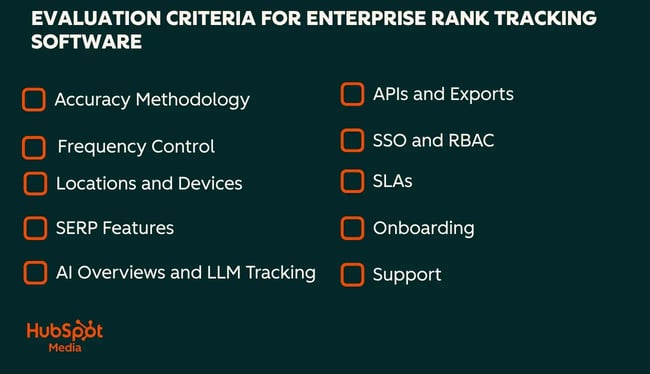
Furthermore, frequency control has become a critical requirement. While daily updates are standard for most industries, enterprise teams operating in high-stakes environments—such as news media, e-commerce during holiday sales, or financial services—require hourly or on-demand refresh capabilities. This ensures that the organization can react instantly to volatility caused by algorithm updates or competitor maneuvers.
Security and governance are equally vital. Unlike small-business tools, enterprise software must offer Single Sign-On (SSO) and Role-Based Access Control (RBAC). This ensures that global teams can access relevant data without compromising sensitive corporate information. Service Level Agreements (SLAs) are also a staple of the enterprise market, providing contractual guarantees regarding data freshness and system uptime.
Evaluation of Leading Enterprise Platforms
As organizations seek to consolidate their marketing technology stacks, several platforms have emerged as leaders in the enterprise rank-tracking space.
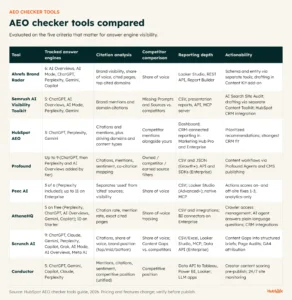
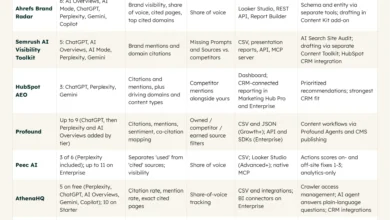
HubSpot SEO Marketing Software and Content Hub
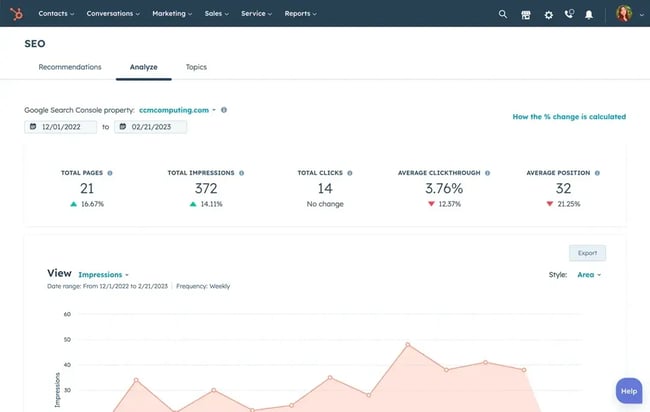
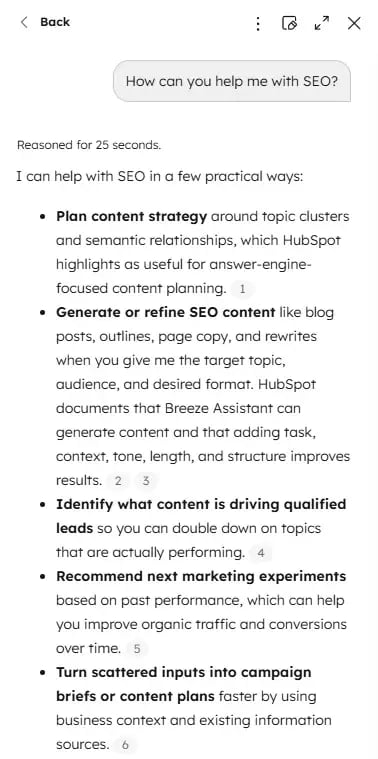
HubSpot has positioned itself as the leader in "integrated SEO." Rather than treating search as a siloed activity, HubSpot embeds SEO intelligence directly into its Marketing Hub and Content Hub. This allows enterprise teams to plan content strategies and optimize pages within the same environment where they manage their CRM and lead attribution.
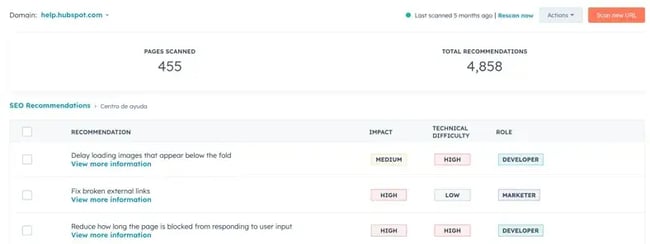
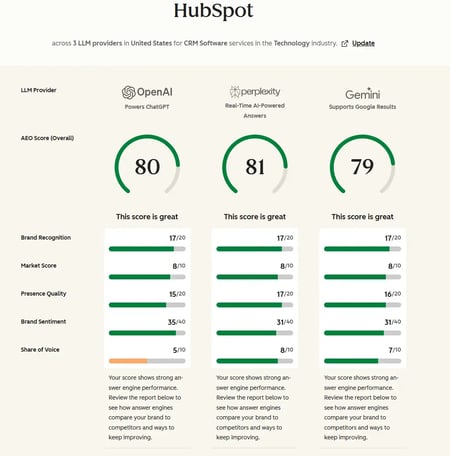
The platform’s "SEO Recommendations" tool is particularly valuable for large-scale operations, as it scans thousands of pages—including those hosted outside of HubSpot—and prioritizes fixes based on potential impact. By integrating with Google Search Console, it provides a unified view of impressions, clicks, and average positions. For organizations looking toward the future, the HubSpot AEO Grader provides a baseline for how a brand is perceived by AI systems like ChatGPT and Gemini, offering a competitive advantage in the burgeoning field of generative search.
Semrush One
Semrush remains a powerhouse in the industry due to its massive data repository. Its "Semrush One" enterprise offering combines traditional position tracking with an AI Visibility Toolkit. This allows brands to monitor their "Share of Voice" across traditional SERPs while simultaneously tracking prompts within AI environments. Semrush’s strength lies in its competitive intelligence, allowing users to perform deep-dive audits into competitor backlink profiles and keyword gaps at an international scale.
Profound
Profound represents a new breed of platform specifically designed for the AI era. Unlike legacy tools that added AI tracking as a secondary feature, Profound was built from the ground up to track brand mentions across generative AI engines. It provides "Narrative Tracking," helping enterprises understand if the AI’s description of their brand aligns with their corporate messaging. This is essential for brand protection in an age where LLMs are becoming the primary source of information for many consumers.
Supporting Data: The Business Impact of Visibility
Recent industry data underscores the necessity of high-fidelity rank tracking. According to search click-through rate (CTR) studies, the first organic result on a desktop SERP typically sees a CTR of approximately 28% to 30%. However, when an AI Overview or a Featured Snippet is present, the CTR for the "Position 1" organic link can drop by as much as 15% to 25%, as the searcher finds their answer without clicking through.

For an enterprise generating $100 million in annual revenue from organic search, a 10% shift in visibility can result in a $10 million swing in the pipeline. This reality has led to the adoption of "Pixel Position Analysis," which measures the actual vertical distance of a brand’s link from the top of the screen. Enterprise software that tracks pixel position provides a more honest assessment of search health than traditional rank numbers alone.
Strategic Framework for Competitor Monitoring
At the enterprise level, competitor tracking is an exercise in market share protection. Organizations must monitor several dimensions of competition:

- Share of Voice (SoV): Tracking the percentage of total search visibility within a specific topic cluster or product category.
- SERP Feature Ownership: Identifying when a competitor gains a "People Also Ask" box or a "Local Pack" position that was previously held by the brand.
- Brand Variant and Affiliate Tracking: Large corporations often compete with their own resellers or affiliates for the same branded keywords. Enterprise tracking helps manage these relationships to prevent "cannibalization" of organic traffic.
Analysis of Implications for Corporate Governance
The adoption of enterprise rank-tracking software has broader implications for how companies are structured. SEO is increasingly moving under the umbrella of "Digital Transformation" or "Revenue Operations" (RevOps) rather than just "Marketing." This shift requires that search data be accessible to more than just SEO specialists.
"The greatest challenge at scale is not the data itself, but the democratization of that data," notes one industry analyst. "If the sales team doesn’t know that visibility for a key product is dropping, they can’t adjust their outreach. If the product team doesn’t see that competitors are winning the ‘Best [Product Category]’ snippets, they can’t refine their positioning."
Consequently, the most successful enterprises are those that treat rank-tracking software as a foundational piece of their data warehouse. By using APIs to push ranking data into Tableau, PowerBI, or Snowflake, organizations can create a "single source of truth" that aligns marketing, sales, and executive leadership.
Future Outlook and Conclusion
The future of enterprise rank tracking is inextricably linked to the evolution of AI. As "Answer Engines" become more prevalent, the metric of success will shift from "clicks" to "citations" and "sentiment." Organizations will need to track not just where they rank, but how they are described by AI agents.
Rank-tracking software is no longer a luxury or a niche tool for technical teams; it is a non-negotiable component of enterprise business strategy. In an era where search engines are becoming answer engines, the ability to monitor, analyze, and act upon search data at scale is the difference between market leadership and digital obsolescence. The right platform must provide more than just numbers; it must provide the integration, security, and AI-ready insights required to navigate the most volatile search environment in history.