From Queens Streets to Global Retail: How Megha Rao Built holiCHIC and Secured a $1.5 Million Seed Investment

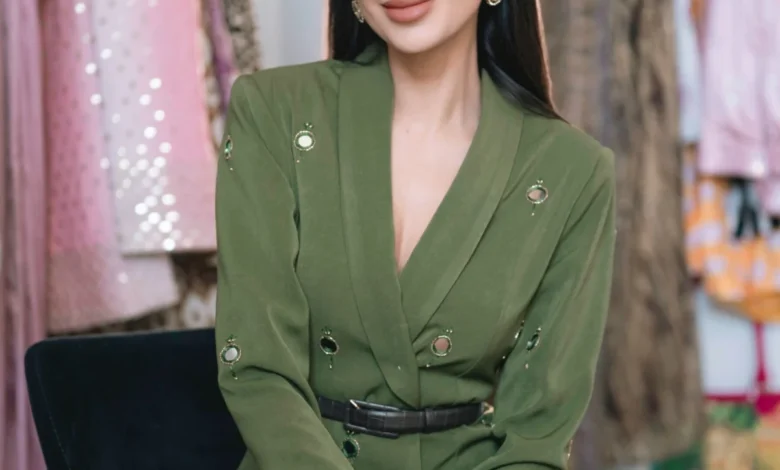
The contemporary fashion landscape is increasingly defined by cultural synthesis, where heritage textiles meet modern Western silhouettes to create entirely new categories of apparel. At the forefront of this movement is holiCHIC, a contemporary lifestyle and apparel brand founded by Megha Rao. Growing up in the diverse cultural mosaic of Queens, New York, Rao experienced a common friction point for many children of immigrants: the challenge of finding ready-to-wear fashion that authentically represented her dual identity. Rather than accepting the limitations of the existing retail market, Rao took matters into her own hands, stitching together traditional South Asian saris with contemporary materials like denim and leather. What began as a personal tailoring project for herself, her friends, and her family has steadily evolved into a thriving, seven-figure enterprise with a global customer base.
For nearly a decade, Rao operated holiCHIC entirely through bootstrapping, relying on her previous professional background in finance sales to navigate the grueling early stages of retail entrepreneurship. Without institutional backing or venture capital during its formative years, the brand relied strictly on organic growth, reinvesting early revenues to sustain its operations. However, a decade of disciplined financial management laid a sturdy operational foundation, enabling the company to weather industry volatility, supply chain disruptions, and the unpredictable cash-flow cycles typical of independent fashion labels. This meticulous approach ultimately transformed a grassroots creative outlet into a commercially viable brand with broad market appeal.
The Turning Point: Breaking Into Major Retail
A major turning point for holiCHIC arrived through a combination of unwavering persistence and strategic vision. As a longtime shopper at Nordstrom, Rao recognized a distinct alignment between her brand’s aesthetic and the retailer’s growing appetite for diverse, contemporary designers. Armed with little more than conviction, Rao initiated a relentless campaign of cold-calling and networking, pitching the department store leadership on the commercial viability of South Asian-inspired fusion wear.
Her perseverance paid off in 2023, just ahead of the Diwali holiday season, when Nordstrom offered holiCHIC a temporary pop-up shop opportunity at its prominent New York flagship location. The three-day retail activation yielded extraordinary results, outperforming internal sales benchmarks and demonstrating robust consumer demand that extended far beyond traditional demographic boundaries.
The immediate commercial success of the flagship pop-up caught the attention of Nordstrom’s senior buying team. Following formal performance reviews, the temporary activation quickly translated into a permanent digital partnership, landing holiCHIC’s signature blazers, dresses, and saris on Nordstrom’s e-commerce platform. This validation from a premier national department store served as a critical proof-of-concept, establishing the brand’s scalability and positioning it favorably for institutional investment.
Analyzing the 2026 Seed Round: Timing and Strategy
Building upon its expanded retail footprint and sustained revenue growth, holiCHIC achieved another major corporate milestone in May 2026 by securing its inaugural institutional funding: a $1.5 million seed round. The cash injection proved immediately transformative, with company sales surging by 47% in the months following the transaction. For a brand that had spent nearly ten years avoiding outside debt and equity dilution, transitioning into a venture-backed entity required a carefully calculated assessment of market timing and operational readiness.
Drawing from her decade-long journey as a bootstrapped founder, Rao has articulated a strategic framework for early-stage entrepreneurs contemplating equity financing. Rather than raising capital out of desperation or to manufacture artificial hype, Rao emphasizes that founders must evaluate their funding readiness through three fundamental operational questions: evaluating existing business momentum, selecting the right strategic partners, and establishing a precise allocation plan for the capital.
Evaluating Market Momentum Before Seeking Capital
The first pillar of Rao’s fundraising philosophy centers on verifiable business momentum. Too often, early-stage founders turn to venture capital and angel investors to jumpstart a lagging enterprise, hoping that cash injection will create demand where none exists. Rao advises the exact opposite: capital should be secured to accelerate an already moving train, not to find the tracks.
For holiCHIC, the decision to approach the market for a seed round was triggered by unmistakable data analytics following their Nordstrom rollout. Rather than assuming their consumer base was restricted to the South Asian diaspora, Rao and her executive team dove deep into customer demographics and purchasing behavior. The data revealed a rapidly expanding segment of non-South Asian consumers purchasing holiCHIC merchandise purely out of an appreciation for its unique design, tailoring, and quality.
Sensing that consumer demand was outpacing the company’s internal operational capacity, Rao recognized that external capital was necessary to capitalize on impending retail opportunities without choking supply chains. This analytical foresight proved prescient when global retail giant Amazon Fashion subsequently approached the brand for potential collaboration. Because holiCHIC had already stabilized its financial footing and secured seed funding, the company possessed the infrastructural bandwidth to entertain major enterprise partnerships without risking operational collapse.
Selecting the Right Strategic Partner
Navigating the venture ecosystem involves critical decisions regarding board composition, governance, and control. Bootstrapping teaches founders the value of autonomy; as Rao notes, operating without outside investors means weathering financial rollercoasters where a single slow month can devour profits, but it also ensures that the founder retains absolute creative and operational control.
When the time came to open a seed round, Rao opted for a streamlined capitalization structure rather than assembling a large syndicate of diverse venture funds. Following a series of introductory meetings, a seasoned angel investor offered to fund the entire $1.5 million requirement single-handedly. For Rao, partnering with a single, aligned stakeholder proved far more advantageous than managing a fractured cap table filled with conflicting opinions, competing demands, and administrative overhead.
The chosen investor demonstrated a deep appreciation for holiCHIC’s organic growth trajectory and shared Rao’s long-term vision for the brand. This alignment eliminated the friction often associated with institutional venture capital, allowing the founder to focus on execution rather than managing investor relations across a sprawling syndicate.
Intentional Capital Allocation and Strategic Growth
The final consideration in Rao’s framework addresses capital deployment. Many early-stage startups raise large seed rounds only to burn through capital on speculative marketing campaigns, unproven product lines, or premature scaling, ultimately resulting in valuation markdowns or corporate restructuring.
Rao entered the fundraising process with a clear, phased roadmap for every dollar secured. Having already experienced and absorbed the financial lessons of early missteps regarding product-market fit and international shipping logistics, the executive team targeted specific, high-yield growth vectors.
A significant portion of the $1.5 million seed round has been allocated toward scaling digital marketing initiatives and expanding the brand’s influencer partnerships. Specifically, holiCHIC has intensified its focus on high-conversion social commerce channels, including Amazon Fashion and the TikTok Shop ecosystem. Recognizing that female consumers purchasing event attire frequently shop alongside a partner, the brand is also executing a strategic pivot to expand its menswear division—holiCHIC Men—with a specialized focus on precise fit, premium materials, and modern styling.
Global Expansion and Future Outlook
With domestic distribution firmly established through Nordstrom, Amazon, and digital direct-to-consumer channels, holiCHIC has set its sights on broader international markets. Market research and digital traffic analytics indicate strong latent demand in regions with vibrant multicultural populations, positioning the United Kingdom, India, and the Middle East as primary targets for the brand’s next phase of international expansion.
However, leadership remains disciplined, prioritizing deep market penetration across the United States and Canada before executing cross-border retail launches. Corporate projections indicate that secondary institutional fundraising will not be considered until the company achieves a fivefold increase in current revenue figures. Until that threshold is crossed, executive priorities remain anchored on consistent retail execution, team expansion, and continuous refinement of product lines.
Industry Implications and Broader Market Trends
The trajectory of holiCHIC offers broader insights into the changing dynamics of the contemporary retail industry. As consumer preferences shift away from homogenized fast fashion toward culturally expressive, high-utility apparel, independent designers who bridge traditional heritage with modern aesthetics are capturing significant market share. Furthermore, the brand’s methodical transition from a bootstrapped enterprise to a venture-backed growth company underscores the viability of sustainable, revenue-first entrepreneurship.
By prioritizing organic momentum and data-driven market validation before pursuing institutional capital, Rao and the holiCHIC team have charted a sustainable blueprint for specialty fashion brands operating in an increasingly competitive global marketplace. As the company scales its operations across new digital platforms and international territories, its journey serves as an instructive case study for founders navigating the delicate balance between creative authenticity and commercial scalability.