The Rise of the Algorithmic Gatekeeper: How Artificial Intelligence is Transforming the Modern Job Interview

Job seekers navigating the contemporary employment market are encountering a profoundly different landscape than applicants did just a few years ago. Artificial intelligence has systematically infiltrated nearly every phase of the professional hiring pipeline, moving far beyond automated resume screening and AI-assisted cover letter generation. Today, the most unsettling hurdle for candidates is no longer a conversation with a human being, but an interrogation by an algorithm. For millions of job hunters across the globe, the traditional introductory phone screen or preliminary video call with a recruiter has been entirely replaced by automated software, text-based chatbots, and digital avatars designed to evaluate human potential.
This rapid shift marks a monumental turning point in human resources and recruitment practices. According to data released by the hiring platform Greenhouse following an April survey of nearly 3,000 active job seekers across the United States, the United Kingdom, Ireland, Germany, and Australia, 63 percent of respondents had completed at least one AI-led interview. This figure represented a striking 13 percent increase in just six months, highlighting an exponential acceleration in the adoption of automated recruitment technologies. As corporations face unprecedented volumes of job applications, the human element of first-round vetting is rapidly vanishing, leaving candidates to wonder how conventional rules of professional engagement apply when speaking to a machine.
The Mechanics of the Algorithmic Screening Process
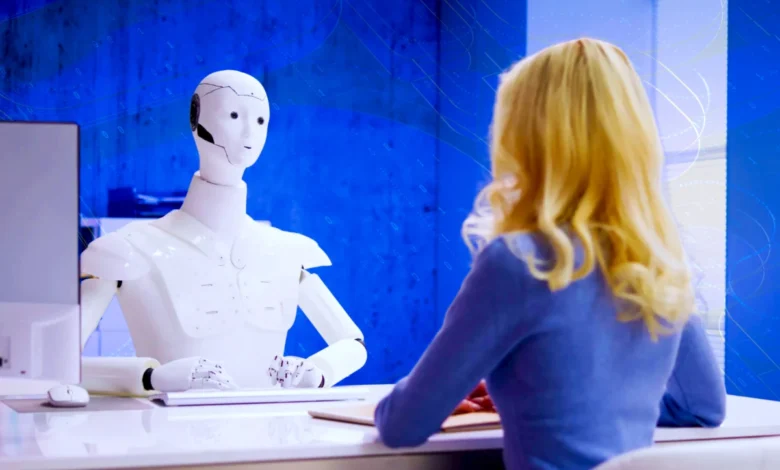
The technology powering these automated interviews varies widely, offering employers a range of digital tools to manage initial applicant pools. Some companies deploy voice or text-based chatbots that present candidates with a standardized set of behavioral and technical questions, recording responses for later algorithmic analysis. More advanced systems utilize digital avatars—graphical representations of humans programmed to mimic real-time facial expressions such as blinking, smiling, and nodding while posing questions.
For the applicant, the psychological experience of these interviews can be jarring. Unlike a standard conversation characterized by mutual rapport-building, organic pauses, and emotional resonance, interacting with an AI avatar or a voice bot often feels like speaking to a pre-recorded simulation. Recruiting experts point out that candidates are forced to unlearn decades of ingrained interview etiquette. Traditional strategies—such as reading a human interviewer’s body language to gauge whether an answer is landing well, or adjusting tone and pacing based on subtle social cues—are entirely useless when facing a machine that evaluates speech patterns, word choice, and response times against a predefined rubric.
Katrina Kibben, a Rockford, Illinois-based recruiting consultant and job-posting copywriter, notes that applicants are struggling to adapt to these novel screening mechanisms. For generations, the foundational expectation of a job interview has been interpersonal communication. As employers increasingly integrate automated solutions into their talent acquisition workflows, candidates are left uncertain about whether traditional virtues like charisma and emotional intelligence hold any value during the preliminary screening phase.
The Catalyst: Volume, Layoffs, and the Corporate Burden
To understand why corporations are pivoting so aggressively toward artificial intelligence, one must examine the macro-level pressures currently dominating the global labor market. The primary driver behind the surge in AI interviews is sheer volume. Human resources departments are routinely inundated with thousands of applications for a single open position, creating an administrative bottleneck that traditional recruiting teams simply lack the bandwidth to manage.
Data released by LinkedIn in January illustrates the stark reality of modern competition. The research revealed that the average number of U.S. candidates vying for each open role on the platform has doubled compared to figures from four years ago. This influx of applicants is driven by several factors, including the widespread accessibility of generative AI tools that allow job seekers to apply to hundreds of positions with a single click, as well as lingering instability across various sectors of the economy.
Simultaneously, the corporate landscape has undergone significant restructuring. Kathleen Nolan-Raygoza, a technical recruiter with nearly a decade of industry experience, explains that years of corporate layoffs and budget contractions have forced companies to downsize their internal recruiting departments. With leaner human resources teams operating under strict financial constraints, organizations face immense difficulty personally screening every qualified or semi-qualified applicant who enters the pipeline.
Enter the enterprise AI interviewer. Technology providers have rushed to fill this operational void. Dina Taylor, chief evangelist at talent acquisition technology firm HireVue, highlighted the skyrocketing demand for automated interviewing solutions in recent months. HireVue introduced its voice-based AI interviewer designed to conduct autonomous, two-way, job-specific screening conversations capable of evaluating candidates and supplying recruiters with a ranked shortlist.
According to industry advocates, the appeal for employers boils down to two critical factors: speed and scale. Human recruiters are constrained by the physical limits of the 40-hour workweek and cannot possibly conduct live interviews with thousands of candidates in a matter of days. AI systems, by contrast, can operate continuously, engaging applicants at any hour and standardizing the initial assessment process.
A Timeline of Transformation: From Resumes to Avatars
The integration of artificial intelligence into the hiring ecosystem has evolved rapidly over the past decade, moving in distinct phases:
- 2015–2019 (The Algorithmic Resume Era): Companies began heavily relying on Applicant Tracking Systems (ATS) driven by basic machine learning to parse keywords, filter resumes, and rank candidates based on historical data.
- 2020–2022 (The Pandemic Remote Shift): Widespread remote work normalized asynchronous video interviews, where candidates recorded responses to prompt questions without a live interviewer present. These recordings were occasionally analyzed by early-stage AI tools for behavioral cues.
- 2023–2024 (The Generative AI Boom): The public release of advanced large language models enabled job seekers to automate mass applications and resume writing, while employers adopted sophisticated software to detect AI-generated content.
- 2025–Present (The Conversational AI Interview Era): The mainstream deployment of real-time voice bots and digital avatars capable of conducting live, dynamic, two-way conversations with applicants during the initial screening phase.
This progression reflects an escalating technological arms race between job seekers attempting to maximize their application output using software and corporations deploying automated gatekeepers to manage the resulting deluge of data.
The Psychological Toll and Candidate Experience
While employers praise the efficiency gains of algorithmic screening, the candidate perspective is markedly more complex. Industry surveys and feedback from human recruiters underscore a growing sense of alienation among job seekers. The Greenhouse survey noted that while a majority of active applicants have now faced an AI interview, most report having a negative or deeply uncomfortable initial experience.
Nolan-Raygoza points out that hopping onto a scheduled professional call only to be greeted by a synthetic voice or an artificial avatar can induce anxiety and disorientation. Candidates accustomed to human empathy find it difficult to establish a connection with a software program. Furthermore, anxiety surrounding algorithmic bias remains a prominent concern. Job seekers frequently express worry that minor speech hesitations, unconventional accents, or non-traditional communication styles might be misinterpreted by AI models programmed to value hyper-specific linguistic patterns.
Compounding this frustration is the broader macroeconomic climate. For unemployed individuals, the job search has grown demonstrably longer and more arduous. Navigating a gauntlet of faceless algorithms before ever speaking to a human decision-maker can exacerbate the psychological toll of prolonged joblessness, turning an already stressful life event into a mechanical endurance test.
Implications for the Future of Work
The widespread normalization of AI-led interviews carries profound long-term implications for the future of employment and human resources management. As these tools become more sophisticated, the boundary between human and machine interaction in the professional sphere will continue to blur.
On one hand, proponents argue that standardized AI screening can reduce unconscious human bias during the initial phase of recruitment, ensuring that every candidate is asked the exact same core questions evaluated against objective criteria. For high-volume entry-level roles, customer service positions, and technical support functions, conversational AI may permanently supplant the traditional phone screen.
On the other hand, critics warn of the dehumanization of the hiring process. If companies rely too heavily on automated gatekeepers, they risk alienating top-tier talent who may abandon applications rather than subject themselves to automated evaluations. Furthermore, over-reliance on AI screening could homogenize workforces if algorithms penalize unique personalities or unconventional communication styles that do not match the statistical norm established by the training data.
Ultimately, the rise of the algorithmic interviewer signals a permanent transformation in how organizations identify and evaluate human capital. As artificial intelligence solidifies its role as the primary gatekeeper of the modern workforce, both employers and job seekers must navigate a new era where mastering the machine is just as important as mastering the job description.