The High-Stakes Battle Over AI Infrastructure: Why Local Communities are Rejecting Data Center Expansion

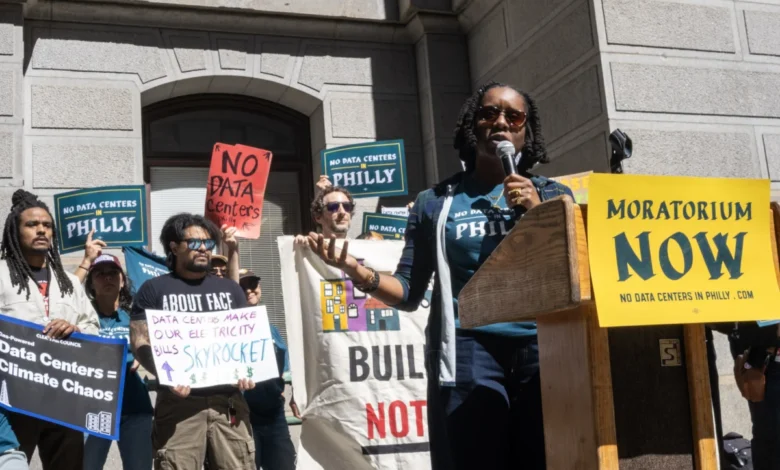
Across the United States, a quiet but profound conflict is reshaping the American landscape as municipalities grapple with the aggressive, energy-hungry expansion of artificial intelligence infrastructure. While tech giants and data center developers market these facilities as engines of economic revitalization and job creation, a growing coalition of citizens is challenging that narrative. From Philadelphia to Reno, residents are increasingly wary of the environmental degradation, water consumption, and strain on electrical grids that accompany these massive server farms. Recent polling data from Gallup indicates that a clear majority of Americans now oppose the construction of data centers in their immediate vicinity, signaling a shift in public sentiment that threatens to stall the rapid scaling of AI hardware.
A Legacy of Industrial Trauma
For activists like Shawmar Pitts, the resistance to data center development is rooted in the tangible, often devastating history of American industrialization. A lifelong resident of the Grays Ferry neighborhood in Southwest Philadelphia, Pitts spent his formative years in the shadow of the Philadelphia Energy Solutions refinery. For decades, the facility served as the largest oil refinery on the East Coast, dominating the local skyline and, according to local advocates, polluting the air and water of surrounding residential streets.
The turning point for the neighborhood came in 2019, when a massive explosion at the refinery prompted its permanent closure. However, the physical and psychological toll remained. It was not until 2018, when members of the environmental justice group Philly Thrive began canvassing the neighborhood, that Pitts began to connect the dots between the facility’s emissions and the pervasive chronic health issues plaguing his family and neighbors.

"I read the information they had on the table about how living near the refinery affects you, and I’m looking at all the sicknesses on this paper," Pitts recounted. "My mother has this, my sister has that, my next-door neighbor suffers from this—every house, someone has something on that list." This realization galvanized Pitts, who today serves as the managing co-director of Philly Thrive, leading the "No Data Centers in Philly" campaign.
The Chronology of Resistance
The movement in Philadelphia is part of a broader, national wave of resistance. The timeline of this pushback has accelerated significantly over the past 24 months, tracking closely with the explosion of the generative AI market.
- 2019: The Philadelphia Energy Solutions refinery closes following a major industrial accident, leaving a massive, potentially developable site in the Grays Ferry neighborhood.
- 2023–2024: As AI demand surges, tech companies begin scouting large industrial sites nationwide, focusing on areas with existing power infrastructure.
- July 2026: City officials in Philadelphia formally identify two potential sites for future data centers: one in Northeast Philadelphia and another in the former refinery district of Grays Ferry.
- July 2026: New York Governor Kathy Hochul signs a landmark executive order halting all new data center permits, citing concerns over water and energy usage.
- September 2026: Following a series of local rallies and public hearings, cities such as Denver, Indianapolis, and Asheville report the implementation of formal moratoriums to study the long-term impact of high-density computing infrastructure.
Environmental and Resource Implications
The primary concern shared by activists and urban planners alike is the staggering scale of energy consumption required to sustain modern AI operations. According to projections by BloombergNEF, U.S. data centers are on track to consume more natural gas by 2035 than the combined demand of Germany and Japan. This estimate, revised upward by nearly double within the last nine months, highlights the runaway nature of infrastructure growth.
Natural gas, while often cited as a "bridge fuel" that burns cleaner than oil, presents significant climate risks. Every cubic foot burned releases approximately 60 grams of carbon dioxide. Furthermore, the reliance on diesel-powered backup generators—often required to prevent data loss during grid instability—creates localized air pollution "hotspots." Annie Fox, an attorney for the Clean Air Council, notes that these diesel generators are increasingly being tapped to support the grid during extreme heatwaves, a move that exacerbates the very climate change driving those high temperatures.

"A typical data center planned in Pennsylvania has hundreds of diesel engines that spew air pollution," Fox stated. "The government has already signaled that data centers may be required to utilize these generators rather than drawing from an overstressed electrical grid during peak heat events. This creates a circular, destructive cycle."
Official Responses and Policy Shifts
The political landscape is shifting as local governments realize that the economic promise of data centers—which are often highly automated and create relatively few long-term jobs—may not outweigh the costs of infrastructure upgrades and environmental remediation.
In New York, Governor Hochul’s administration has become the standard-bearer for a more cautious approach. "Progress shouldn’t arrive with a higher utility bill, deleted water supply, or noise pollution," Hochul remarked during her July announcement. The executive order has effectively forced a pause in development, allowing for a comprehensive audit of how these facilities impact the state’s carbon neutrality goals.
Similarly, city councils in Charlotte and Reno have extended existing moratoriums, citing the need for "data-driven" zoning. These officials are under immense pressure from both the tech industry, which argues that slowing development will cause the U.S. to lose its competitive edge in AI, and local constituents, who fear that their neighborhoods will be sacrificed to satisfy the cooling and power needs of server racks.

The Human Cost: A Perspective from the Frontlines
At a recent rally at Philadelphia’s City Hall, the emotional weight of the debate was on full display. Sonya Sanders, president of the board for Philly Thrive, shared the story of her husband, a lifelong Grays Ferry resident who died of a rare bone cancer in 2020. Having lived his entire life in the proximity of industrial emissions, Sanders maintains that his death was a direct consequence of the pursuit of industrial profit.
"In my eyes, they killed him," she said. "The pollution killed him. I believe he would be here today if he wasn’t silently murdered." Her testimony resonates with many in the community who see the arrival of data centers as a potential "second wave" of environmental burden. For these residents, the promise of "digital progress" rings hollow when measured against the health of their families.
Broader Economic and Societal Implications
The debate over data centers is fundamentally a question of priorities: does the national imperative for AI dominance override local sovereignty and environmental health?
Economically, the data center industry is a paradox. While they represent billions in capital investment, they are notoriously capital-intensive rather than labor-intensive. Once a facility is constructed, it may employ only a small staff, meaning the tax revenue generated may be offset by the costs of upgrading regional substations, water treatment facilities, and road infrastructure.

Furthermore, the issue of surveillance and data privacy—mentioned by rally attendees like Donna Greenberg—adds another layer to the public outcry. Residents are increasingly concerned not just about what is being built, but who is building it and what those entities will do with the massive amounts of data flowing through these physical hubs.
As cities across the country continue to debate the future of their industrial zones, one thing is clear: the era of "rubber-stamp" development for tech infrastructure is ending. Whether through local moratoriums, state-level executive orders, or persistent community activism, the people living near these sites are demanding a seat at the table. The future of AI, it seems, will be determined as much by zoning board meetings and local rallies as it is by the engineers and venture capitalists in Silicon Valley. For the residents of neighborhoods like Grays Ferry, the fight is not just about a building; it is about the right to a clean, healthy, and sustainable future.