London Mayor Boris Johnson Settles Dispute with Internal Revenue Service Over Worldwide Tax Obligations
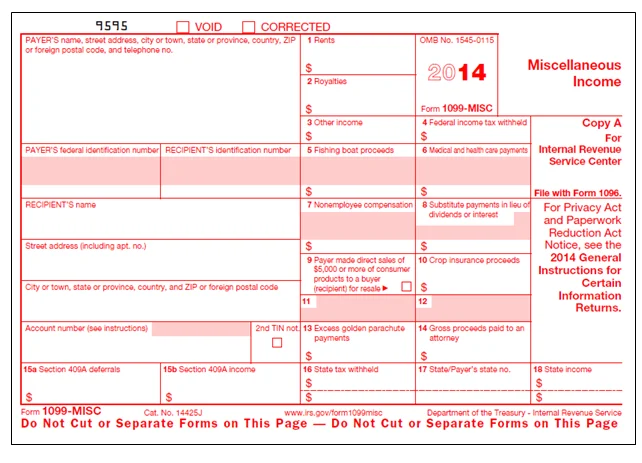
In a significant reversal of his previous public stance, London Mayor Boris Johnson has officially settled a long-standing tax dispute with the United States Internal Revenue Service (IRS), putting an end to a high-profile confrontation over the reach of American tax authority. The settlement follows months of public defiance by the Mayor, who had previously characterized the IRS’s attempts to tax his global income as "absolutely outrageous." The resolution of this matter highlights the unique and often controversial nature of the United States’ citizenship-based taxation system, which mandates that all citizens, regardless of where they reside or where their income is earned, remain subject to U.S. federal tax requirements.
The dispute centered on the sale of Mr. Johnson’s primary residence in London in 2009. While the transaction was exempt from capital gains tax under United Kingdom law, the IRS asserted its right to a portion of the proceeds based on Mr. Johnson’s status as a U.S. citizen. Born in New York City in 1964, Mr. Johnson held dual U.K.-U.S. citizenship despite having left the United States at the age of five. This status, often referred to as being an "accidental American," placed him within the crosshairs of a tax regime that few other nations in the world employ.
The Core of the Dispute: A Conflict of Jurisdictions
The friction between the London Mayor and the American tax agency began to escalate publicly in 2014. During a promotional tour for his book, The Churchill Factor, Mr. Johnson participated in an interview with NPR’s Diane Rehm, where he was questioned about his refusal to pay a capital gains tax bill related to the sale of his Islington home. The property had reportedly been sold for approximately £1.2 million. Under British tax law, the sale of a "principal private residence" is generally exempt from capital gains tax, a policy intended to allow homeowners to move between properties without a significant tax penalty.
However, the U.S. tax code operates under different parameters. While Section 121 of the Internal Revenue Code allows individuals to exclude up to $250,000 (or $500,000 for married couples filing jointly) of gain from the sale of a primary residence, any profit exceeding that threshold is subject to federal capital gains tax. For Mr. Johnson, whose property value had appreciated significantly over several years, the resulting U.S. tax liability was substantial. Because he paid no tax on the sale in the U.K., he was unable to utilize foreign tax credits to offset the U.S. bill, leading to what he described as a double-standard in international fiscal policy.
Chronology of a Transatlantic Tax Battle
The timeline of Mr. Johnson’s tax complications stretches back over a decade, reflecting the slow-moving but persistent nature of international tax enforcement.
- 1964: Boris Johnson is born in New York City to British parents, automatically acquiring U.S. citizenship via jus soli (right of the soil).
- 1969: The Johnson family moves back to the United Kingdom.
- 2006: Writing in The Spectator, Mr. Johnson expresses frustration with the requirements of his U.S. passport and hints at the possibility of renouncing his American citizenship.
- 2009: Mr. Johnson sells his home in Islington, London. The sale is tax-free in the U.K.
- 2014 (November): In a widely publicized NPR interview, Mr. Johnson confirms he is being pursued by the IRS for capital gains tax on the 2009 sale. He calls the demand "outrageous" and initially suggests he will not pay.
- 2015 (January): Reports emerge that the Mayor has settled his tax bill with the IRS. This decision comes ahead of a scheduled trade mission to the United States, where the threat of legal complications or being flagged by U.S. Customs and Border Protection (CBP) posed a significant political and personal risk.
The Burden of Citizenship-Based Taxation
The United States is one of only two countries in the world—the other being Eritrea—that taxes its citizens based on their nationality rather than their place of residence. This policy means that an estimated 7 to 9 million U.S. citizens living abroad are required to file annual tax returns with the IRS. They must report all global income, including wages, investment earnings, and capital gains.
Furthermore, expats are subject to stringent reporting requirements such as the Report of Foreign Bank and Financial Accounts (FBAR). Failure to disclose foreign accounts exceeding $10,000 at any point during the year can result in draconian penalties, often starting at $10,000 per non-willful violation and reaching much higher for "willful" failure to file. For many dual citizens like Mr. Johnson, who may have had little to no financial connection to the U.S. for decades, these requirements represent a complex and expensive administrative burden.
The FATCA Factor and the End of Financial Privacy
The timing of the IRS’s pursuit of Mr. Johnson coincided with the full implementation of the Foreign Account Tax Compliance Act (FATCA). Passed in 2010 as part of the HIRE Act, FATCA requires foreign financial institutions (FFIs) to report the financial accounts of U.S. taxpayers directly to the IRS. Non-compliant institutions face a 30% withholding tax on certain U.S.-source payments.

FATCA effectively ended the era of bank secrecy for American expats. Banks in the U.K., Europe, and Canada began systematically identifying customers with "U.S. indicia"—such as a U.S. birthplace—and sharing their data with the U.S. Treasury. This global dragnet made it nearly impossible for high-profile figures or even ordinary citizens to remain "off the grid" regarding their U.S. tax obligations. The "panic" mentioned by observers during this period was driven by the realization that the IRS now possessed the digital tools to enforce its worldwide tax mandate with unprecedented precision.
Diplomatic Friction: The Congestion Charge Counter-Argument
The tax dispute was further complicated by a "tit-for-tat" diplomatic row regarding London’s Congestion Charge. As Mayor, Mr. Johnson was a vocal critic of the U.S. Embassy in London for its refusal to pay the daily fee for driving within the city’s central zone. The U.S. Department of State has long maintained that the Congestion Charge is a tax, from which diplomats are exempt under the 1961 Vienna Convention on Diplomatic Relations.
Transport for London (TfL), under Johnson’s leadership, argued that the charge is a fee for service, not a tax. By 2015, the unpaid debt from the U.S. Embassy was estimated to exceed £7 million. Mr. Johnson famously attempted to confront President Barack Obama regarding the unpaid fees during a 2011 state visit, an exchange that was reportedly intercepted by the U.S. Ambassador. The irony of the U.S. government demanding tax payments from a London official while refusing to pay local London fees was not lost on the British public or the international media.
The Complexity of Renunciation and the Exit Tax
Following the settlement of his tax bill, the question of whether Mr. Johnson would renounce his U.S. citizenship remained. However, renouncing citizenship is not a simple or cost-effective escape from the IRS. To legally sever ties with the U.S., an individual must undergo a formal renunciation process at a U.S. consulate, which includes a fee that was raised significantly during this era to $2,350.
More importantly, "covered expatriates"—generally those with a net worth over $2 million or an average annual income tax liability above a certain threshold—may be subject to an "Exit Tax." This tax is calculated as if the individual had sold all their global assets on the day before renunciation, with the "mark-to-market" gain being taxed immediately. Additionally, individuals must certify five years of full U.S. tax compliance. For Mr. Johnson, paying the 2009 capital gains bill was a necessary prerequisite to any future attempt to renounce his citizenship without facing severe legal and financial repercussions.
Broader Implications for Global Tax Policy
The resolution of Boris Johnson’s tax case serves as a cautionary tale for the millions of Americans living abroad. It underscores the reality that even high-ranking foreign government officials are not immune to the reach of the U.S. Treasury. The case sparked renewed debate among expat advocacy groups, such as American Citizens Abroad (ACA) and various "accidental American" organizations in France and Canada, who argue that citizenship-based taxation is an archaic policy that hinders the ability of U.S. citizens to compete in the global economy.
In Canada, legal challenges were launched to block the implementation of FATCA, with plaintiffs arguing that the intergovernmental agreements (IGAs) violated sovereignty and privacy rights. While these legal battles saw mixed results, they highlighted a growing international resentment toward U.S. fiscal extraterritoriality.
For Boris Johnson, the decision to pay the bill was likely a pragmatic political move. As a figure with aspirations for higher national office, the prospect of being detained or denied entry to the United States was untenable. The settlement effectively cleared his path for future diplomatic engagements and removed a significant point of personal vulnerability. However, for the broader community of American expats, the "lesson of Boris" remains a stark reminder of the inescapable nature of U.S. tax obligations, regardless of where one calls home. The IRS’s ability to collect, bolstered by global reporting standards and the threat of travel restrictions, ensures that the long arm of U.S. law remains a permanent fixture in the lives of its citizens abroad.