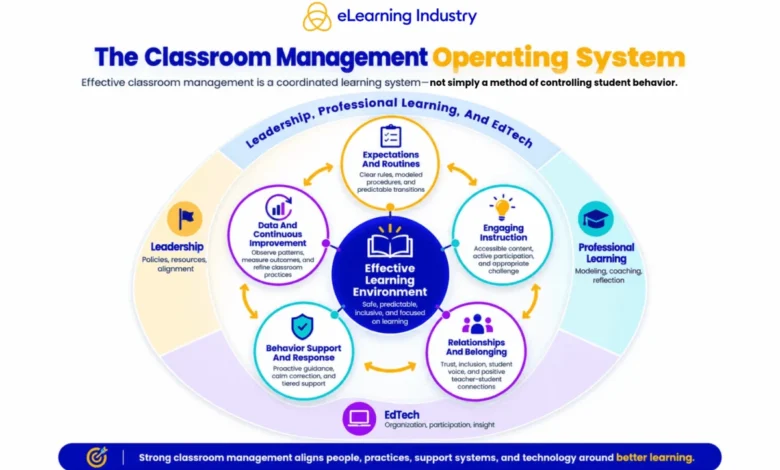
Modern education faces an evolving landscape where the role of the teacher has expanded far beyond the delivery of academic content. Classroom management—the systemic orchestration of expectations, routines, and behavioral support—has emerged as a critical pillar of professional success and student achievement. As of 2026, the complexity of the learning environment has reached a tipping point, with recent data from the RAND Corporation indicating that teachers dedicate an average of eight hours per week to addressing student behavioral and mental health needs. This shift underscores the reality that classroom management is no longer merely a "discipline issue" but a fundamental organizational and pedagogical challenge that directly impacts both workforce retention and student outcomes.
The evolution of this discipline has been marked by a move away from punitive "control" models toward proactive, evidence-based systems. Historically, classroom management was often equated with silence and strict adherence to rules. However, contemporary research, including guidelines provided by the American Psychological Association (APA), suggests that prosocial behaviors are skills that must be explicitly taught, modeled, and reinforced, much like mathematics or literacy.
The Organizational Impact of Classroom Dynamics
The current crisis in teacher retention is intrinsically linked to classroom management. Reports from 2026 indicate that student behavior remains the primary driver of job-related stress for public school educators in the United States. This stress is not a reflection of individual teacher failure, but rather a symptom of systemic gaps in resources, training, and institutional support. When a teacher is left to manage high-needs behavioral incidents in isolation, the risk of burnout increases significantly.
Industry experts argue that effective management is an institutional, not an individual, responsibility. A school-wide commitment to frameworks such as Positive Behavioral Interventions and Supports (PBIS) has been shown to reduce the reliance on reactive, exclusionary discipline. By standardizing expectations across grade levels, schools provide a predictable environment that fosters student security and reduces the cognitive load on educators.
A Framework for a Robust Management Plan
A successful classroom management plan functions as a living document, serving as a roadmap for daily operations. To be effective, this plan must be grounded in seven fundamental pillars:
- A Clearly Defined Purpose: Educators must articulate the ethos of their learning environment. This involves defining the classroom not just as a place for task completion, but as a community where inquiry is encouraged and support is readily accessible.
- Observable Behavioral Expectations: Vague mandates like "be good" are ineffective. Instead, high-performing classrooms utilize three to five actionable, positive expectations, such as "respect the learning process" or "engage with technology responsibly," translated into observable behaviors for specific contexts.
- Predictable Routines and Procedures: The most effective educators eliminate ambiguity. Detailed procedures for transitions, independent work, help-seeking, and device management prevent "dead time" that often serves as a catalyst for off-task behavior.
- Instructional Engagement: Pedagogical design is the first line of defense in classroom management. Lessons that are paced appropriately, accessible to diverse learners, and include regular opportunities for movement and choice naturally minimize behavioral disruptions.
- Constructive Feedback Loops: Recognition should be specific and tied to student effort rather than vague praise. Feedback that explains the "why" behind a student’s success reinforces the desired behavior for the future.
- Response and Escalation Protocols: Consistency is paramount. A pre-established, tiered system for responding to minor disruptions—ranging from non-verbal redirection to formal restorative conversations—ensures that students understand the consequences of their actions and the path toward reconciliation.
- Data-Driven Review Cycles: Just as student academic performance is tracked, classroom management strategies must be audited. Educators should periodically evaluate which routines are failing and adjust their approach based on observable data rather than anecdotal frustration.
Implementing Proven Management Strategies
The implementation of management strategies must be treated as a systemic endeavor rather than a "bag of tricks." Research consistently highlights ten specific areas where targeted interventions yield the highest returns:
- Establishment of Expectations: Limiting expectations to a small, manageable number ensures students can retain them. When students participate in the creation of these norms, they exhibit higher levels of ownership.
- Explicit Modeling of Routines: Routines should be taught with the same rigor as curriculum. This includes "rehearsing" procedures for entering the room, signaling for attention, and utilizing technology.
- Active Supervision: Moving purposefully throughout the room allows the teacher to identify confusion before it manifests as behavioral frustration.
- Strategic Use of Noise Management: Distinguishing between productive academic discourse and disruptive noise allows for a more flexible and engaging classroom culture.
- Private Correction: To preserve the teacher-student relationship, corrections should be delivered discreetly. Public shaming or arguments in front of peers are universally associated with diminished student engagement.
- Behavioral Pattern Analysis: By logging the "antecedents" of behavioral issues—such as the time of day, the complexity of the task, or the physical environment—teachers can identify and remove triggers.
- Culturally Responsive Norms: Effective management accounts for diverse communication styles. What may appear as "disrespect" in one culture may be a standard way of interacting in another; successful educators adapt their approach to honor student backgrounds.
- Tiered Support: Recognizing that universal strategies do not work for every student, educators must be prepared to integrate individualized support, including collaboration with school counselors and behavior specialists.
The Role of Technology and Grade-Level Differentiation
The integration of EdTech into classroom management is a double-edged sword. While digital tools can streamline administrative tasks and facilitate engagement, they can also introduce unnecessary complexity. The goal of technology in the classroom should always be the simplification of workflows. If an EdTech platform requires students to navigate multiple interfaces to find a simple assignment, the technology is actively working against classroom management.
Furthermore, strategies must evolve as students mature. In elementary settings, management relies heavily on visual cues, physical movement, and clear, concrete modeling. In middle school, the focus shifts toward fostering autonomy and collaborative norms, acknowledging the students’ growing social complexity. By high school, management is most effective when it emphasizes relevance, choice, and a partnership model where students are treated as independent stakeholders in their own learning process.
Measuring Success: Beyond Quietude
A "quiet" classroom is a flawed metric for success. High-functioning learning environments are often dynamic and noisy, but that noise is characterized by collaborative inquiry. To accurately assess whether a management system is working, leaders should focus on indicators such as:
- Time-on-Task: Are students transitioning into work quickly and staying engaged until the objective is met?
- Equitable Participation: Is a wide range of students contributing to lessons, or are only a few voices dominating?
- Consistency of Response: Is the teacher responding to the same behaviors in a predictable, fair manner, or is there evidence of inconsistency?
- Student Self-Regulation: Are students increasingly able to recognize their own needs and seek help before a minor issue escalates?
Broader Implications and Future Outlook
The implications of these findings for school districts and policy makers are clear: Professional development cannot be a "one-and-done" workshop. To improve classroom management, schools must invest in ongoing coaching, peer observation, and systemic support structures.
When teachers are supported by a school culture that prioritizes clear communication, consistent policies, and mental health resources, they are better equipped to handle the demands of the modern classroom. Ultimately, effective classroom management is a testament to the fact that when expectations are clear, support is available, and instruction is engaging, students are not just better behaved—they are more capable, confident, and prepared for the challenges of the future. The shift from reactive discipline to proactive, systemic design is not just a professional development goal; it is an essential component of creating a sustainable and equitable education system.