Ford Partners with Apple to Power Next-Generation Electric Vehicle Software and Autonomous Systems

In a landmark move that signals a significant shift in the relationship between Silicon Valley and Detroit, Ford Motor Company has announced a deep integration with Apple to develop the software architecture for its upcoming line of electric vehicles. The $56 billion automaker confirmed this week that it will leverage Apple’s advanced software capabilities to power driver-assistance systems and in-car interfaces, starting with a new generation of electric vehicles slated for release next year. This collaboration marks an unprecedented level of cooperation, placing Apple’s technology at the very core of vehicle operations and granting the iPhone maker a more essential role in the automotive industry than ever before.
For years, the relationship between tech giants and traditional car manufacturers has been defined by a cautious distance. While Apple CarPlay has become a staple feature in more than 800 vehicle models—including those from Toyota, Chevrolet, and Ford—it has historically functioned as a secondary layer, essentially mirroring a user’s smartphone onto a dashboard screen. The new partnership between Ford and Apple breaks this mold. Rather than merely offering a portal to mobile apps, Apple’s software will now be embedded directly into the vehicle’s hardware, controlling critical aspects of how the car operates, particularly during autonomous and semi-autonomous driving modes.
A New Era of Engineering Collaboration
The depth of this partnership is evidenced by the direct collaboration between Apple and Ford engineers. In previous years, Apple worked largely in isolation or provided fixed software packages that automakers could choose to adopt. Now, teams from both companies are working side-by-side to refine self-driving features and user interfaces specifically for Ford’s hardware. This integration ensures that the software is "native" to the car, meaning drivers will no longer need to connect an iPhone to access advanced features like Apple Maps or Siri-based vehicle controls.
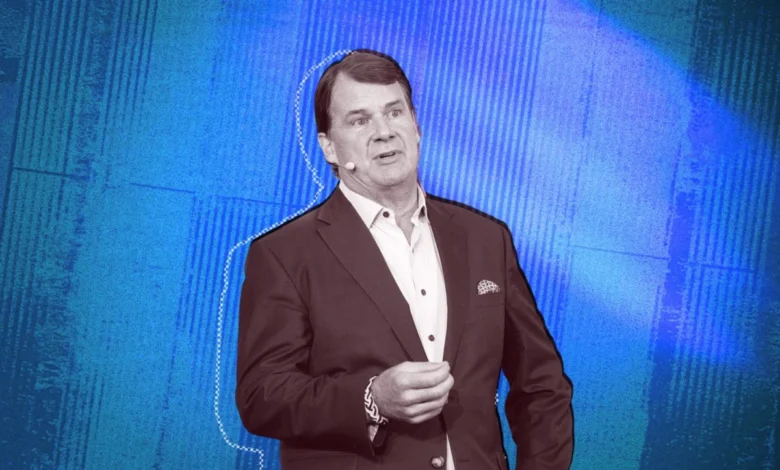
Ford CEO Jim Farley emphasized the significance of this move during a recent interview, describing it as one of the most pivotal announcements in the company’s 121-year history. According to Farley, the decision to embed Apple Maps and other software directly into the vehicle’s ecosystem is a strategic move to enhance user experience without adding financial burdens to the consumer. By integrating these systems at the factory level, Ford can offer high-end navigation and driver-assistance features as standard equipment, rather than as subscription-based add-ons that have become increasingly common in the industry.
The $30,000 Electric Pickup: A Strategic Target
The first vehicle to showcase this deep software integration will be a new, highly anticipated electric pickup truck. This project is being overseen by a specialized Ford group led by Alan Clarke, a former executive at Tesla who was instrumental in the development of the Model 3. The choice of Clarke to lead this initiative underscores Ford’s commitment to adopting a "software-first" mentality similar to that of its competitors in Silicon Valley.
One of the most ambitious goals of this project is its price point. Ford aims to bring this new electric pickup to market at approximately $30,000. In a market where the average price of an electric vehicle often exceeds $50,000, a $30,000 pickup would represent a major disruption. To achieve this, Ford is relying on the cost-saving benefits of the Apple partnership. By utilizing Apple’s existing software infrastructure for driver-assistance and navigation, Ford can significantly reduce its own research and development expenditures, allowing it to pass those savings on to the consumer. This strategy is critical as Ford seeks to recover from recent financial headwinds, including a reported $1.9 billion loss on its EV truck division.
Apple’s Strategic Pivot in the Automotive Sector
For Apple, this partnership represents a successful pivot in its long-rumored automotive strategy. For nearly a decade, the tech giant was believed to be developing its own physical vehicle under the internal codename "Project Titan." However, as the complexities of mass-scale automotive manufacturing became apparent, Apple shifted its focus toward becoming the primary software layer for the entire industry.
Eddy Cue, Apple’s Senior Vice President of Services and Health, noted that Ford is the first major automaker to adopt this specific tier of integrated software. However, he made it clear that Apple does not intend for this to be an exclusive arrangement. Apple’s goal is to create a standardized automotive operating system that can be licensed to other manufacturers, effectively doing for cars what the iOS ecosystem did for mobile telephony. By controlling the software that manages autonomous driving and cabin entertainment, Apple secures a permanent presence in the "third space"—the time consumers spend commuting—opening up vast new avenues for data and services revenue.
The Great Software Schism: Ford vs. GM and Tesla
The partnership between Ford and Apple highlights a growing divide in the automotive industry regarding software sovereignty. On one side of the schism are companies like Ford and Volvo, which are embracing partnerships with tech giants to accelerate innovation. On the other side are manufacturers like Tesla, Rivian, and General Motors, which are doubling down on proprietary systems.
General Motors recently made headlines by announcing it would phase out Apple CarPlay and Android Auto in its future electric models. GM’s strategy is to force users into its own "Ultifi" software ecosystem, allowing the company to retain 100% of the data generated by drivers and to capture 100% of the revenue from in-car digital purchases. Similarly, Tesla has never allowed Apple or Google software to run natively in its cars, preferring to maintain a closed ecosystem that it controls from top to bottom.
Ford’s approach is a pragmatic middle ground. While it cedes some control to Apple, it gains access to a world-class user interface that millions of consumers already know and trust. For Ford, the risk of losing "data control" is outweighed by the immediate benefit of offering a superior, bug-free software experience that can be updated over-the-air, a feat that many traditional car companies have struggled to achieve on their own.
Economic Implications and Market Dynamics
The disparity in market valuation between these entities provides context for why Ford is seeking such a partnership. At the time of the announcement, Apple’s market capitalization stood at a staggering $4.7 trillion, reflecting its dominance in the global economy. In contrast, Ford’s market cap is approximately $56 billion, and General Motors sits at $72 billion.
This "valuation gap" illustrates the immense resources Apple can pour into software development—resources that even the largest automakers cannot match. By partnering with Apple, Ford effectively "rents" a multi-billion dollar R&D department. This allows Ford to focus its capital on its core competencies: manufacturing, supply chain management, and vehicle chassis engineering.
Furthermore, the integration of Apple software could serve as a powerful tool for customer retention. For a consumer who is already deep within the Apple ecosystem—using an iPhone, Mac, and Apple Watch—the transition into a Ford vehicle that functions like their other devices is seamless. This "ecosystem lock-in" is a powerful psychological factor that could give Ford a competitive edge over GM or Tesla for the loyal Apple user base.
Chronology of the Ford-Apple Relationship
The path to this week’s announcement has been building for several years.
- 2014: Apple introduces CarPlay, and Ford is among the first to announce support for the feature in its Sync 3 infotainment systems.
- 2021: Ford hires Alan Clarke from Tesla, signaling a move toward more advanced, software-integrated vehicle platforms.
- 2022: Apple previews the "next generation of CarPlay" at its Worldwide Developers Conference (WWDC), showing a system that can take over all the screens in a car, including the instrument cluster.
- 2023: General Motors announces its plan to drop Apple CarPlay, creating a vacuum that Ford and Apple move to fill.
- 2024: Ford and Apple engineers begin deep-level collaboration on the "Skunkworks" EV pickup project.
- 2025 (Projected): The first Ford vehicles with embedded Apple autonomous and navigation software are expected to arrive at dealerships.
Analysis of Future Implications
The long-term implications of this partnership could redefine the automotive landscape. If Ford’s $30,000 electric pickup is a commercial success, it will prove that the path to affordable EVs lies in software partnerships rather than internal development. It also puts pressure on other legacy automakers to choose a side: spend billions to develop inferior software in-house or partner with a tech giant and risk losing brand identity.
There are also significant regulatory and safety considerations. As Apple software begins to control driver-assistance systems, questions regarding liability in the event of a software-related accident will move to the forefront. Currently, automakers bear the brunt of legal responsibility for vehicle performance. A deeper integration suggests that tech companies may eventually have to share in that liability, a move that would require a massive shift in current legal frameworks.
For the consumer, the immediate benefit is clear: a more intuitive, powerful, and connected driving experience. As vehicles transition from mechanical machines to "computers on wheels," the partnership between Ford and Apple suggests that the future of the car is not just about how it drives, but about the digital world it enables inside the cabin. Ford’s bet is that by inviting Apple into the driver’s seat, it can secure its own future in an increasingly autonomous world.
Related posts: