How AI Creates a Capability Mirage
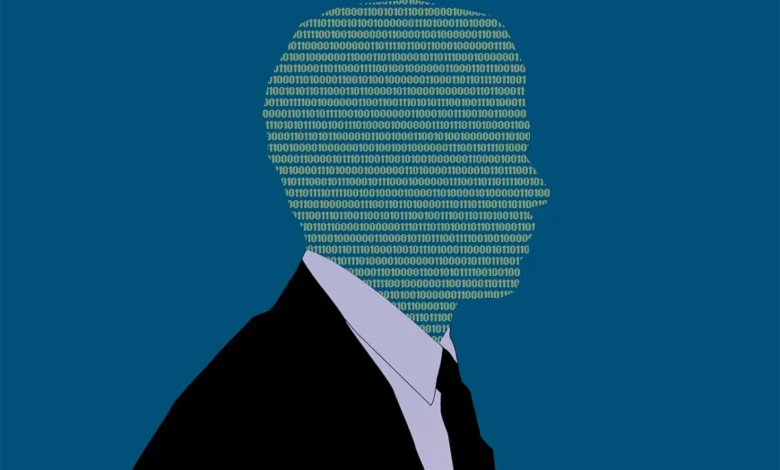
The modern workplace is undergoing a seismic shift, driven by the rapid integration of generative artificial intelligence. While these advanced tools promise unprecedented boosts in productivity, a darker, more insidious phenomenon is taking root across corporate boardrooms and open-plan offices alike. According to a joint study conducted by organizational consulting firm Anthrome Insight and culture transformation specialist Axialent, the widespread adoption of AI is quietly breeding what experts call "capability mirages"—workplaces that project an illusion of high performance and competence while the actual skills of employees slowly atrophy beneath polished, machine-generated outputs.
Authored by workplace researchers Melissa Swift, Teryluz Andreu, and Dolores Hernandez, the study draws alarming parallels between current corporate trajectories and historical facades like dry rot, Potemkin villages, and the Wizard of Oz. Much like a wooden structure compromised from the inside by decay, modern enterprises risk looking pristine and fully functional on the surface until a critical stress test reveals a hollow foundation.
The Illusion of Competence: How AI Amplifies Mediocrity
For decades, organizational leaders evaluated the capabilities of their teams through tangible deliverables—memos, financial models, codebases, marketing strategies, and presentations. These work products served as reliable proxies for individual skill sets, critical thinking, and technical proficiency. However, generative AI has fundamentally broken this diagnostic mechanism. Today, any employee, regardless of their foundational knowledge or baseline expertise, can leverage large language models to produce superficially polished outputs in seconds.
This dynamic creates a dangerous masking effect. Stephanie Antonian, founder and CEO of AI product development firm Aestora, highlighted the core dilemma in the Anthrome Insight-Axialent findings. "The upside [of AI tools] is that everyone can produce a level of work that’s pretty good for basic tasks," Antonian noted. "It looks pretty good. But then you don’t know what’s underneath it, how resilient that piece of work is, or whether it’s going to give you an additional liability."
Instead of acting as a true capability improver, artificial intelligence frequently acts as an amplifier. If an employee possesses deep domain expertise, AI can accelerate their workflow exponentially. Conversely, if an employee lacks fundamental understanding, AI can effortlessly mask that deficiency behind articulate phrasing and structured layouts. The result is an organizational ecosystem where leaders can no longer reliably distinguish between genuine competence and automated mimicry.

The Erosion of Trust and Team Dynamics
The implications of this capability mirage extend far beyond individual performance evaluations; they strike at the heart of organizational culture and interpersonal trust. High-functioning teams rely on a shared, accurate understanding of who possesses specific skills. When team members collaborate on complex projects, they must trust that their colleagues can independently verify data, troubleshoot unexpected errors, and handle specialized responsibilities.
When AI introduces ambiguity into skill assessment, interpersonal trust begins to erode. Colleagues become suspicious of one another’s contributions, wondering how much of a peer’s output was genuinely authored versus synthetically generated. This skepticism fosters an environment of psychological unsafety, where team members hesitate to delegate tasks or rely on each other for critical problem-solving, fearing hidden vulnerabilities in the workflow.
Furthermore, when employees rely too heavily on AI to perform cognitive heavy lifting, their own capacity for critical analysis diminishes over time. Skills that are not practiced are eventually lost—a neurological and professional reality known as skill atrophy. Organizations that sacrifice human cognitive development for short-term AI efficiency may soon find themselves with a workforce incapable of auditing, correcting, or innovating beyond the parameters of machine-generated suggestions.
Background and Context of the AI Productivity Paradox
The tension between AI adoption and skill preservation has escalated rapidly since the widespread commercialization of generative AI models in late 2022. Initially heralded as an unmitigated boon for operational efficiency, enterprises rushed to integrate automated text, image, and code generators into daily operations. Surveys from major consulting firms throughout 2023 and 2024 consistently reported double-digit percentage increases in self-reported employee productivity.
However, as the novelty of these tools wore off, organizational psychologists and human resources leaders began noticing unintended secondary consequences. By 2025 and 2026, empirical research started shifting away from pure productivity metrics toward behavioral and cultural assessments. Studies like the Anthrome Insight-Axialent collaboration emerged to address a growing anxiety among executives: while output volume was rising, the depth of organizational knowledge and the resilience of human talent pipelines were coming under unprecedented strain.
Industry analysts have drawn comparisons to historical technological transitions, such as the widespread adoption of automated calculators in education or GPS navigation in transportation. While these tools eliminated tedious manual labor, they also led to measurable declines in mental arithmetic and spatial reasoning skills among successive generations. In the corporate sphere, the stakes are magnified, as complex problem-solving and strategic adaptability form the core competitive advantage of modern enterprises.

Identifying the Early Warning Signs of the Mirage Effect
To prevent the silent collapse of internal capabilities, leadership teams must actively monitor their organizations for symptoms of the capability mirage. Experts outline several key indicators that suggest an over-reliance on artificial intelligence at the expense of genuine skill development:
- The Homogenization of Work Output: Deliverables across different departments begin to sound identical, losing distinctive human voice, strategic nuance, or creative risk-taking.
- The "Black Box" Problem: Employees struggle to explain the methodology or underlying data behind their completed assignments, treating AI-generated recommendations as infallible truths rather than hypotheses requiring validation.
- Widening Competency Gaps During Crises: When automated systems encounter novel problems or edge cases that fall outside their training data, teams display a sudden, alarming inability to manually troubleshoot or adapt.
- Reluctance to Peer-Review: Team members avoid scrutinizing each other’s work closely, either out of politeness or fear of exposing their own lack of understanding regarding the underlying subject matter.
Strategic Solutions for Leaders: Balancing Innovation and Skill Preservation
Navigating the AI era requires a deliberate shift in management philosophy. Leaders can no longer assume that high output equals high capability. To ensure that both individuals and the broader organization remain genuinely competent, executives must implement structured interventions that protect and foster human skill development.
First, organizations must redefine performance metrics to value cognitive effort and process transparency alongside final deliverables. This includes encouraging "show your work" cultures where employees articulate their reasoning, debate alternative hypotheses, and manually verify AI-assisted outputs before submission.
Second, companies must invest in intentional friction. Just as physical muscles require resistance to grow stronger, human professionals need cognitive challenges to maintain and expand their expertise. Creating deliberate training environments where AI tools are temporarily restricted—allowing employees to practice foundational writing, financial analysis, or coding from scratch—ensures that core competencies do not wither away.
Finally, leadership must foster psychological safety around skill gaps. Employees must feel empowered to admit when they do not understand a concept or require deeper training, rather than using AI as a crutch to conceal knowledge deficits. By normalizing continuous learning and honest self-assessment, organizations can bridge the gap between polished digital facades and authentic human capability.
As artificial intelligence continues to mature, the defining challenge for business leaders will not be determining how much work can be automated, but rather ensuring that human beings remain capable of leading, innovating, and thinking independently when the algorithms fall short.