Waymo Resumes San Francisco Robotaxi Operations Following Brief Suspension Amid Major Citywide Power Outage

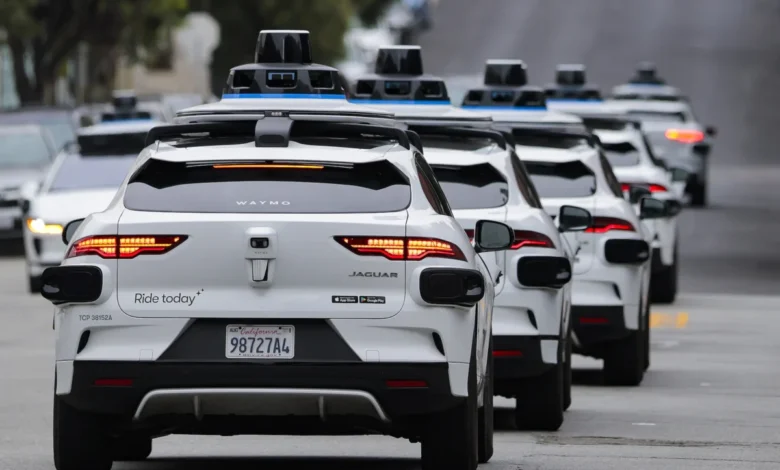
Waymo, the autonomous driving subsidiary of Alphabet Inc., officially resumed its robotaxi services in San Francisco on the afternoon of July 18, 2026, following a strategic one-hour suspension necessitated by a significant power outage. The electrical failure, which disrupted service for approximately 7,000 Pacific Gas and Electric (PG&E) customers across various city neighborhoods, prompted the company to implement "temporary adjustments" to its fleet operations to ensure passenger safety and prevent traffic congestion. While the majority of the service has been restored, Waymo confirmed that certain high-speed routes, specifically freeway segments, remained unavailable in the immediate aftermath of the outage as the company continued to monitor local infrastructure stability.
The disruption began midday when a localized failure in the PG&E grid led to a blackout affecting residential and commercial sectors. For an autonomous vehicle (AV) provider like Waymo, a power outage represents a complex operational challenge. Traffic signals in affected zones often default to a flashing red or go completely dark, requiring vehicles to treat intersections as all-way stops. While Waymo’s software is programmed to handle these scenarios, the unpredictable behavior of human drivers during outages creates a high-risk environment that the company chose to mitigate through a temporary operational pause.
Chronology of the Operational Suspension
The timeline of the July 18 incident highlights Waymo’s increasingly cautious approach to urban disruptions. At approximately 12:00 PM PDT, reports began to surface regarding a power failure in San Francisco. Shortly thereafter, Waymo users began receiving notifications via the mobile app stating that service was "temporarily paused" due to external conditions.
By 12:30 PM PDT, social media reports showed screenshots of the Waymo app informing customers that "freeway routes are unavailable." This specific restriction suggested that while surface street navigation was being managed, the company was not yet confident in the fleet’s ability to navigate high-speed transitions or off-ramps in areas where lighting or sensor-linked infrastructure might be compromised.
At 1:30 PM PDT, a Waymo spokesperson clarified that the company had decided to pause service for roughly one hour. This window allowed the company’s operations center to assess the scale of the PG&E outage and coordinate directly with San Francisco municipal officials. "We are making temporary adjustments to our service while we monitor local conditions," the spokesperson stated. "We know riders depend on us, and we will return to normal operations as soon as possible."
Impact of the PG&E Outage on San Francisco Infrastructure
The outage affected a significant portion of the city’s northeastern and central corridors, areas where Waymo maintains a high density of vehicle deployments. According to PG&E, the interruption left 7,000 customers without power, including several major transit arteries. When power is lost, the "smart" infrastructure that assists in the orchestration of urban mobility—including connected sensors and synchronized traffic lights—can fail, leaving autonomous systems to rely solely on their onboard suite of Lidar, cameras, and radar.
For Waymo, the decision to pause was likely informed by the need to prevent "cluster events," where multiple autonomous vehicles might converge on a single darkened intersection and execute overly cautious maneuvers, leading to localized gridlock. In previous years, San Francisco has seen instances where AVs became "confused" by emergency flares or downed power lines, resulting in vehicles stopping mid-street and requiring manual recovery by "Roadside Assistance" teams.
Historical Context and Previous Technical Challenges
This is not the first time that environmental or infrastructural failures have forced Waymo’s hand in San Francisco. The July 18 suspension follows a series of high-profile incidents that have intensified the scrutiny of autonomous vehicle deployment in dense urban environments.
In December 2025, a similar citywide blackout led to several Waymo vehicles stalling on active roadways. During that event, the vehicles entered a "safe state" mode—a fail-safe designed to stop the car when the onboard computer detects an environment it cannot navigate with 100% certainty. However, when multiple cars entered this state simultaneously during a blackout, they effectively blocked emergency vehicle access and exacerbated traffic woes.
Furthermore, the Fourth of July celebrations earlier in 2026 saw a significant traffic fiasco near the Golden Gate Bridge. During a fireworks display, the surge in pedestrian traffic and unconventional vehicle movements caused several robotaxis to stop moving, paralyzing traffic for hours. These recurring issues have created a rift between tech advocates and local governance, leading to a demand for more robust fail-over protocols.

Political and Regulatory Reactions
The frequency of these "unplanned stops" has drawn the ire of San Francisco’s leadership. Mayor Daniel Lurie has been a vocal critic of the current regulatory framework, which largely places oversight in the hands of California state agencies rather than municipal authorities.
Following the July 18 outage, Mayor Lurie reiterated his call for tougher state regulations. "We need to adequately address how autonomous vehicles operate during major incidents, planned or not," Lurie stated in a press briefing. The Mayor’s office is pushing for the California Public Utilities Commission (CPUC) and the Department of Motor Vehicles (DMV) to grant the city more power to dictate operational limits during emergencies.
Lurie’s proposed "Emergency Response Protocol for Autonomous Systems" would require companies like Waymo and its competitors to share real-time telemetry with the city’s Emergency Operations Center. It would also mandate that AV companies maintain a specific ratio of human "recovery" personnel to active vehicles on the road to ensure that stalled cars can be moved within minutes rather than hours.
Technical Implications of Infrastructure Failure on AVs
From a technical standpoint, the July 18 incident underscores the limitations of current Level 4 autonomous systems when stripped of external infrastructure support. While Waymo’s "Driver" (the AI system) does not technically require a connection to the city’s power grid to operate—since it relies on internal sensors—the loss of external cues like traffic light colors and pedestrian signals significantly increases the "computational load" on the vehicle.
When a traffic light is out, the AI must use visual inference to determine if an intersection is clear. It must also predict whether human drivers will follow the legal requirement to treat the intersection as a four-way stop. If the AI detects a high level of entropy or unpredictable behavior from surrounding actors, it is programmed to prioritize safety over progress, often resulting in the vehicle pulling over or stopping.
Industry analysts suggest that until "Vehicle-to-Everything" (V2X) technology is fully integrated with independent battery backups for city sensors, robotaxis will remain vulnerable to power grid instability. The "temporary adjustments" mentioned by Waymo likely involved re-routing vehicles away from the densest blackout zones and limiting the fleet to areas where infrastructure remained online.
The Economic and Social Impact of Robotaxi Reliability
As Waymo continues to scale its operations—moving from a niche experimental service to a core component of San Francisco’s transportation matrix—the stakes for reliability are higher than ever. Thousands of residents now rely on these vehicles for commuting, medical appointments, and late-night travel.
A one-hour suspension might seem minor, but it highlights the fragility of an AI-dependent transit system. If robotaxis are to eventually replace private car ownership, they must demonstrate a level of resilience comparable to, or better than, human-operated ride-hail services like Uber or Lyft. Human drivers can intuitively navigate a blackout by observing hand signals from police officers or following the flow of traffic; teaching an AI to recognize an improvised hand signal from a construction worker or a police officer in low-light conditions remains one of the "long-tail" challenges of the industry.
Future Outlook for Waymo in San Francisco
As of the evening of July 18, Waymo reported that service had returned to near-normal levels, though they continued to advise users that wait times might be slightly longer as the fleet redistributed itself across the city. The company has pledged to work with PG&E and the City of San Francisco to better integrate their operational alerts with the city’s utility reporting systems.
The incident serves as a critical data point for the ongoing debate over the "Right to Operate" for autonomous fleets. While Waymo’s proactive decision to pause service prevented a repeat of the December 2025 stalls, it also proved that the technology is not yet "set it and forget it."
Moving forward, the industry can expect a push for "Infrastructure-Independent Autonomy," where vehicles are stress-tested in environments with zero external signaling. Until then, the residents of San Francisco will remain the primary test subjects for how a 21st-century city balances the promise of autonomous mobility with the unpredictable realities of aging urban infrastructure. Waymo’s ability to navigate these "edge cases"—like the July 18 power outage—will ultimately determine whether the public and regulators grant them the permanent green light they seek.