Slack Technologies Expands Collaborative Development Ecosystem with General Availability of the Slack Code API for Third-Party AI Agents


The landscape of software engineering is undergoing a structural transformation, shifting from isolated, single-player interactions with artificial intelligence toward shared, collaborative environments where humans and machine agents work side by side. Slack, a premier enterprise communication platform owned by Salesforce, has officially announced the general availability of the Slack Code API across all company plans. This major enterprise release follows the initial August rollout of Slack Code and specialized code channels, a feature set originally developed in close partnership with prominent industry leaders such as Anthropic, Cognition, GitHub, and Vercel.
By opening these robust application programming interfaces to the wider developer community, Slack aims to eliminate the traditional fragmentation associated with integrating third-party coding agents. Previously, engineering teams attempting to incorporate customized AI assistants into their daily operations faced significant architectural hurdles. Communication platforms typically restricted agent interactions to cramped standard message threads or direct messages. When an autonomous agent needed to process massive debugging logs, display a comprehensive fifty-line code difference, or outline a complex multi-step execution plan, standard chat layouts quickly became unmanageable. Furthermore, developers lacked the necessary framework to deliver a clean, multiplayer interface to their own customers, while corporate security organizations struggled to balance the productivity gains of artificial intelligence with rigorous governance and access policies.
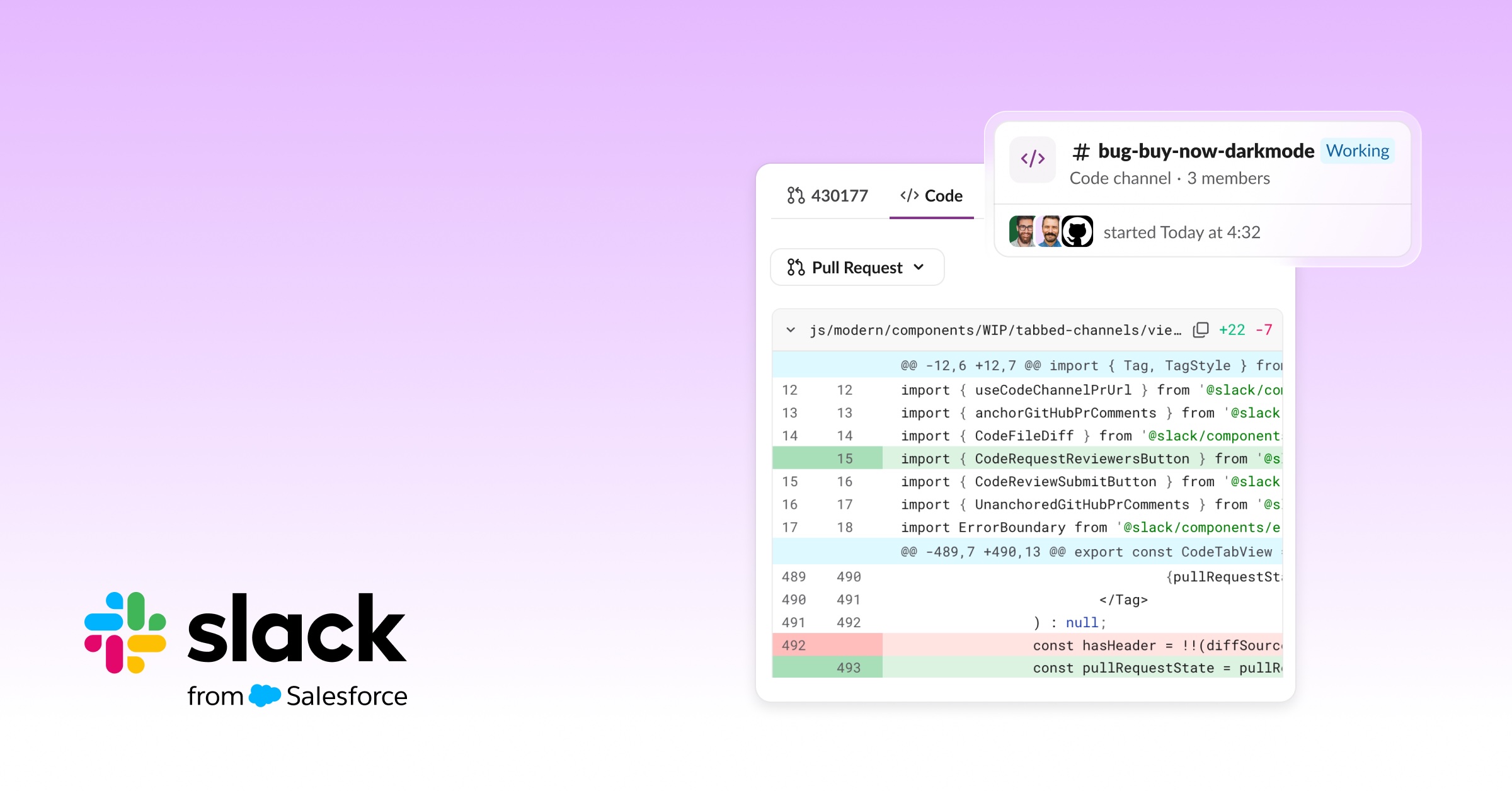
The newly released Slack Code API directly addresses these engineering and administrative bottlenecks. By allowing developers to embed custom or marketplace-ready agents directly into dynamic, temporary workspaces known as code channels, the platform bridges the historical gap between asynchronous chat tools and integrated development environments.
Chronology of the Collaborative AI Movement
The genesis of this development paradigm can be traced to the rapid proliferation of autonomous coding assistants throughout 2023 and 2024. While generative artificial intelligence dramatically accelerated individual coding output, industry analysts increasingly noted a profound limitation: software engineering is inherently a team sport. When a developer interacted with an AI model within a private tab, local integrated development environment extension, or isolated browser window, that critical contextual knowledge remained trapped in a silo. Other team members had no visibility into why specific architectural decisions were made, how code modifications were generated, or what debugging steps the agent took.
Recognizing this friction, Slack launched its initial suite of code channels in August, introducing a multiplayer framework designed to bring artificial intelligence into the open channels where teams already communicate. Early implementation metrics provided by launch partners demonstrated immediate utility. GitHub Copilot, one of the primary participants in the initial rollout, reported that it automatically establishes a dedicated code channel in approximately 30 percent of its total agent sessions. This statistic highlights that nearly one-third of all coding tasks tackled by the assistant are sufficiently complex to warrant a dedicated, task-oriented workspace where engineers can collaborate from initial concept to final deployment.
Following this successful pilot phase, the demand from enterprise customers and external developers surged. More than 150 partner organizations and corporate clients formally requested access to build custom code channel experiences tailored to their proprietary AI models. Until now, only a select group of launch partners possessed the technical access required to deliver these native capabilities. The general availability of the Slack Code API democratizes this infrastructure, enabling any enterprise developer or independent creator to programmatically initiate code channels, invite relevant engineering personnel, populate files, stream real-time operational updates, and automatically archive workspaces upon task completion.
Technical Architecture and Operational Mechanics
The technical design of the Slack Code API prioritizes developer velocity and operational flexibility. Developers can integrate the API directly into their agent manifest files, establishing core parameters such as channel naming conventions, custom commands, and interactive views. When a software engineer or product manager mentions an agent within a standard communication channel or direct message, the agent evaluates the complexity of the request. If the task requires deep analysis or multi-step execution, the system programmatically generates a dedicated code channel, embedding relevant bookmarks, documentation, and technical artifacts to ensure human observers can easily follow the trajectory of the work.
As the agent executes its programming, it streams continuous updates and status reports directly into the workspace interface. Crucially, the platform manages the user interface layer, allowing developers to skip the laborious process of designing custom user interfaces for code diffs, HyperText Markup Review previews, and step-by-step thinking sequences. The API infrastructure natively supports the visualization of these complex data structures.
Security and governance requirements have also been incorporated into the core architecture of the API. Rather than forcing organizations to establish a separate, complex access control model for artificial intelligence tools, the Slack Code API inherits the existing permissions, security policies, and administrative controls of the host channel. Enterprise IT leaders gain complete oversight, ensuring that every high-stakes code modification requires explicit human authorization. Furthermore, because all agent activities, interventions, and human steering maneuvers occur within a searchable, persistent channel archive, institutional knowledge is preserved long after the task concludes and the workspace is archived.
Industry Reactions and Enterprise Implications
Early adopters and enterprise technology leaders have responded enthusiastically to the new programming interface, emphasizing its potential to streamline complex incident responses and development pipelines. Engineering representatives from partner organizations have praised the platform for its intuitive architecture and alignment with modern software delivery workflows.
Industry analysts suggest that the broader availability of these integration tools signals a pivotal maturation phase in the enterprise software market. As businesses move past the initial novelty of conversational chatbots, the primary competitive advantage shifts toward integrated, workflow-native artificial intelligence. By positioning Slack as an agent-neutral hub, the platform allows enterprises to seamlessly swap underlying large language models or specialized coding agents without disrupting established team workflows or requiring employees to learn new interface paradigms.
This interoperability is further reinforced by upcoming platform enhancements. Slack has announced forthcoming updates to the pull request experience within code channels, extending the multiplayer philosophy through the final stages of deployment. Engineering teams utilizing GitHub will soon be able to formally request code reviews, share comprehensive context derived from agent execution logs, and execute bi-directional comment synchronization between Slack and GitHub repositories. Once all continuous integration tests pass and peer approvals are secured, developers receive a direct prompt to merge the pull request without ever navigating away from the Slack interface.
Real-World Application: Transforming Incident Response and Triage
To fully understand the practical implications of the Slack Code API, industry experts point to high-pressure scenarios such as middle-of-the-night production incidents. In a traditional software engineering environment, an automated monitoring system might trigger an alert at 2:00 a.m., waking an on-call engineer who must manually inspect server logs, isolate the failing microservice, and write a hotfix in isolation.
Under the new paradigm empowered by the Slack Code API, a custom observability agent can autonomously intercept the production alert, instantly instantiate a dedicated code channel, ingest the relevant error logs, and begin drafting a targeted remediation plan. When the on-call engineer wakes up, they can review the agent’s progress in real time. If the engineer notices that the model is analyzing an incorrect service dependency, they can steer the agent mid-task with a simple chat message. Simultaneously, a domain expert who specializes in that specific backend service can join the channel and supply missing context. By the time leadership reviews the incident during morning standup, the team possesses a fully vetted fix, an immutable audit trail documenting how the solution was developed, and a clear record of collaborative decision-making.
Similar operational efficiencies apply to routine bug triage, configuration management, and DevOps rollback procedures. By shifting these tasks from solitary exercises into transparent, collaborative workspaces, organizations prevent critical technical knowledge from evaporating into private, stateless terminal sessions. Instead, operational intelligence compounds organically across the entire team.
Outlook and Future Accessibility
The general availability of the Slack Code API marks a definitive step toward a more integrated, cooperative future for software development. By breaking down the barriers that historically kept artificial intelligence confined to single-player applications, the platform enables cross-functional teams to harness the speed of automation while retaining rigorous human oversight.
The Slack Code API is currently available to developers and enterprise organizations across all subscription tiers. As independent developers, enterprise IT departments, and third-party vendors begin deploying their proprietary agents onto the infrastructure, the boundaries between communication platforms and development environments will continue to blur, establishing a new standard for how modern engineering teams conceptualize, build, and deploy software.
Related posts: