After accusations of selling ‘perv glasses,’ Meta prepares to sell a pair without a camera

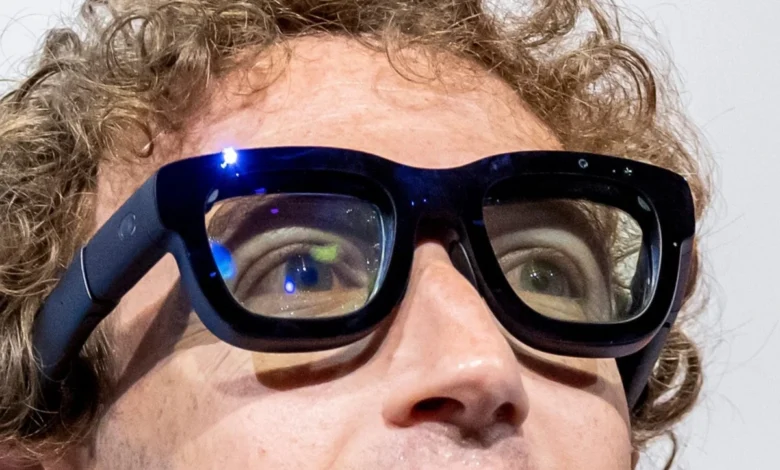
The Evolution of Meta’s Wearable Strategy
Since the debut of its first-generation smart glasses, Meta has sought to establish a foothold in the augmented reality (AR) and wearable market, aiming to provide a hands-free alternative to the smartphone. While the initial camera-equipped models proved to be a commercial success relative to other industry entrants, they became flashpoints for privacy advocates. Critics frequently labeled the devices "pervert glasses," reflecting widespread discomfort with the possibility of being recorded in public or private spaces without explicit consent.
This friction has persisted throughout the company’s product development lifecycle. By integrating cameras, Meta inadvertently positioned itself at the center of a cultural debate regarding surveillance, consent, and the boundaries of personal technology. The development of the Luna glasses represents a calculated effort to broaden the addressable market by removing the specific hardware feature that has arguably hindered wider mainstream adoption.
Technical Specifications and AI Integration
According to reports from The Information, the Luna model will maintain the core "smart" capabilities of its predecessors without the visual recording hardware. The hardware will reportedly include an array of six microphones, enabling sophisticated voice interaction with Meta’s AI chatbot. Users will be able to engage with the assistant through a physical button located on the frame, which triggers the AI to process commands and provide real-time information.
This transition marks a shift in Meta’s philosophy for the product line: prioritizing the glasses as an "AI-first" device rather than a "capture-first" device. By focusing on auditory input and AI-driven assistance—such as real-time language translation, contextual navigation, or personal scheduling—Meta aims to provide the utility of its AI ecosystem without the ethical baggage of camera-enabled recording.
Chronology of Meta’s Hardware Ambitions
The path to the Luna release is part of a multi-year strategy driven by CEO Mark Zuckerberg’s vision for the future of computing.
- September 2021: Meta launches its first-generation Ray-Ban Stories, introducing camera-equipped eyewear to the market.
- October 2023: The company releases the second-generation Ray-Ban Meta smart glasses, which feature improved audio quality and integrated AI capabilities, marking the beginning of significant revenue growth for its wearables division.
- April 2026: Meta’s quarterly earnings report highlights that Reality Labs, the division responsible for AR and VR hardware, continues to post substantial financial losses, emphasizing the cost of aggressive R&D investment.
- September 2026: Reports emerge regarding the "Luna" project just days before the scheduled Meta Connect event in Menlo Park.
This timeline underscores the company’s resilience in the face of mounting costs. Despite the fiscal strain on Reality Labs, Meta remains committed to the hardware category, viewing it as the primary interface for its future AI services.
Market Context and Industry Growth
The smart glasses market is currently undergoing a transformation. While many competitors have struggled to find a sustainable business model, Meta has managed to stay at the front of the pack, aided by its partnership with EssilorLuxottica and its established social media presence. According to recent industry insights from firms like Citigroup, AI-integrated glasses are being viewed as the "next fast-growing edge device," capable of bridging the gap between mobile computing and the physical world.

However, industry data remains mixed. While adoption among early tech enthusiasts is rising, the general public remains hesitant. Concerns range from the high cost of entry to a fundamental lack of clarity regarding the utility of these devices. Many consumers are still asking: "Why do I need these if I have a phone in my pocket?" By introducing a lower-cost or more socially acceptable model like Luna, Meta is attempting to answer that question by reducing friction.
Economic and Privacy Implications
The decision to pivot to a camera-free model has clear economic implications for Meta. The company has been burning a "gargantuan" amount of money on its Reality Labs division, and for these investments to reach break-even status, the products must achieve mass-market appeal. Privacy concerns have acted as a ceiling for that growth. By removing the cameras, Meta is effectively lowering the barrier to entry for consumers who are uncomfortable with the surveillance implications of existing hardware, potentially tapping into corporate or educational sectors where camera-equipped devices are often prohibited.
Furthermore, the focus on the Muse AI agent suggests that Meta is not just selling hardware; it is selling access to its artificial intelligence platform. By embedding microphones into a wearable device, Meta ensures that its AI is available to users at any moment, deepening the integration of its ecosystem into the user’s daily life.
Official Responses and Future Outlook
Meta has remained relatively quiet regarding the specifics of the Luna project, typical of its pre-event strategy. When reached for comment, representatives for the company did not provide specific details, maintaining their focus on the upcoming Meta Connect event.
Observers expect that the event in Menlo Park next week will serve as the primary platform for announcing the future of the company’s wearable roadmap. The presentation will likely emphasize the synergy between the new hardware and the advancements in Meta’s large language models.
The success of the Luna model will ultimately depend on the quality of the AI experience. If the six-microphone array and the AI-agent integration can provide tangible, everyday value—such as seamless information retrieval or productivity assistance—the device could serve as a model for how "smart" wearables can exist without the inherent controversy of visual recording.
Broader Societal Impact
The introduction of camera-free smart glasses is a significant signal to the tech industry that privacy-conscious design is no longer just a peripheral concern, but a core competitive advantage. As developers and manufacturers continue to experiment with wearable tech, the industry may see a bifurcation: high-end devices designed for creators and photographers, and "lifestyle" devices designed for communication and AI interaction.
The move also highlights the power of public perception in shaping hardware evolution. Meta, a company often criticized for its data collection practices, is essentially using a product design choice to rehabilitate its image among privacy-focused users. Whether this shift will be enough to satisfy regulators and privacy advocates remains to be seen. As the company prepares for its annual developer event, the tech world will be watching to see if "Luna" can truly change the narrative surrounding Meta’s long-term hardware strategy. The outcome of this experiment will likely influence the direction of the entire wearable market for years to come, as companies continue to debate the balance between utility, convenience, and the fundamental right to privacy in an increasingly digitized society.
Related posts: