The professional landscape of 2026 is defined by a paradoxical environment where the demand for rapid skill acquisition is colliding with a profound shortage of time. As artificial intelligence continues to permeate every facet of corporate operations, the traditional paradigms of professional development are undergoing a mandatory transformation. According to the TalentLMS 2026 Annual L&D Benchmark Report, 65% of the modern workforce reports that their professional expectations have surged in the last twelve months, yet more than half of these individuals cite a lack of available time as the primary barrier to effective upskilling.
This tension between rising expectations and shrinking capacity has elevated employee training from a secondary human resources function to a critical business survival strategy. With 73% of employees explicitly stating that robust training opportunities are a deciding factor in their decision to remain with an organization, learning and development (L&D) departments are now tasked with delivering high-impact, time-efficient, and highly relevant educational content that integrates seamlessly into the daily workflow.
The Evolution of the Corporate Learning Paradigm
Historically, corporate training was characterized by episodic, classroom-based events that often disrupted productivity. However, the current economic climate—marked by rapid AI integration and shifting market requirements—demands a more agile approach. The "one-size-fits-all" model has been largely discarded in favor of personalized, adaptive learning paths that leverage data analytics to match content with individual performance gaps.
The urgency for this shift is supported by recent labor market data. While 90% of managers believe they possess a comprehensive understanding of their team’s skill sets, only 69% of employees concur, indicating a significant "visibility gap." This misalignment often leads to inefficient training investments, where companies deploy resources toward skills that are either already possessed or irrelevant to the employee’s current trajectory.
Top Ten Training Methods Optimized for 2026
To bridge the gap between organizational goals and individual capability, leading firms are adopting a multi-modal approach. The following ten methodologies represent the current standard for high-performance L&D programs.
1. Integrated On-The-Job Training (OJT)
OJT remains the gold standard for practical skill acquisition. In 2026, this method has evolved beyond simple observation. It is now highly structured, incorporating real-time feedback loops and AI-assisted performance monitoring. By embedding learning into the completion of actual business tasks, organizations ensure that employees are not just learning theory, but applying it to the specific technological stack and protocols of their roles.
2. Blended Instructor-Led Training (ILT)
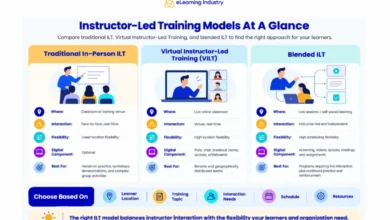
While remote work has reduced the frequency of traditional, room-based instruction, ILT has pivoted to a "blended" model. Live sessions are now frequently paired with pre-course digital modules and post-session virtual practice. This hybrid structure is particularly effective for complex, sensitive topics such as DEI initiatives or leadership development, where peer-to-peer dialogue and real-time instructor clarification are essential.
3. Targeted Job Shadowing
Job shadowing has been revitalized through the use of digital observation tools. By pairing junior staff with senior mentors for specific project cycles, companies facilitate a transfer of tacit knowledge—the "how-to" nuances that manuals cannot capture. When combined with clearly defined learning objectives, shadowing becomes a measurable and cost-effective method for onboarding and succession planning.
4. Gamified Skill Development
Gamification in 2026 is no longer about superficial rewards; it is about psychological engagement. By utilizing leaderboards, level advancement, and team-based challenges, organizations are seeing increased completion rates in technical training areas such as cybersecurity and data compliance. These systems provide immediate gratification and foster a sense of progress, which is critical in sustaining motivation over long-term training cycles.
5. Data-Driven eLearning
Modern eLearning platforms have moved beyond static video libraries. They are now dynamic ecosystems that use predictive algorithms to recommend content based on an employee’s current role, past performance, and career aspirations. By automating the delivery of content, organizations reduce the time spent on administrative tasks and ensure that every minute of training is highly relevant to the learner.

6. Microlearning for Just-In-Time Support
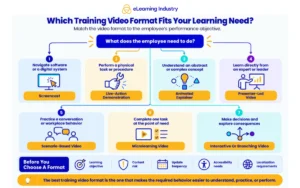
Microlearning addresses the time-scarcity crisis by delivering information in short, digestible segments. In 2026, the trend is "just-in-time" delivery, where an employee receives a 90-second instructional burst exactly when they encounter a specific hurdle—such as utilizing a new AI feature or navigating a complex software interface—rather than weeks after the need has passed.
7. Risk-Free Simulation Training
In sectors such as healthcare, aviation, and finance, simulation has become a standard. By providing a digital, high-fidelity environment where employees can fail without consequence, companies accelerate the path to competency. These simulations provide a controlled space for "muscle memory" development, allowing staff to handle high-stakes situations with calm, practiced efficiency.
8. Role-Playing for Soft-Skill Mastery
As AI automates technical workflows, human-centric "power skills"—communication, empathy, and conflict resolution—have increased in market value. Role-playing is being utilized more frequently to help managers navigate difficult conversations, such as performance reviews or team restructuring. This method allows for a safe exploration of behavioral responses, building the emotional intelligence required for modern leadership.
9. Mentorship and Coaching Programs
Mentorship has transitioned from a loose networking arrangement to a formalized, metric-driven development strategy. By pairing high-potential employees with executive coaches, organizations ensure the transfer of institutional knowledge and the development of leadership pipeline. These programs are increasingly vital for remote and hybrid teams to maintain a sense of organizational culture and professional belonging.
10. Cross-Functional Cross-Training
Cross-training is proving to be an essential tool for organizational resilience. By rotating employees through different departments, companies create a more empathetic and collaborative culture. Furthermore, this practice provides a buffer against talent turnover, ensuring that essential skill sets are not siloed within a single individual or team.
Strategic Focus Areas for 2026
Beyond the methods themselves, the content of training is shifting toward three core pillars:
AI Literacy: The focus has moved from teaching employees how to use AI to replace human work, to empowering them to use AI as a force multiplier. This requires training on prompt engineering, ethical AI usage, and critical evaluation of AI-generated outputs.
Soft Skills Development: Because soft skills are harder to quantify, many firms are now integrating "skills-visibility" dashboards into their HR systems. By assigning measurable KPIs to communication and leadership metrics, companies are finally treating these skills with the same analytical rigor as technical proficiencies.
Sustainable DEI Initiatives: The annual diversity workshop is being replaced by continuous, integrated learning. Organizations are recognizing that inclusive culture is a daily practice, not a yearly mandate, and are moving toward embedding these principles into all facets of management training.
Implications for the Future of Work
The evidence suggests that the organizations that will thrive in the coming years are those that view training not as a cost center, but as a primary driver of operational performance. The shift toward "learning in the flow of work" suggests that the future of corporate education will be invisible, continuous, and highly personalized.
As the labor market continues to tighten and technology continues to evolve, the capacity for an organization to upskill its workforce will likely become the most significant differentiator between industry leaders and those left behind. The data is clear: investment in employee growth is no longer optional; it is the fundamental mechanism through which organizations maintain their competitive advantage in an increasingly complex and automated world.