Why the 2017 HR Tech Conference Represented a Watershed Moment for Industry Alliances and Partnerships

The 2017 HR Tech Conference stands as a historic inflection point in the evolution of human resources technology, marking a departure from siloed software development toward a collaborative ecosystem defined by strategic alliances. Having attended 18 of the past 20 iterations of this premier industry gathering, it is clear that 2017 was the most significant year for the maturation of the vendor landscape. While previous shows focused primarily on individual product innovation and direct sales, the 2017 event revealed a systemic shift: vendors are no longer operating as isolated entities, but as integrated components of a complex, interconnected HR technology stack.

The Evolution of the HR Tech Landscape
For two decades, the HR Tech Conference has served as the primary stage for showcasing the latest advancements in workforce management software. In the early years, the event was characterized by a "shootout" mentality, where vendors competed fiercely for market share through standalone product demonstrations and case studies. This era fostered a culture of accidental connections and ad-hoc collaborations. However, the rapid expansion of the industry—driven by the explosion of cloud computing, mobile-first applications, and the rise of specialized SaaS solutions—created a fragmentation that the traditional model could no longer support.
By 2017, the volume of vendors and the complexity of client requirements had surpassed the limits of what a single platform could deliver. The industry realized that the "best-of-breed" strategy, while beneficial for innovation, created a massive integration burden for HR professionals. Consequently, the conference floor transformed. Without a formal "Collaboration Zone" or mandated networking sessions, a grassroots movement took hold: vendors began actively seeking partnerships to streamline data flow, enhance user experience, and provide more comprehensive solutions to their mutual clients.

Chronology of a Shifting Paradigm
The transformation of the HR Tech Conference did not occur overnight. The following timeline illustrates the shifting priorities within the industry:
- 1997–2007 (The Era of Isolation): The focus remained on proprietary systems. Partnerships were rare and often limited to rigid, long-term legacy integrations.
- 2008–2014 (The Rise of SaaS and APIs): As companies migrated to the cloud, the necessity for data sharing became apparent. The "API-first" movement began to gain traction, setting the technical foundation for future alliances.
- 2015–2016 (The Realization of Complexity): Vendors acknowledged that clients were struggling with "app fatigue." The need for integrated workflows began to dominate executive-level conversations.
- 2017 (The Strategic Alliance Pivot): The 2017 conference served as the definitive pivot point. It was no longer about who had the best individual tool, but rather who possessed the most robust, connected ecosystem. The rise of marketplace platforms and the shift toward "coopetition" became the primary narrative of the event.
Strategic Perspectives from Industry Suppliers
To understand the implications of this shift, one must look at the strategic objectives of the suppliers present at the 2017 event. Interviews with key players like Lumesse, Leoforce, Cegid, and Symphony Talent revealed a common theme: the customer is the ultimate architect of the modern partnership.

Lumesse, represented by US Country Sales Manager Laura Fuller and Global Head of Partners and Alliances Kate Heath, emphasized that their product strategy is increasingly driven by client use cases. Whether it is integrating assessment tools like CEB, job distribution channels via Broadbean and eQuest, or analytics through Clickatell, Lumesse demonstrated a commitment to an agnostic, open-platform approach. Kate Heath noted that, compared to the conference two years prior, the urgency and volume of partnership requests had surged, signaling a market-wide recognition of the value of integrated ecosystems.
Similarly, Jack Spain of Leoforce highlighted the importance of the HR Open Standards committee. By participating in the recruiting work group, Leoforce demonstrated that modern success is tied to interconnectivity. The ability to integrate with various Applicant Tracking Systems (ATS) and data enrichment platforms is no longer a "value-add"—it is a baseline requirement for market entry.

Data-Driven Implications for the Industry
The rise of the partnership model is backed by structural changes in how software companies allocate their R&D budgets. As of 2017, industry data suggested that firms prioritizing partner-led growth saw significantly higher customer retention rates compared to those maintaining closed ecosystems.
The rationale is clear: when a software provider adopts an open API strategy, they lower the friction for their customers, allowing them to plug in the best solutions available rather than relying on a single, potentially inferior, native feature. This shift toward "coopetition"—where companies compete in some areas while collaborating in others—has enabled smaller, disruptive startups to enter the market with greater speed and efficiency.

Official Responses and the Future of Collaboration
The work of organizations like HR Tech Alliances, led by Ward Christman and Larry Cummings, has been instrumental in facilitating these connections. Their role is to provide a structured environment for companies to find and manage the complex web of alliances that define today’s enterprise software landscape.
During the 2017 conference, discussions moderated by leaders such as Steve LaMotta highlighted that partnerships are no longer just a marketing tactic; they are a fundamental business strategy. Mark Baker, EVP of Sales for Symphony Talent, echoed this sentiment, noting that the company’s focus has moved toward identifying partners who solve genuine customer problems rather than those simply looking to push a product. Their launch of a refreshed partner page and their commitment to open APIs demonstrate a shift from "selling features" to "selling solutions."

The Broader Impact: Why 2017 Mattered
The broader implications of this trend are significant for the HR profession. For years, HR departments were forced to act as systems integrators, manually stitching together disparate platforms to ensure data integrity and process efficiency. The 2017 HR Tech Conference signaled the beginning of the end for that manual burden.
As vendors continue to prioritize integration and strategic alliances, HR professionals can expect:

- Reduced Implementation Time: With pre-built integrations, the time-to-value for new software deployments will continue to decrease.
- Higher Data Integrity: Standardized APIs and collaborative data sharing reduce the risk of information silos and manual entry errors.
- Greater Innovation Velocity: By partnering with specialized startups, established vendors can bring new, disruptive technologies to their client base much faster than they could through internal R&D alone.
Conclusion: A New Era of Connectivity
The 2017 HR Tech Conference proved that the industry has matured beyond the hype of individual feature sets. The most successful organizations are those that embrace the reality of the modern digital workspace: a space that is collaborative, integrated, and inherently interconnected.
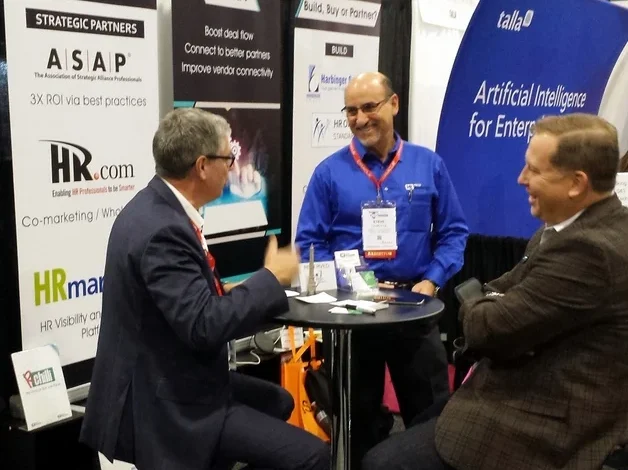
The absence of a formal "Collaboration Zone" at the 2017 show was ultimately irrelevant because the entire event had, in effect, become one. The conversations held in hallways, booths, and meeting rooms across the conference floor represented a fundamental realignment of the industry. As we look back, it is clear that 2017 was not merely another year of product announcements, but the year the HR technology industry officially embraced the necessity of the alliance ecosystem. The path forward for any HR technology firm is now inextricably linked to its ability to work with others, proving that in the digital age, the most competitive advantage is the ability to collaborate effectively.