Salesforce AI Research doubled Agentforce memory performance by creating a framework that tracks what an AI agent remembers.

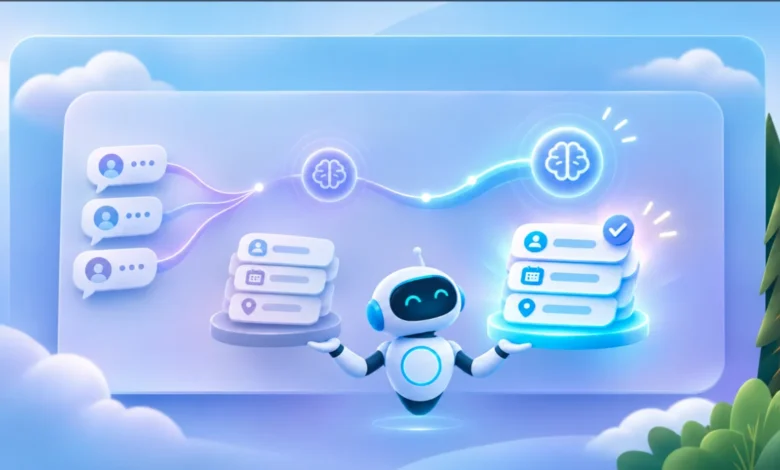
The rapid evolution of enterprise artificial intelligence has brought forth a critical bottleneck that transcends raw computational power or model parameter size: the challenge of temporal memory and contextual continuity. As organizations increasingly deploy autonomous AI agents to manage complex, long-term customer relationships, the ability of these digital assistants to accurately retain, update, and recall evolving information has become a paramount engineering hurdle. Addressing this fundamental limitation, Salesforce AI Research has successfully doubled the memory performance of its Agentforce platform. By pioneering a rigorous evaluation framework designed to track conversational retention over extended periods, the company has fundamentally transformed how enterprise AI handles dynamic data, setting a new benchmark for contextual reliability in commercial applications.
The Anatomy of Agent Amnesia in Enterprise Environments
To understand the magnitude of the breakthrough achieved by Salesforce, one must first examine the inherent fragility of standard artificial intelligence memory architectures. Consider a typical corporate scenario: in March, a enterprise customer informs a service representative that their regional headquarters is located in Bangalore. Several months later, in June, the client casually mentions that corporate operations have relocated to Pune. By July, when the customer submits a logistics or administrative query dependent on their geographical location, a flawed AI agent might easily default to the outdated March record, operating under the assumption that the office remains in Bangalore.
The root cause of this failure lies not necessarily in the AI’s inability to store data, but in its inability to synthesize temporal updates. In the eyes of a standard large language model, a reply formulated using an obsolete fact reads just as fluently and structurally sound as a reply built on current data. At best, this friction forces human customers into the tedious cycle of repeating themselves. At worst, it precipitates operational disasters—such as an internal employee directing an AI agent to arrange corporate catering for an upcoming meeting, only for the system to schedule delivery to a decommissioned facility.
In the high-stakes world of enterprise operations, such forgetfulness translates directly into operational friction, eroded customer trust, and tangible financial liabilities. Recognizing that localized prompt engineering and incremental model fine-tuning were insufficient to solve this systemic issue, Salesforce AI Research set out to engineer a comprehensive solution that would evaluate and rectify memory degradation across live deployment environments.
Building the Evaluation Framework and the ConvoMem Benchmark
Historically, evaluating AI memory has been a notoriously difficult endeavor for researchers and product developers alike. Traditional benchmarks often rely on isolated, single-turn prompts or short-lived dialogue sequences that fail to mirror the meandering, multi-session complexity of real-world business interactions.
To bridge this gap, Salesforce AI Research developed a sophisticated evaluation framework capable of answering a deceptively simple question: exactly how much does an AI agent actually remember across a protracted engagement? This proprietary framework systematically generates long, multi-session conversations embedded with specific, strategically planted factual assertions. These simulated scenarios are subsequently routed through the live Agentforce system, after which the agent is subjected to targeted queries that strictly depend on the successful retention and updating of those planted facts.
Crucially, this methodology tests the entire end-to-end pathway—from the precise moment a customer introduces a piece of information to the downstream moment the agent executes an action based upon it. This comprehensive tracking isolates whether a system failure stems from an inability to initially encode data or an inability to retrieve and apply stored knowledge during inference.
The foundation of this testing methodology draws heavily from ConvoMem, a public research benchmark released by Salesforce in 2025 via arXiv. By open-sourcing aspects of this benchmarking approach, Salesforce has contributed a vital evaluation tool to the broader artificial intelligence research community, helping establish standardized metrics for conversational persistence.
The September Deployment and the Mechanics of the Updated Memory Policy
The insights gleaned from this rigorous evaluation framework directly informed the development and optimization of Agentforce Memory, a core platform capability that achieved general availability in September.
Rather than overhauling the underlying neural architecture or swapping out foundational models—a disruptive and costly endeavor—the engineering team focused exclusively on refining the system’s memory policy. In the architecture of Agentforce, the memory policy functions as the set of governing rules that dictates what information the agent chooses to retain about a customer, how that information is cataloged, and how the system reacts when a user introduces conflicting or updated data.
Under the previous iteration, updates to customer data were frequently treated as supplementary facts filed adjacently to historical entries, creating a cluttered repository where old and new truths competed for relevance. The updated memory policy introduces a paradigm shift: it aggressively retains a higher volume of foundational customer statements while explicitly treating new data as a corrective override to existing knowledge rather than a mere additive note.
When subjected to evaluation on the live Agentforce system, the performance differential was stark. The updated policy successfully recalled 1.8 times as many static facts stated outright by customers compared to its predecessor. More impressively, it achieved a 2.2-fold improvement in recalling dynamic facts—those critical data points that evolve and change over time, such as addresses, preferences, and personnel assignments. Taken together, these enhancements effectively doubled the holistic quality of the end-to-end conversational memory.
Perspectives from Leadership and Research
The significance of conducting these evaluations within production environments, rather than isolated laboratory settings, cannot be overstated. While academic laboratories frequently manufacture synthetic datasets to fit pre-determined hypotheses, product organizations operate under the pressure of live systems processing active enterprise workloads.
Erik Nijkamp, director of research at Salesforce AI Research, emphasized the diagnostic clarity provided by the new testing paradigm. "An agent’s answer can’t tell you whether it failed to save something or failed to use what it saved," Nijkamp noted. "Testing the whole path is what separates those, and once you can see which one is failing, you can improve it by changing a policy instead of rebuilding the system."
Echoing this sentiment, Silvio Savarese, executive vice president and chief scientist at Salesforce, highlighted the operational discipline required to bridge academic theory with enterprise-grade software development. "In a research lab, you choose a problem and then go find data for it," Savarese stated. "In a product organization, the problem is already running, with customers on it, and the discipline is to measure it honestly before you change anything. That is what this work gives us, on a capability our customers depend on every day."
Real-World Enterprise Applications and Implications
The practical ramifications of this technological advancement are already manifesting across diverse industry verticals. For instance, a major global travel platform recently integrated the updated Agentforce framework to deploy a sophisticated internal, employee-facing AI assistant. This system is tasked with answering complex team inquiries, summarizing customer service cases, drafting professional correspondence, and automatically updating comprehensive customer relationship management (CRM) records.
With the deployment of the enhanced Agentforce Memory capability, the travel platform’s internal assistant seamlessly carries vital contextual threads across disparate conversations. Consequently, sales and support representatives are greeted with personalized, contextually relevant answers that eliminate the friction of starting interactions from scratch. This reduction in administrative overhead translates directly into measurable productivity gains and accelerated issue resolution times.
As artificial intelligence transitions from experimental novelty to core enterprise infrastructure, the expectations governing agent behavior are undergoing a profound maturation. Business organizations are no longer willing to tolerate stochastic hallucinations or historical amnesia from software systems that purport to manage vital workflows. By establishing a rigorous, empirical standard for testing and verifying what an AI agent remembers across a complete conversational lifecycle, Salesforce is actively redefining the architectural requirements for enterprise-grade autonomous agents, setting a rigorous precedent for the entire technology sector.