What Is Place-Based Learning and Why It Is Transforming Modern Education and Corporate Development

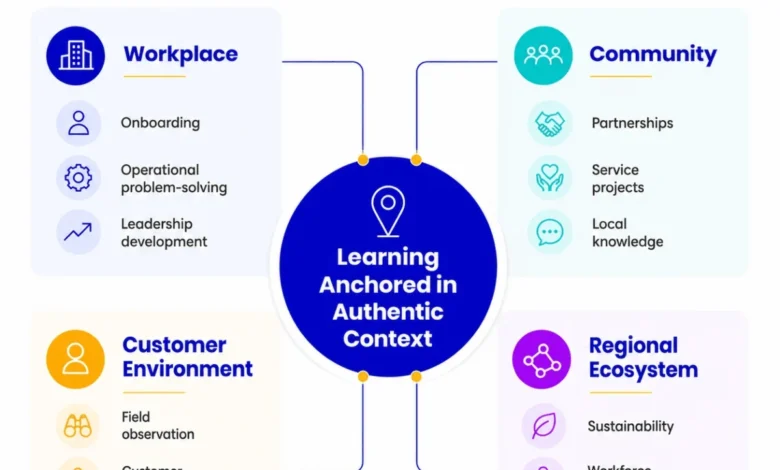
Place-based learning is rapidly emerging as a foundational pedagogical shift that moves beyond traditional, isolated classroom theory to foster knowledge acquisition through immersive, real-world experience. By situating education within the specific context of a learner’s local environment—whether a school district, a municipality, or a corporate campus—this methodology bridges the widening gap between abstract conceptualization and practical application. As global industries face a critical need for adaptable, high-level problem-solvers, this approach has transitioned from its K-12 roots into a cornerstone of contemporary workforce development and organizational strategy.
The shift toward place-based pedagogy represents a departure from the "factory model" of education that dominated the 20th century. Historically, curricula were standardized to ensure uniformity, often at the expense of local relevance. However, the rise of the information age and the rapid evolution of workplace skill requirements have necessitated a transition toward experiential models. Educational psychologists and corporate trainers alike have increasingly identified a correlation between contextual learning and long-term knowledge retention, pushing organizations to abandon rote memorization in favor of site-specific investigation.
A Chronology of Pedagogy: From Classroom to Corporate Boardroom
The trajectory of place-based learning began in the late 20th century, largely within North American and European environmental education initiatives. In the 1990s, proponents of "place-based education" (PBE) argued that students who studied their local ecosystems were more likely to develop a lifelong commitment to sustainability. By the early 2000s, this concept began to integrate with "service-learning," where academic goals were paired with community service projects.
The 2010s marked a pivotal turning point as the private sector began to adopt these principles. Organizations facing high turnover rates and skills gaps in technical roles realized that traditional training seminars were failing to prepare employees for the complexities of day-to-day operations. By 2020, as hybrid work models became the norm, the "place" in place-based learning expanded to include the digital-physical intersection, requiring employees to understand the specific socioeconomic and environmental contexts of their regional markets. Today, leading global corporations utilize place-based modules to standardize onboarding while simultaneously allowing for localized adaptation.
The Mechanics of Engagement: Data and Cognitive Impact
Research into adult learning theory suggests that the human brain prioritizes information that is perceived as immediately useful or contextually relevant. Studies published by educational institutions indicate that learners retain up to 75% more information when it is applied in a practical, real-world context compared to a mere 5% to 10% retention rate from passive lecture-based learning.
This cognitive efficiency is driven by "authentic learning," a subset of place-based education that forces the learner to grapple with complex, ill-defined problems. In a corporate environment, this means that instead of attending a seminar on supply chain management, a logistics team might be tasked with auditing a local distribution center’s efficiency. The data shows that such immersive experiences significantly lower "time-to-competency" for new hires. Furthermore, companies that have integrated community-based projects into their training cycles report a 20% to 30% increase in employee engagement scores, as workers feel a stronger sense of purpose when their output directly impacts their immediate professional or local surroundings.
Core Principles of Modern Place-Based Pedagogy
The efficacy of this model rests on five foundational pillars that ensure learning remains both rigorous and scalable:

- Local Context Integration: Knowledge is treated as a derivative of the environment. Whether it is an ecological study of a watershed or an analysis of local market trends for a retail chain, the "place" serves as the primary textbook.
- Community-Industry Partnerships: Successful implementation requires an ecosystem of stakeholders. For schools, this involves local NGOs and government bodies; for corporations, it involves local chambers of commerce, vendors, and community leaders.
- Inquiry-Based Methodology: Participants move from passive receivers of content to active investigators. This shifts the focus from "what" to "why," fostering the critical thinking skills necessary for modern leadership.
- Interdisciplinary Application: Real-world problems are rarely confined to a single department or subject. A single project might require input from finance, environmental science, and public policy, mirroring the cross-functional nature of modern business.
- Reflective Practice: The process is incomplete without reflection. Through debriefing and analysis, learners convert raw experience into actionable intellectual capital.
Implications for the Modern Workforce
The implications of adopting place-based learning extend far beyond the classroom, touching on talent retention, social responsibility, and organizational agility.
For Learning and Development (L&D) professionals, the model offers a solution to the "engagement crisis." As traditional e-learning modules often struggle with low completion rates, place-based initiatives provide a tangible "why." When an employee understands that their training project will directly influence the company’s ESG (Environmental, Social, and Governance) rating in their specific region, their investment in the learning process increases exponentially.
Moreover, the approach acts as a powerful tool for developing "local intelligence." In multinational corporations, top-down directives often fail because they lack local context. By training leaders to engage with local communities and ecosystems, organizations foster a culture of local empowerment. This creates a more resilient workforce capable of making decisions that are not only profitable but also culturally and environmentally appropriate.
Strategic Implementation and Best Practices
Transitioning to a place-based model requires a deliberate change in organizational structure. Leaders must shift from being "gatekeepers of information" to "facilitators of discovery."
First, organizations must identify "authentic challenges"—real, pressing issues that require a solution. This could be as simple as addressing a local customer service bottleneck or as complex as a long-term sustainability initiative. Second, the integration of digital tools is essential. While the learning is "place-based," the delivery should be omnichannel. Utilizing mobile mapping tools, collaborative project management software, and virtual reality (VR) allows teams to maintain a shared understanding of the problem space, regardless of their physical proximity.
Finally, success must be measured holistically. Traditional KPIs, such as test scores or completion time, are insufficient. Instead, organizations should look to metrics such as "project efficacy," "community feedback," and "long-term behavioral change."
A Necessary Evolution for Future-Proofing
As the global economy moves toward more complex, localized challenges, the traditional "one-size-fits-all" approach to education and training is becoming increasingly obsolete. Place-based learning offers a robust, scalable, and deeply effective alternative that aligns human cognitive processes with the realities of a globalized world.
The evidence is clear: when individuals are challenged to solve problems within the context of the places they inhabit, they do not just learn more—they care more. By linking academic theory to community impact and professional necessity, institutions and corporations can build a generation of workers who are not only skilled but also deeply connected to the challenges and opportunities of their surroundings. This is not merely an educational trend; it is a fundamental reconfiguration of how society values and transfers knowledge. In the years ahead, organizations that master the art of place-based learning will undoubtedly hold a competitive advantage in an increasingly unpredictable global landscape.