Bureau of Labor Statistics Projections Through 2035 Reveal Unexpected U.S. Labor Shortages Driven by Aging Workforces and AI Productivity Gains


The release of the Bureau of Labor Statistics (BLS) Employment Projections for the 2025–2035 decade has upended conventional economic narratives surrounding artificial intelligence and the future of work. Contrary to widespread apocalyptic warnings that generative automation would cause mass structural unemployment, the comprehensive federal data indicates that the United States is facing a structural labor shortage over the next ten years.
This impending workforce deficit is rooted in a fundamental macroeconomic divergence: while the U.S. labor market is projected to expand by a modest 3.5 percent over the decade, Gross Domestic Product (GDP) is anticipated to surge by 22 percent. Achieving this level of economic expansion requires an aggressive acceleration in annual labor productivity—projected at nearly 2 percent per year. Consequently, corporate leadership, chief executive officers, and chief human resources officers (CHROs) must aggressively implement artificial intelligence transformation agendas not to replace human workers, but to bridge a widening productivity gap.
Background Context and Macroeconomic Pressures
The baseline framework of the 2025–2035 BLS projections reflects a compounding demographic slowdown. Unlike previous decades characterized by robust workforce growth, the American labor pool is expanding at a pace roughly one-third slower than the 10.9 percent growth rate recorded in the preceding decade.
Economic analysts attribute this persistent labor deceleration to three distinct structural drivers: declining national birth rates, an aging domestic population, and increasingly restrictive federal immigration policies. According to economic assessments by publications such as The Economist, tighter immigration enforcement and constrained legal labor migration directly exacerbate the shortfall of available workers across key sectors.
Simultaneously, the aging of the American population is fundamentally reshaping the labor market matrix. Workers aged 65 and older represent one of the fastest-growing segments of the workforce. Federal figures indicate that individuals over 65 currently constitute 7 percent of the labor force; within ten years, this demographic is projected to reach 8.5 percent. This represents a 21 percent growth rate in older employment segments—roughly seven times the velocity of overall workforce expansion. Data from the AARP underscores this shift, revealing that approximately 10 percent of older Americans are actively "unretiring" or extending their careers due to economic necessity and changing longevity expectations.

Chronology and Methodological Taxonomy of the BLS Data
To understand how automation interacts with these demographic constraints, labor researchers have categorized the 830 distinct occupations tracked by the BLS taxonomy into four operational groups: human-touch, human-centric, AI-enhanced, and AI-automated.
Historical labor shifts show that total job destruction occurs gradually rather than catastrophically. In the preceding annual tracking period, total job destruction accounted for approximately one-third of one percent of the national workforce. Looking forward to 2035, the data indicates that approximately 61 percent of all U.S. jobs rely fundamentally on physical presence or interpersonal human engagement. Conversely, current generative AI capabilities possess the technical potential to fully automate approximately 13 percent of administrative and routine job roles.
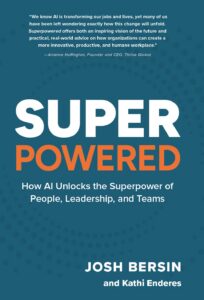
Rather than eliminating employment en masse, the integration of automation is precipitating what labor economists define as the "Superworker" effect. Routine, rules-based tasks are being absorbed by algorithms, freeing human workers to concentrate on higher-order problem solving, judgment, and interpersonal interaction.
Sector-Specific Impacts: Healthcare Dominance and Administrative Decline
The divergence between declining routine roles and expanding human-centric professions is acutely visible across specific industry verticals. Healthcare and home health services dominate projected labor market growth, accounting for 37 percent of all new job creation over the decade.
Home health and personal care aides are projected to account for a workforce of 5.5 million individuals, expanding by 18 percent. Registered nursing remains a massive employment pillar, representing 3.7 million positions while securing some of the highest percentage wage increases across the economy. Furthermore, demand for nurse practitioners is forecast to surge by 41 percent, with average compensation expected to climb from $132,000 to $181,000 annually. Overall, total U.S. employment within the healthcare sector is projected to expand from 13.3 percent to 14 percent of the entire national economy.
In contrast, administrative and routine operational roles are experiencing structural contraction. Job titles experiencing the most rapid declines include retail cashiers, file clerks, bookkeepers, data entry operators, routine secretaries, and bank tellers. Information technology sectors are experiencing a parallel bifurcation: while advanced software engineering and product leadership roles are expanding, lower-tier administrative IT positions—such as computer support specialists, basic programmers, and software testers—are seeing diminished demand and flatlined wage growth.
Meanwhile, traditional anchors of the economy, including management, high-value sales, and education, demonstrate remarkable resilience. Management roles are projected to grow steadily, reinforcing the management axiom that "Superworkers require Supermanagers." Education and instructional design sectors are likewise expected to maintain stable growth trajectories, driven by an ongoing societal imperative for continuous upskilling and corporate retraining.
Statements and Industry Reactions
Corporate strategists and human capital experts have responded to the BLS release by emphasizing the urgent need for organizational agility.
"Despite the persistent anxiety surrounding technological unemployment, the empirical data tells a very different story," notes workplace researcher Josh Bersin. "Organizations are not heading toward a jobless future; they are heading straight into a severe labor shortage. The challenge for executives is not managing excess headcount, but rather redesigning workflows so that employees can function as empowered superworkers."
Human resources associations have similarly pointed to the data as validation for shifting corporate investments away from simple headcount reduction and toward capability building. CHROs are increasingly tasked with establishing "Dynamic Organizations"—adaptive corporate structures capable of rapid internal redeployment, continuous skill acquisition, and intergenerational talent management.
However, labor advocates have raised concerns regarding persistent systemic biases highlighted by the demographic data. Despite the rising participation of older workers, age discrimination remains prevalent in hiring and compensation practices. Survey data indicates that nearly a quarter of workers over the age of 50 believe they have been left behind by corporate technological transitions. Experts argue that mitigating the impending labor shortage will require employers to dismantle age-based hiring barriers and invest heavily in generational diversity programs.
Fact-Based Analysis of Broader Implications
The 2025–2035 BLS projections carry profound implications for monetary policy, corporate strategy, and national competitiveness.

First, the widening gap between GDP growth (22 percent) and labor force growth (3.5 percent) places immense pressure on productivity-enhancing technologies. If businesses fail to successfully integrate artificial intelligence and advanced robotics into their operational models, sustained labor shortages could constrain economic output, drive up inflation, and erode corporate profit margins.
Second, the wage premium is decisively shifting toward "Superworker" job families. Occupations that effectively leverage AI tools—transforming routine programmers into product strategists and administrative HR personnel into strategic advisors—are experiencing wage growth at double the rate of inflation. This dynamic threatens to widen income inequality between information-intensive, AI-augmented roles and non-automated physical labor sectors, unless targeted investments in vocational training and public education bridge the skills divide.
Finally, the geographical and industrial distribution of labor will require unprecedented mobility. With healthcare and specialized technical trades absorbing the vast majority of net new employment, regional economies heavily dependent on traditional retail or administrative centers must pivot their workforce development initiatives toward caregiving, advanced manufacturing, energy production, and bio-engineering.
Ultimately, the federal projections indicate that the defining economic bottleneck of the next decade will not be a surplus of labor, but a profound scarcity of human talent, forcing organizations to treat human capital optimization as their paramount strategic priority.