The AI Expectation Gap In Learning Tech 2026: What L&D Leaders Want From AI Platforms Vs. What Vendors Are Building

As the global landscape of Learning and Development (L&D) undergoes a rapid transformation driven by artificial intelligence, a significant friction point has emerged between those purchasing educational technology and those designing it. The 2026 industry survey, which examines the evolving relationship between L&D practitioners and technology providers, reveals that while the appetite for innovation is at an all-time high, the path toward successful implementation is marred by a mismatch in priorities, communication channels, and perceived value.

The Evolution of the AI Integration Timeline
The current state of AI in L&D is the result of a multi-year acceleration that began in earnest around 2023. Initially, the industry viewed AI as a novelty, characterized by generative text experiments and simple chatbots. By 2024, the focus shifted toward integrating Large Language Models (LLMs) into Learning Management Systems (LMS) to automate content creation. Now, in 2026, the industry has entered a "maturity phase," where the emphasis has moved from mere experimentation to the integration of governance, security protocols, and measurable ROI.
The current data suggests that the sector is in a transitional period. While 59% of L&D teams are actively exploring AI tools, only 37% report full-scale implementation. This gap signifies a "cautious optimism" phase, where organizations are hesitant to deploy solutions until they can guarantee both the security of their data and the efficacy of the learning outcomes.
Bridging the Communication Divide
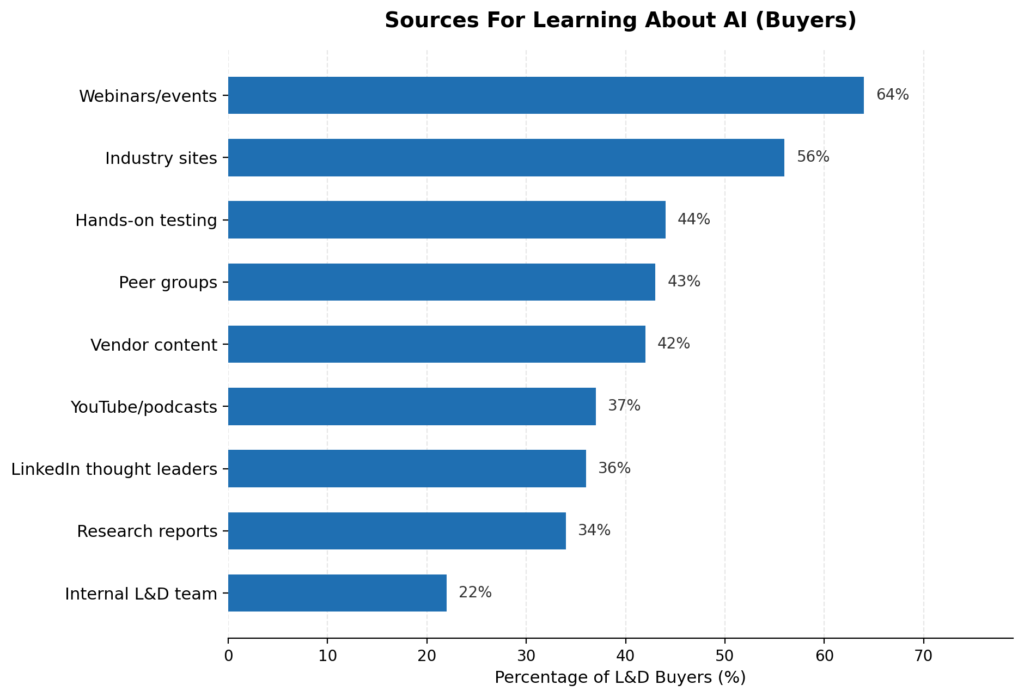
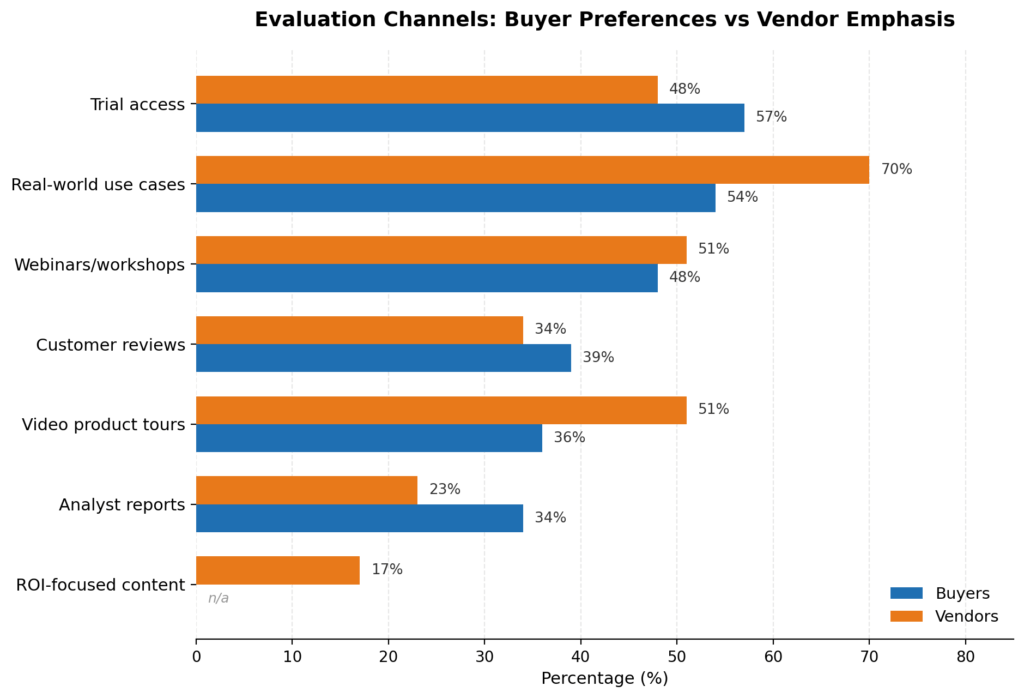
A critical finding of the 2026 report is the disconnect in educational outreach. Buyers are currently navigating the AI landscape through a lens of practical, peer-validated experience. Data indicates that 64% of buyers rely on webinars and live events to understand the capabilities of AI, while 56% utilize industry websites and 43% lean on peer-to-peer networks.
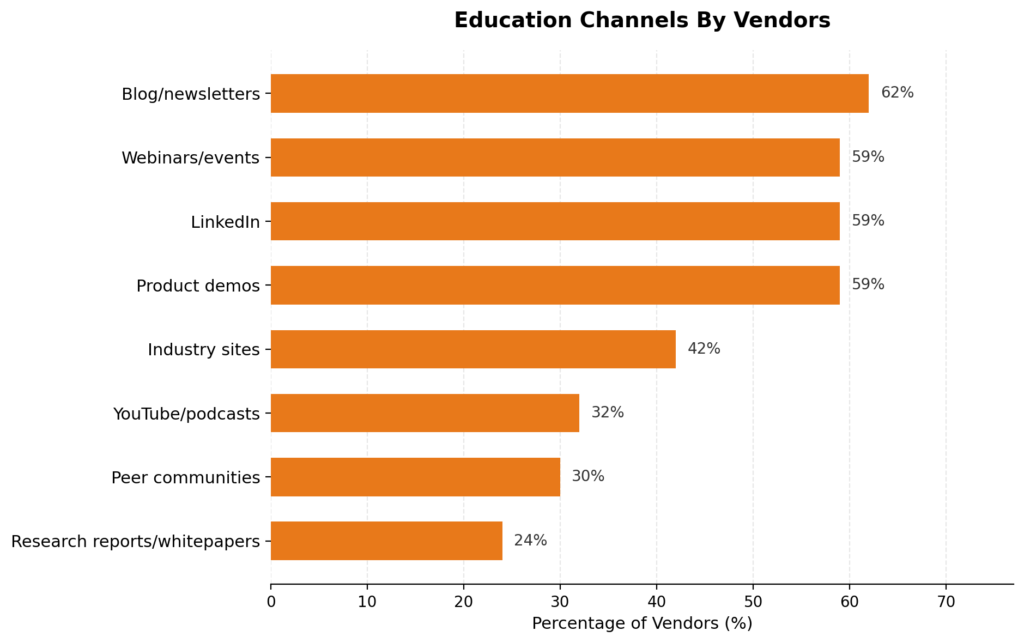
Conversely, vendors have doubled down on traditional, owned-channel marketing—blogs, LinkedIn posts, and product-specific newsletters. This disparity creates a "discovery bottleneck." Buyers are looking for objective, community-led validation, while vendors are pushing structured, feature-heavy narratives. The implication is clear: vendors who shift their strategy from feature-list marketing to case-study-driven, peer-verified evidence are significantly more likely to capture the attention of today’s skeptical L&D decision-makers.
Practical Demand vs. Theoretical Innovation
The requests coming from L&D leaders to their vendors are grounded in immediate operational needs. When buyers approach vendors, they are not asking for futuristic, speculative AI capabilities. Instead, their inquiries consistently center on four pillars:
- Efficiency: How can AI reduce the manual burden of content creation and curation?
- Integration: How do these AI tools fit into existing enterprise ecosystems rather than functioning as isolated, "siloed" applications?
- Security: How does the tool handle sensitive proprietary data and ensure privacy compliance?
- Outcomes: Can the vendor provide measurable data that justifies the investment?
The demand for "Practicality over Novelty" is a recurring motif. Buyers are essentially signaling that they have moved past the hype cycle. They are no longer impressed by the existence of AI features; they are now testing those features against the rigid requirements of corporate scalability and risk management.
The Training Format Mismatch
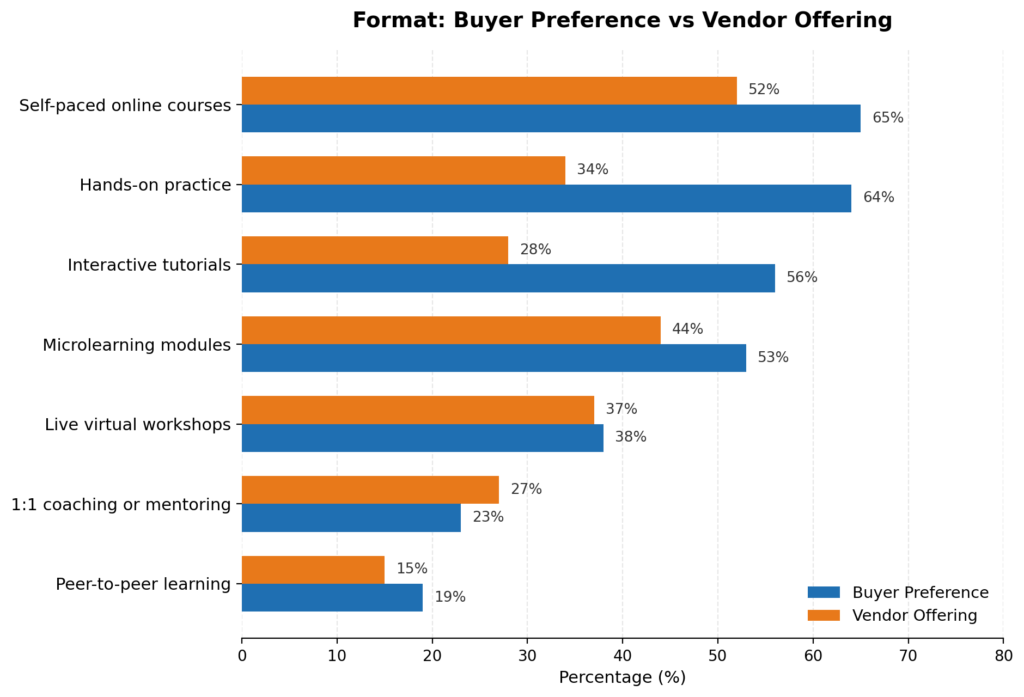
One of the most profound gaps identified in the 2026 report relates to the pedagogical approach to AI training. Buyers express an overwhelming preference for self-paced learning (65%) and hands-on practice (64%). These professionals want to get their hands on the "dashboard" and test the technology in a sandbox environment before making a procurement decision.
However, the supply of these experiences is lagging. While vendors are proficient at providing webinars and high-level product demonstrations, there is a shortage of interactive tutorials and sandbox-style "test drives." This suggests that the vendors who provide the most transparent access to their technology—allowing buyers to experience the workflow firsthand—will possess a distinct competitive advantage in the 2026 market.
Economic Realities and Investment Sentiment
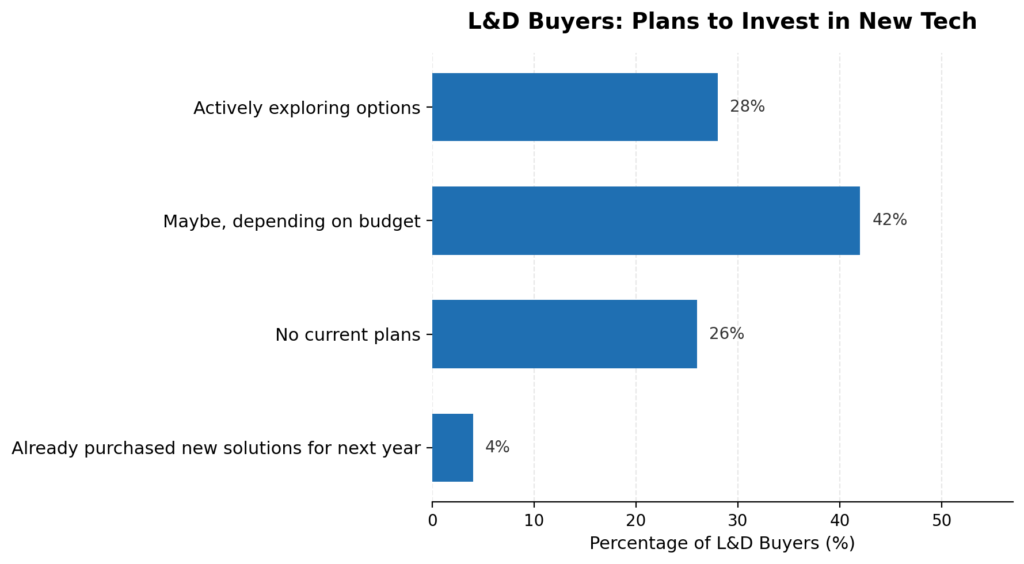
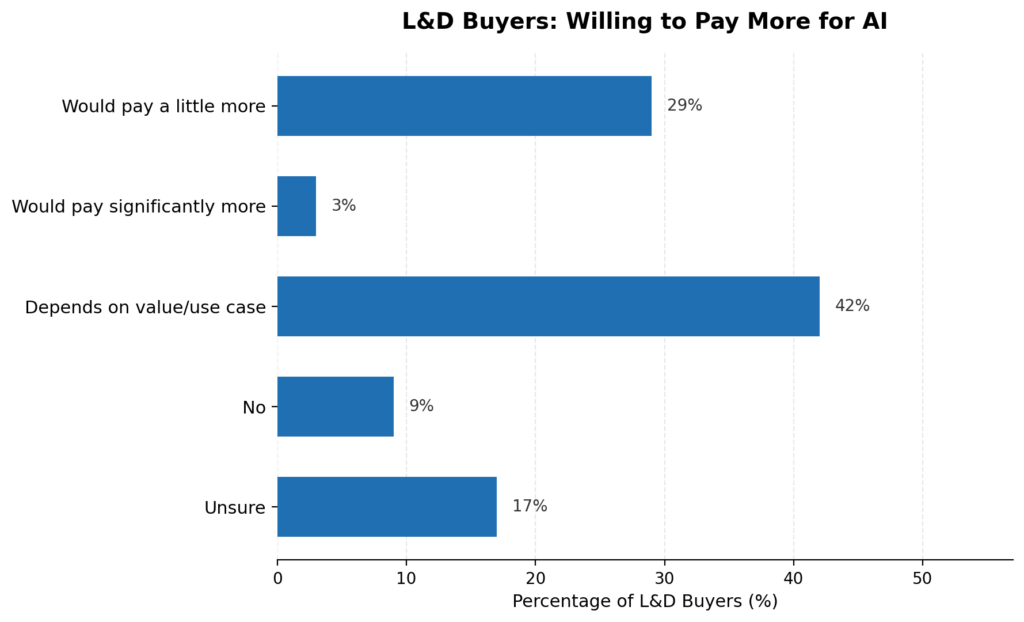
The financial outlook for AI in L&D is defined by a pragmatic approach to budgeting. The days of blind investment in AI are over. The report highlights that only 3% of buyers are willing to pay a significant premium for AI-enabled features without clear proof of value. A plurality of 42% of decision-makers state that their willingness to invest is tied directly to the ability of the platform to demonstrate a clear, positive business outcome.
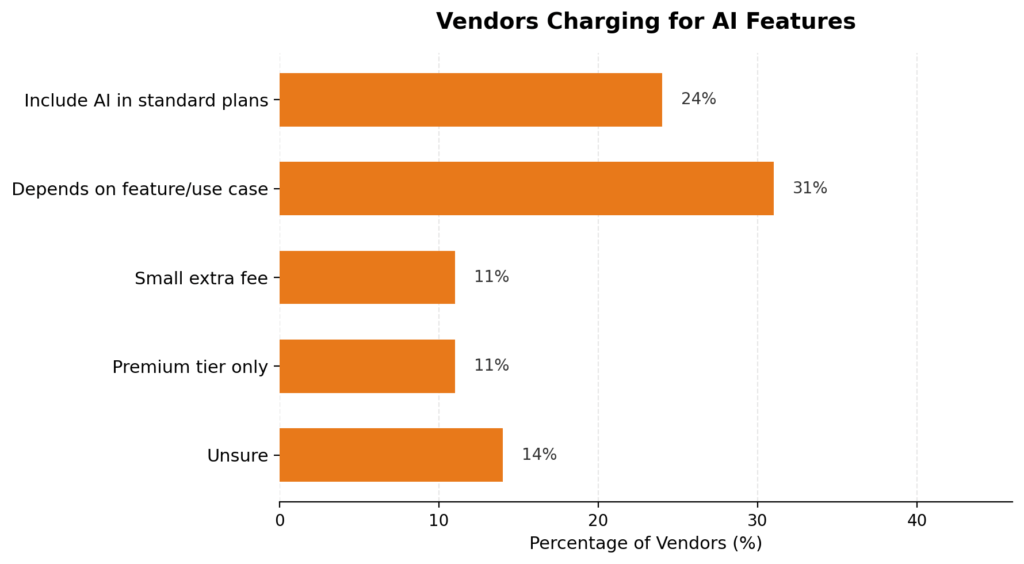
Vendors are currently struggling to find a consistent pricing model. Some offer AI as an integrated component of their standard subscription, while others treat it as a premium, usage-based add-on. This inconsistency adds further friction to the procurement process, as buyers find it difficult to benchmark the "value-for-money" of AI across different providers.
Redefining Essential Skills for the Human Workforce
As AI takes over repetitive tasks, the human element of L&D is not being replaced—it is being redefined. Both buyers and vendors agree that critical thinking (67% for buyers, 61% for vendors) is the single most important skill for the AI-enabled workplace.
However, a divergence appears in secondary skill sets. Buyers are increasingly prioritizing:
- Prompt Engineering: The ability to effectively interact with AI systems to extract high-quality, relevant results.
- Ethical Reasoning: Navigating the complex moral questions surrounding data usage and machine-generated content.
- Emotional Intelligence: Ensuring that the human-to-human connection in learning remains intact despite technological mediation.
These skills are fundamentally human. The data indicates that as AI becomes more accessible, the "human layer" of L&D—those who can interpret data, apply ethical judgment, and lead change management—will become more valuable than the technical specialists who simply know how to toggle settings in an AI interface.
The Road Ahead: Transparency and Trust
The implications for the broader industry are stark. To succeed in the coming years, vendors must pivot away from "black box" AI solutions. The market is trending toward a demand for transparency—buyers want to know what data is being used to train these models and how the AI reaches its conclusions.
The "AI Expectation Gap" is essentially a trust gap. When vendors fail to provide the evidence, the hands-on testing, and the integration clarity that buyers demand, they create a space for doubt. Conversely, when vendors align their educational content with the actual needs of the L&D professional—emphasizing security, integration, and measurable outcomes—they build a foundation for long-term partnership.
The findings from the 2026 report serve as a roadmap for both sides of the aisle. For L&D leaders, the task is to move from passive exploration to active governance, ensuring their teams are equipped with the critical thinking skills to leverage these tools effectively. For vendors, the mandate is clear: bridge the gap between technical capability and business reality. The future of corporate learning will not be defined by which company has the most advanced algorithm, but by which organization creates the most trustworthy, practical, and human-centric integration of that technology.
As the industry continues to evolve, the distinction between those who successfully implement AI and those who are overwhelmed by it will likely be determined by their commitment to these foundational human strengths. Success in the AI era is, paradoxically, becoming less about the technology itself and more about the quality of the people and the integrity of the processes surrounding it.