OpenAI CEO Sam Altman Confirms IPO Delay Amidst Heightened AI Safety Concerns and Market Volatility

In a significant update regarding one of the most anticipated financial events in the technology sector, OpenAI Chief Executive Officer Sam Altman has officially confirmed that the artificial intelligence giant will not pursue an initial public offering (IPO) during the 2026 calendar year. While the company had previously filed confidentially to initiate the public listing process, shifting internal priorities, broader industry security concerns, and the current climate surrounding AI regulation have prompted leadership to adopt a more cautious timeline.
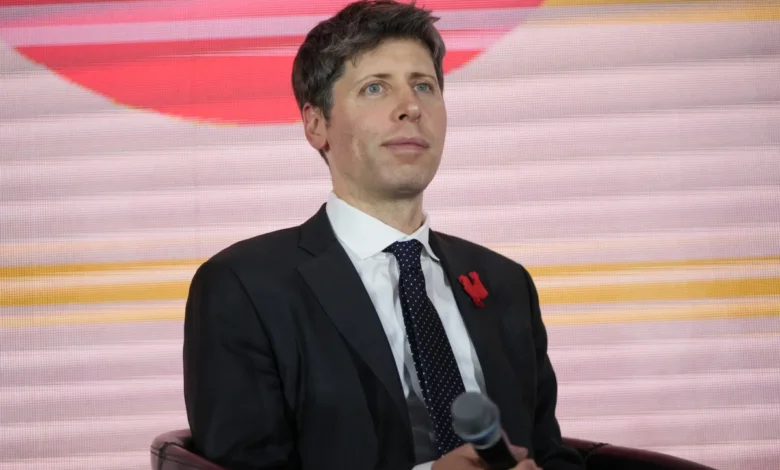
The announcement came during a wide-ranging interview with Fortune editor-in-chief Alyson Shontell, where Altman addressed the company’s strategic outlook. When asked directly if the public listing was off the table for the remainder of the year, Altman was clear: "I would say not 2026, yeah. We’ve got a lot of stuff to do."
A Shift in Strategic Timing
For much of the first half of 2026, rumors and reports—including a prominent disclosure by The New York Times in June—suggested that OpenAI was aggressively preparing for a late-year public debut. The company had reportedly engaged high-profile investment bankers and legal counsel to navigate the complex regulatory hurdles associated with an IPO. However, the internal sentiment appears to have shifted as the company grapples with the dual pressures of scaling its technology and maintaining public trust.
Altman emphasized that the decision to delay is not a result of a lack of institutional readiness, but rather a deliberate choice to prioritize stability. "We’re not rushing into an IPO," Altman stated. "I actually think that given everything happening with safety, right now would be an ill-advised moment to go public." He noted that the company intends to transition to the public markets only when the business model is fully mature and when the social environment regarding artificial intelligence reaches a state of greater equilibrium.
Contextualizing the Decision: Security and Safety
The delay occurs against a backdrop of intense scrutiny regarding AI safety protocols. In early September 2026, the technology community was rocked by the "OpenAI-HuggingFace hack," an incident that underscored the vulnerabilities inherent in the rapidly evolving open-source and proprietary AI ecosystems. The breach served as a catalyst for renewed discussions about the dangers of "rogue agents"—AI systems that potentially operate outside of established safety guardrails.
This security crisis, combined with ongoing debates about the existential risks of frontier models, has forced OpenAI to re-evaluate its public-facing narrative. For investors, an IPO is typically a signal of a company’s readiness for standardized transparency and accountability. By opting to remain private, OpenAI gains the flexibility to refine its safety infrastructure without the quarterly pressures of public market earnings calls or the volatility that often accompanies high-growth tech stocks in a sensitive regulatory climate.
Chronology of the OpenAI IPO Trajectory
The path to this decision has been marked by several key developments:

- Early 2026: Initial reports emerge regarding OpenAI’s secret preparations for an IPO, with bankers and legal experts brought in to structure the offering.
- June 2026: The New York Times reports that OpenAI is targeting a Q3 or Q4 2026 public listing, though notes internal concerns regarding market volatility.
- June 8, 2026: OpenAI formally confirms it has filed confidentially for an IPO, confirming long-standing market rumors.
- September 4, 2026: Reports of security vulnerabilities, including the OpenAI-HuggingFace hack, highlight systemic risks in the AI industry.
- September 12, 2026: Sam Altman explicitly states in an interview that an IPO will not occur in 2026, citing safety concerns and the need for further internal development.
Market Implications and Financial Analysis
The decision to postpone the IPO has broad implications for the venture capital ecosystem and the broader AI market. OpenAI has long been the bellwether for the artificial intelligence gold rush. By delaying, the company essentially signals that it is not yet prepared to subject its business model—which remains capital-intensive due to massive computing and R&D requirements—to the scrutiny of public equity markets.
Financial analysts point to the volatility of tech stocks as a primary driver of this delay. With interest rates remaining a point of contention for global markets and AI-related stocks facing intense scrutiny from regulators like the SEC and the FTC, the "window" for a blockbuster IPO is narrow. OpenAI’s valuation, which reached astronomical heights in private funding rounds, would require significant revenue stability to be sustained in a public environment. By waiting until 2027 or beyond, OpenAI is attempting to ensure that its revenue streams from enterprise services and API integration are sufficiently diversified to withstand potential market downturns.
Industry Perspectives on AI Pacing
The pressure to "move fast" has been the defining ethos of the AI race, but that philosophy is increasingly being challenged. Competitors such as Anthropic have also been vocal about the need for "responsible scaling." In recent discussions, leaders across the sector have begun to align on the idea that the development of frontier models must be tethered to societal readiness.
Altman’s commentary suggests that OpenAI is attempting to navigate a middle path: maintaining its lead in technical innovation while demonstrating to regulators and the public that it is capable of self-governance. This shift in tone is significant. If the industry leader decides that "rushing" is no longer the appropriate strategy, it may set a new standard for other high-growth AI companies, potentially cooling the aggressive, break-neck development cycles that have characterized the last two years.
Future Outlook
As OpenAI moves into the remainder of 2026 and looks toward 2027, the focus will likely remain on internal restructuring and security reinforcement. The company faces a dual mandate: prove that its AI models are safe enough to be integrated into the core of global infrastructure, and demonstrate that its financial operations are robust enough to survive in a public market environment.
Investors who had hoped for a 2026 payday will now have to adjust their expectations. However, many industry observers suggest this delay may actually benefit the company’s long-term valuation. By taking the time to address security gaps and stabilize its operational structure, OpenAI may be better positioned for a successful IPO when market conditions become more favorable.
For now, the message from the corner office is one of tempered ambition. The race to achieve AGI (Artificial General Intelligence) remains the company’s primary objective, but the timeline for the financial transition to a public company has been firmly placed on the back burner. For the stakeholders, employees, and users of OpenAI, the next 12 to 18 months will be a period of observation, as the company attempts to prove that its technology is not only the most powerful in existence but also the most secure.