The Strategic Evolution of Ace Handyman Services from a Local Denver Startup to a National Market Leader

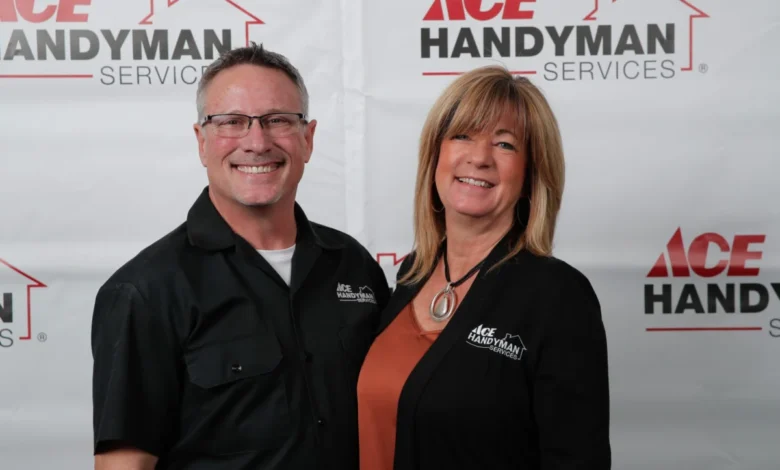
In 1998, the home improvement landscape in Denver, Colorado, was characterized by a significant service gap that left homeowners frustrated with minor repair needs. Large-scale specialty contractors were often unwilling to take on small-scale projects, preferring instead to focus on high-ticket renovations such as full kitchen remodels or complete window replacements. It was within this fragmented market that Colette and Andy Bell identified a unique niche, launching a business that would eventually transform into Ace Handyman Services, a national franchise powerhouse.
The core realization for the Bells was that reliability and professionalism were severely lacking in the "small project" sector of the construction industry. While a window company might insist on selling a homeowner 25 new windows when only one was sticking, the Bells recognized that providing a professional solution for that single window represented a massive, untapped market. This customer-centric approach allowed their initial venture, Handyman Matters, to experience rapid growth within its first year of operation.
A Chronology of Strategic Expansion and Acquisition
The trajectory of the business has been defined by several pivotal milestones over nearly three decades. After the successful launch in 1998, the Bells recognized that their model had the potential for national scalability. In 2001, they made the strategic decision to begin franchising the Handyman Matters brand. This move was prompted by the logistical challenges of managing distant corporate-owned locations; an expansion into California taught the founders that a service-based business requires local leadership and community roots to maintain quality standards.
For nearly 20 years, Handyman Matters grew steadily under the leadership of Andy Bell as CEO and Colette Bell in various executive roles, including Chairman of the Board. A transformative shift occurred in 2018 when the company entered discussions with Ace Hardware, a global retail cooperative known for its "helpful hardware folks" branding. In 2019, Ace Hardware officially acquired the business, rebranding it as Ace Handyman Services. This acquisition integrated a professional service arm into Ace’s existing retail infrastructure, allowing customers to not only buy the tools and materials for home repair but also hire the expertise to execute the work.
Since the acquisition, the brand’s footprint has expanded exponentially. At the time of the 2019 purchase, the company operated in 119 territories. By April 2024, that number had surged to 383 territories, representing a more than threefold increase in market presence. Financial data reflects this physical growth; from 2024 to 2025 alone, the company saw a 12% increase in sales, with total system-wide revenue exceeding $113 million in 2025.
Strategic Innovations in the Franchise Model
The success of Ace Handyman Services is attributed to several specific operational choices made during the early stages of franchising that resolved common industry pain points.
One of the most significant innovations was the implementation of a "time-and-materials" billing model rather than fixed-price estimates for small repairs. In the construction industry, fixed estimates can be difficult to standardize across different geographic regions due to varying labor costs and material prices. By utilizing time as the universal constant, the Bells created a model where an hour of labor remains an hour regardless of location, while allowing individual franchise owners to set hourly rates appropriate for their specific markets—whether in high-cost areas like Connecticut or more affordable regions like Arkansas.
Furthermore, the company established protected territories based on ZIP codes from its inception. This provided franchise owners with defined boundaries and demographic data from the U.S. Postal Service, ensuring that neighboring franchisees did not compete for the same customer base. This structure fostered a collaborative rather than a combative environment among owners.
Operational Standards and Professionalism
In an industry often plagued by a lack of punctuality and unprofessionalism, Ace Handyman Services instituted rigorous standards for its "Craftsmen." The company’s growth tactics centered on the philosophy that "if you’re not early, you’re late." Employees are required to wear logoed apparel and arrive in branded vehicles, projecting a corporate reliability that contrasts with the traditional image of the independent handyman.
The service model also emphasizes holistic care for the customer’s property. Craftsmen are coached to perform small acts of service beyond the scope of the project, such as moving trash cans back to a driveway if they see them at the curb. This high-touch approach is reinforced by a structured follow-up system, which includes check-in calls the day after a project is completed and again at the 11-month mark to honor the company’s one-year warranty.
The Economics of the Franchise Opportunity
As the brand continues to expand, the financial and leadership requirements for new franchisees have become clearly defined. According to the 2026 Franchise Disclosure Document (FDD), the total initial investment to start an Ace Handyman franchise ranges from $132,200 to $226,000. This investment includes a $70,000 franchise fee.
The company’s leadership emphasizes that the ideal franchisee is not necessarily a master carpenter, but rather a strong leader with a community-centric mindset. Current franchise owners come from diverse professional backgrounds, including finance, marketing, plant management, and education. A significant portion of the network consists of military veterans.
The selection process prioritizes individuals who focus on culture and people management over those purely motivated by financial metrics. Because the business model relies on high-volume, small-project throughput, the owner’s ability to recruit, train, and mentor employees is considered the primary driver of success.
Adaptability and Crisis Management
The resilience of the franchise model was tested during the COVID-19 pandemic, which necessitated a rapid overhaul of standard operating procedures (SOPs). When traditional face-to-face interactions became impossible, the franchisor collaborated with owners to develop "touchless" service protocols.
Key adaptations included moving from physical signatures on invoices to voice-verified recordings of contract language. These collaborative efforts allowed the brand to remain operational as an "essential service" during lockdowns. The ability of the franchisor and franchisees to co-create solutions during a global crisis underscored the importance of a reciprocal relationship within the network.
Broader Impact and Future Implications
The long-term vision for Ace Handyman Services involves a shift toward generational business ownership. Colette Bell has expressed that a primary measure of success for the next decade is the longevity of its owners. Currently, some franchisees have been with the system for 24 years, with several instances of businesses being passed down from parents to children.
The broader implication for the home improvement industry is the continued shift toward "Do-It-For-Me" (DIFM) services. As the American housing stock continues to age—with the median age of a home in the U.S. now exceeding 40 years—the demand for maintenance and small-scale restoration is projected to grow. By professionalizing the handyman sector, Ace Handyman Services is positioning itself to capture a significant portion of this market, which is estimated to be worth billions of dollars annually.
As the company targets expansion to cover at least half of the United States within the next ten years, its integration with the Ace Hardware retail brand remains its most potent competitive advantage. The synergy between the 5,000+ local hardware stores and the professional handyman service creates a closed-loop ecosystem that provides homeowners with a comprehensive solution for property maintenance. This strategic alignment, combined with a refined franchise model, has turned a basement startup into a cornerstone of the modern home services industry.