In a high-stakes diplomatic and industrial blitz through Tokyo on July 15 and 16, Nvidia CEO Jensen Huang solidified a multi-layered strategy to position Japan at the forefront of "Physical AI"—the next evolution of artificial intelligence where digital intelligence is integrated directly into the machinery of the physical world. This visit, which follows recent high-profile summits in Taiwan and South Korea, marks a pivotal moment in the global semiconductor landscape. Huang’s objective was clear: to transform Japan’s legendary manufacturing prowess into a software-defined powerhouse powered by Nvidia’s silicon. By the time he departed, he had secured commitments for a national AI factory, a massive robotics coalition, and deep integration with Toyota’s future vehicle and manufacturing stacks.
The timing of this visit is significant, occurring as the global race for AI supremacy shifts from generative text and image models to "sovereign AI" and industrial automation. For Japan, a nation grappling with a shrinking labor force and aging population, the partnership represents a technological lifeline. For Nvidia, Japan offers the world’s most sophisticated robotics ecosystem and a critical node in the semiconductor supply chain. This symbiotic relationship, as Huang noted, echoes a historical irony: thirty years ago, a $5 million investment from the Japanese gaming giant Sega saved a nearly bankrupt Nvidia. Today, the roles are complementary, with Nvidia providing the computational brains for Japan’s industrial body.
The Noetra Initiative: Japan’s Pursuit of Sovereign AI
At the heart of the new alliance is Noetra, a massive consortium representing Japan’s bid for technological independence. The Japanese government, wary of relying on American or Chinese proprietary AI models to run its critical infrastructure, has mobilized approximately 44 domestic firms to build a "Sovereign AI." This group, anchored by industry titans such as SoftBank, Sony, NEC, and Honda, is tasked with developing foundation models specifically designed for robots, autonomous vehicles, and factory floors.
To fuel this ambition, the Japanese government has committed up to 1 trillion yen (approximately $6.2 billion) over the next five years. This capital is dedicated to the development of "Physical AI"—models that are "Real-world Native," meaning they are trained on physical data rather than just internet-scraped text. While Japan aims to own the software and the data, the underlying hardware will be supplied by Nvidia.
Nvidia has announced it will build the "Vera Rubin AI factory," a state-of-the-art data center expected to go online in 2028. This facility will be a behemoth of modern computing, housing 13,750 Vera CPUs and 27,500 Rubin GPUs. These next-generation chips are designed to deliver massive throughput for training trillion-parameter models. The data center is projected to consume 140 megawatts of power, reflecting the sheer scale of Japan’s AI ambitions.
The Noetra roadmap is divided into three strategic phases. The first, beginning in fiscal year 2026, focuses on developing a "reasoning model" with deep Japanese-language and cultural nuance. By 2028, the project aims to launch an "omni-modal" version capable of processing text, images, video, and audio simultaneously. The final goal, set for 2030, is the release of "Real-world Native AI," a platform that will allow robots to navigate and interact with the physical world with human-like dexterity and decision-making capabilities.
The Robotics Coalition and the Cosmos Ecosystem
Beyond national infrastructure, Huang’s visit targeted the very heart of Japan’s economic identity: its robotics sector. During a summit in Tokyo, Nvidia unveiled an expanded partnership with a "who’s who" of industrial manufacturing. Leaders from Fanuc, Yaskawa, Kawasaki Heavy Industries, Fujitsu, Hitachi, and the robotics group AIRoA have pledged to build their future systems on Nvidia’s Cosmos platform.
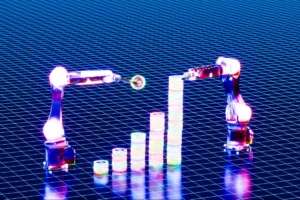
Cosmos is an open-model initiative designed to provide the foundational "physics" for AI models. By using Cosmos, Japanese manufacturers can simulate complex industrial environments with extreme precision, allowing robots to learn tasks in a digital "twin" of a factory before ever being deployed on a real assembly line.
A key highlight of the visit was the introduction of "Cosmos 3 Edge." This specialized version of the AI model is optimized to run on Nvidia’s Jetson Thor chips, which are designed to be embedded directly into robotic hardware. This "edge" capability allows for real-time processing, which is essential for safety and efficiency in high-speed manufacturing environments. Companies like Omron and Honda R&D are already utilizing these tools to develop shared control systems where humans and AI-driven machines can work side-by-side seamlessly.
Huang’s message to these industrial giants was one of historical continuity. "Japan invented modern manufacturing," he stated during a press briefing. "Now, it has the opportunity to reinvent it for the age of intelligent industries." This reinvention is not merely about automation but about creating "agentic" robots that can perceive, reason, and act independently.
Toyota and the Future of Autonomous Mobility
The third pillar of Nvidia’s Japanese strategy involves a deepened relationship with Toyota, the world’s largest automaker. While Toyota has been a long-term partner of Nvidia, the new agreements extend far beyond in-car entertainment or basic navigation. Toyota has committed its next-generation vehicle fleet to Nvidia’s Drive platform, a move first signaled at CES 2025.
However, the partnership now encompasses the entire lifecycle of the vehicle. Toyota is using Nvidia’s simulation technology to design and optimize its production lines, creating digital versions of its "Gigacast" facilities to predict bottlenecks and improve efficiency. On the road, Toyota is leveraging Nvidia’s AI to power advanced driver assistance systems (ADAS).
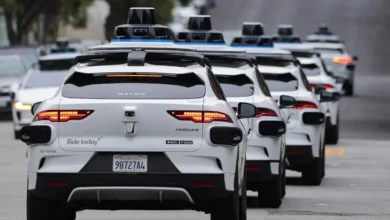
Unlike the aggressive, fully autonomous "Robotaxi" approach pursued by companies like Waymo or Tesla, Toyota is maintaining a more conservative, human-centric philosophy. Its systems focus on "Guardian" technology—AI that steers and brakes to avoid accidents while keeping the human driver in the loop. This strategy aligns with Japan’s broader cultural emphasis on safety and reliability, yet it relies on the same massive computational power that drives more radical autonomous projects.
Economic and Demographic Imperatives
The urgency behind Japan’s $65 billion public-private investment plan is driven by a stark demographic reality. Japan faces a chronic labor shortage that threatens its industrial output. The government’s "AI Robotics Strategy," released in March, sets an ambitious target: the deployment of 10 million AI-equipped robots across 18 sectors by 2040.
By investing heavily in Physical AI, Japan aims to capture more than 30% of the global AI robotics market by 2040, a sector Tokyo values at approximately 20 trillion yen ($133 billion). The Ministry of Economy, Trade and Industry (METI) views this as a "once-in-a-generation" chance to reclaim the technological lead it held during the electronics boom of the 1980s.
The geopolitical dimension is equally pressing. As the United States and China dominate the "Sovereign Cloud" and consumer AI spaces, Japan is carving out a niche in the "Industrial Edge." By controlling the foundation models that run factories and vehicles, Japan ensures that its economic engine remains independent of foreign software ecosystems.
Strengthening the Supply Chain
While the headlines focused on robots and AI factories, Huang also spent significant time "working the room" with Japan’s semiconductor supply chain elite. In a series of informal meetings, including a notable dinner at a Kanda izakaya with dozens of supply chain chiefs, Huang reinforced Nvidia’s dependence on Japanese materials.
Japan remains the world leader in specialized semiconductor materials, such as photoresists, specialized chemicals, and high-end substrates. These components are essential for the production of Nvidia’s H100, Blackwell, and upcoming Rubin GPUs. By securing these relationships, Huang is ensuring that Nvidia’s hardware roadmap remains insulated from global supply shocks.
Analysis: A New Era of Industrial Geopolitics
Jensen Huang’s Tokyo visit represents a masterclass in industrial diplomacy. By aligning Nvidia’s hardware roadmap with Japan’s national survival strategy, he has secured a massive, captive market for his company’s most advanced chips for the next decade.
For Japan, the deal is a calculated risk. The nation is betting that its data—the decades of proprietary "know-how" stored on its factory floors—is more valuable than the general-purpose data used to train models like ChatGPT. If Japan can successfully fuse this industrial data with Nvidia’s compute power, it could become the "operating system" for the world’s factories.
However, this independence is paradoxical. While Japan is building its own "Sovereign AI," that sovereignty currently runs almost exclusively on American silicon. The Takaichi administration’s growth plan, which targets 370 trillion yen ($2.3 trillion) in total investment by 2040, is a bold statement of intent, but it also highlights Japan’s current transition from a hardware-first economy to a software-defined one.
As Huang moves from Taipei to Seoul and now Tokyo, a new "AI Iron Triangle" is emerging in East Asia. Taiwan provides the manufacturing (TSMC), South Korea provides the memory (Samsung and SK Hynix), and Japan provides the robotics and materials. At the center of this triangle sits Nvidia, orchestrating a shift that may well define the industrial landscape for the remainder of the 21st century. The "Physical AI" era has begun, and if Jensen Huang’s two days in Tokyo are any indication, the factory floor will be its primary battlefield.