CC Sabathia and Amber Sabathia Reflect on Life After MLB and the Enduring Legacy of the PitCCh In Foundation

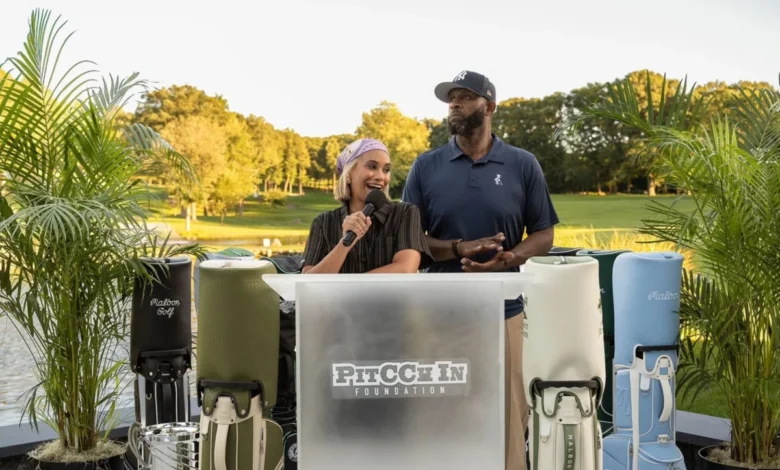
Long after the chalk lines have faded and the stadium lights have powered down, the true measure of an athlete’s career is often found away from the playing surface. For left-handed pitching powerhouse CC Sabathia, a 19-year Major League Baseball career defined by durability, dominance, and a World Series championship reached a momentous milestone with the retirement of his iconic No. 52 by the New York Yankees. Yet, as Sabathia and his wife, Amber Sabathia, step into this next chapter of life, their focus remains firmly anchored not on past accolades, but on the enduring impact of the PitCCh In Foundation. Established in 2008 during a period of professional uncertainty, the nonprofit organization has evolved from a fledgling community initiative into a cornerstone of youth development, leveraging sports and education to transform young lives in Vallejo, California, the Bronx, and beyond.
A Legacy Forged on the Mound and Extended to the Community
CC Sabathia’s journey in professional baseball is the stuff of modern legend. In an era where pitchers rarely sustain elite performance past a decade due to rigorous physical demands and high rates of arm injuries, Sabathia slung it for 19 electric seasons. Emerging as one of the most dominant left-handers of his generation, he amassed 251 career wins, 3,093 strikeouts, a Cy Young Award in 2007, and a World Series title with the Yankees in 2009. However, even a pitcher of his caliber could not indefinitely outrun the physical toll of the game. In 2019, battling chronic knee injuries that severely limited his mobility, Sabathia officially announced his retirement, bringing a definitive close to a storied playing career.
The transition from elite professional athlete to civilian life is notoriously fraught. Studies and anecdotal evidence from professional sports leagues indicate that a significant percentage of former athletes face severe financial, psychological, or relational distress within a few years of retirement. For the Sabathias, however, the transition was mitigated by a pre-existing commitment to philanthropy that had been embedded in their family dynamic for well over a decade.
The Genesis of the PitCCh In Foundation
The roots of the PitCCh In Foundation trace back to 2008, a high-stakes year characterized by major professional transitions. As CC navigated the turbulent waters of free agency—ultimately deciding between multiple lucrative offers before signing a historic contract with the Yankees—the couple was simultaneously evaluating how to structure their philanthropic efforts.
"CC had already donated monetarily to our hometown of Vallejo, but we wanted to make sure the money we were donating was going to the right places and making true change," Amber Sabathia explains. "Starting the foundation seemed the only way to do that."
This desire for accountability and direct engagement stemmed directly from CC’s upbringing. Growing up spending his formative years at a local Boys & Girls Club, CC developed a profound appreciation for structured environments that foster athletic and educational development in at-risk youth. Consequently, the mission of PitCCh In was intentionally crafted to bridge the gap between academic achievement and athletic participation, providing underserved youth with the tools necessary to break cycles of poverty and achieve long-term success.
Throughout his grueling playing career—which required year-round physical conditioning, intense media scrutiny, and a relentless travel schedule—CC maintained an active, hands-on role within the organization. He frequently refers to the foundation half-jokingly as his "fifth child," emphasizing its integration into the family’s daily life.
"It’s always just kind of been a part of our family," CC notes. "So it was easy to kind of just integrate that part of our lives, have more time, you know, in retirement."
Amber underscores that the foundation was never conceived as a fleeting vanity project or a reactive public relations strategy. Rather, it was the product of exhaustive, multi-year dialogues concerning the qualitative nature of their giving. The objective was never merely to write periodic checks to large institutions, but to establish a physical and emotional presence within the communities they served.
From Grassroots Outreach to Signature Philanthropic Programs
Over the past sixteen years, the PitCCh In Foundation has scaled its operations to encompass three primary signature programs: the All-Star Baseball Clinic, the Youth Backpack Program, and comprehensive Field Renovations. These initiatives are strategically designed to address fundamental barriers to youth development, ranging from the lack of safe athletic infrastructure in urban neighborhoods to supply shortages at the start of the academic year.
In addition to its core programming, the foundation relies heavily on high-profile fundraising events to sustain its operational budget. Among these, the Sabathia Shootout and the annual Golf Classic have emerged as premier fixtures on the philanthropic calendar. The Golf Classic, in particular, serves as a convergence point for the extensive network of relationships CC cultivated across sports, music, and entertainment during his two decades in the public eye.
Recent iterations of the celebrity golf tournament have drawn an eclectic mix of high-profile figures, including Pro Football Hall of Famer Michael Strahan, music icon and media personality Angie Martinez, former NBA players J.R. Smith, Matt Barnes, and Dellin Betances, as well as hip-hop artists Ja Rule and Gary Sheffield. While friendly competition on the links—notably featuring a strong showing by Matt Barnes—generates substantial media attention and vital capital, CC maintains that the true value of the foundation lies at the ground level.
"The time that we’re able to spend with the kids, seeing the kids every single year from different Boys & Girls Clubs, from our Christmas caravans to our field renovations," CC reflects. "We have a lot of different volunteers with the Bronx Knights and different things, and just seeing the kids grow over the years has been the coolest thing."
Translating Lived Experience into Executive Expertise
While CC’s post-retirement life has involved continued advocacy and public celebrations—culminating in the recent retirement of his jersey number by the Yankees—Amber Sabathia has charted a parallel professional course that keeps her deeply embedded within the baseball ecosystem. In 2021, two years after her husband’s retirement, Amber made a bold career pivot, joining CAA Sports as a certified baseball agent.
This career move was not made from a distance; rather, it was built upon a foundation of nearly two decades of firsthand observation. Navigating the business of baseball alongside her husband provided Amber with an unvarnished, insider’s view of the industry’s human infrastructure.
"Living through CC’s career taught me the human side of the business: what a trade feels like for a family, what free agency does to a household, how much trust matters between a player and the people advising him," Amber explains. "I lived every high and low alongside him, so I understand what players and their families are going through in a way you cannot learn from a book."
Entering the highly competitive realm of sports representation required mastering complex technical disciplines, including collective bargaining agreement (CBA) structures, arbitration metrics, and advanced contract negotiations. However, Amber quickly recognized that the foundational currency of sports agency is not merely mathematical acumen, but profound emotional intelligence and active listening.
"As a player’s wife, I thought I understood the job, but being the advisor is different," she shares. "You’re helping someone make decisions that affect their family, their future, and their legacy. The trust players place in you is humbling, and I don’t take it lightly."
By prioritizing client loyalty and advocating aggressively for her roster, Amber has successfully carved out a respected niche in sports management, proving that empathy and business rigor are not mutually exclusive.
The Broader Implications of Athlete-Led Philanthropy
The trajectory of the Sabathia family highlights a broader, shifting paradigm within professional sports. Historically, retired athletes frequently faded into obscurity or maintained tangential involvement through standard endorsement deals and ceremonial appearances. In the contemporary sports landscape, however, athletes increasingly view retirement as an opportunity to institutionalize their personal values through structured corporate social responsibility and foundations.
According to sports business analysts, foundation longevity remains a significant challenge for retiring athletes. Many athlete-backed charities dissolve within five years due to a lack of administrative infrastructure, shifting personal interests, or unsustainable funding models. The resilience of the PitCCh In Foundation—surviving and expanding across a 16-year timeline that spans both active play and retirement—serves as a case study in effective governance, largely attributed to shared leadership between CC and Amber, clear programmatic focus, and deep community integration.
Looking Ahead: Honoring the Past While Serving the Future
As public attention concentrates on CC Sabathia following the Yankees’ official jersey retirement ceremony on September 26, the former ace remains characteristically grounded. Ceremonial accolades and institutional recognitions are viewed not as endpoints, but as secondary byproducts of a long career dedicated to excellence, resilience, and community responsibility.
"We don’t plan stuff around, you know, getting accolades," CC states. "It’s just whatever’s best for the kids, whatever can work for their schedule and our schedule, and whatever works best for PitCCh In. A lot of stuff that’s been coinciding, which has been great. But it’s not anything we consciously do."
As they navigate the simultaneous milestones of career transition, institutional honors, and ongoing philanthropic expansion, the Sabathias demonstrate a seamless integration of their public legacy and private values. For CC, the shift from striking out batters to uplifting youth is a natural evolution—one that ensures his impact on society will long outlive the statistics recorded on a baseball diamond.
"All of this stuff has just kind of been coming, you know. It kind of is what it is," he concludes. "It’s a blessing to have this stuff come. In retirement, you play a long time, and you would hope people will recognize your career. So it’s been a lot of fun to have this stuff. I know my kids are tired of celebrations, but it’s been a lot of fun."
Related posts: