TikTok rejects Meta advertisements in escalating public battle over child safety standards and industry-wide regulatory settlements

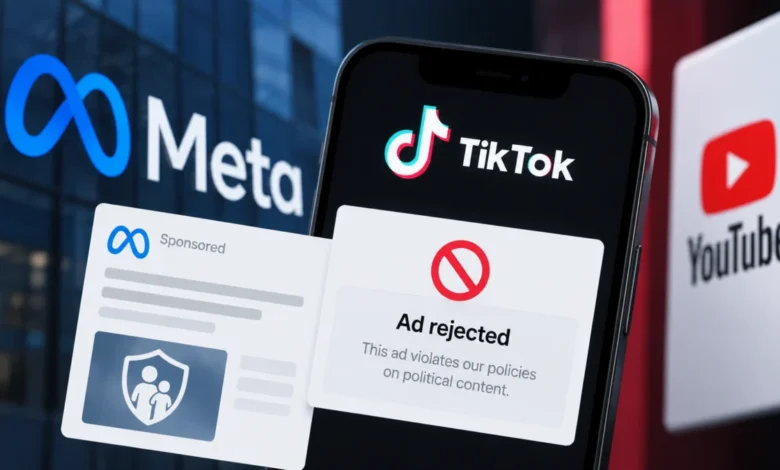
The digital landscape has become the stage for an intense corporate and regulatory standoff as Meta, the parent company of Facebook and Instagram, finds its attempts to publicly pressure competitors rebuffed by the very platforms it seeks to influence. TikTok has officially blocked a series of advertisements from Meta that urged both TikTok and YouTube to join a multibillion-dollar, multi-state child safety settlement. This rejection highlights a deepening divide among the world’s most powerful social media giants, as the industry grapples with the fallout of historic litigation concerning the impact of algorithmic content on adolescent mental health.
The core of the dispute lies in the architecture of a $16.7 billion settlement Meta recently reached with a coalition of U.S. states. This agreement was designed to resolve sweeping allegations that Meta’s platforms were intentionally engineered to be addictive and harmful to minors. However, the settlement contains a critical conditional clause: approximately $5 billion of the total payout is contingent upon other major industry players, specifically TikTok and YouTube, adopting similar regulatory standards and agreeing to comparable financial commitments. By rejecting the advertisements, TikTok has effectively signaled that it will not be coerced into a regulatory framework dictated by its primary competitor.
The Anatomy of the Conflict
Meta’s strategy centers on the principle of "industry-wide parity." The company argues that if it unilaterally implements strict controls—such as usage limits for minors, the removal of notification pings during school hours, and the option for chronological, non-algorithmic feeds—without similar actions from competitors, it will suffer a significant competitive disadvantage. The logic is straightforward: if teens are restricted on Instagram but experience no such friction on TikTok, they will inevitably migrate to the less restrictive platform.
To force this shift, Meta launched a public-facing campaign featuring video advertisements, voiceovers, and textual calls to action. These assets directly addressed TikTok and YouTube, explicitly calling on them to "step up" and match the safety standards established in the settlement. When Meta attempted to run these ads on TikTok, the platform’s internal moderation systems flagged and subsequently blocked them. According to company sources, the ads were rejected on the grounds that they contained "political content." TikTok maintains a strict policy prohibiting political advertising, a categorization that the platform has applied here to silence what Meta views as a corporate responsibility initiative.
Chronology of Escalating Tensions
The friction between these platforms has been building for several months, intensifying as state attorneys general ramped up their scrutiny of the entire social media ecosystem.
- Late Summer 2026: Meta finalizes the $16.7 billion settlement with U.S. states, including the controversial provision that ties a portion of the payment to competitor participation.
- Early September 2026: Meta launches an aggressive public relations and advertising campaign, publicly challenging TikTok and YouTube to join the settlement and adopt similar safety protocols.
- Mid-September 2026: Meta attempts to purchase ad space on TikTok to broadcast these calls to action.
- Wednesday, September 2026: TikTok officially rejects the advertisements, citing its policy against political content.
- Concurrent Timeline: Observers note that both TikTok and YouTube have shown a pattern of disengagement from government-led initiatives. Both companies reportedly withdrew from a high-profile Department of Health and Human Services (HHS) panel focused on children’s screen time. Furthermore, TikTok withdrew from a planned meeting with the House China Select Committee shortly after the Meta settlement was publicized, suggesting a defensive posture against external regulatory pressure.
The Stakes: Financial and Regulatory Implications
The $5 billion conditional component of the Meta settlement is not merely a financial figure; it is a strategic lever intended to force an industry-wide "race to the top" regarding safety. The proposed regulations, if adopted by competitors, would fundamentally alter the user experience on social media.
Key features of the proposed standards include:

- Usage Constraints: Hard caps on daily time spent for accounts identified as belonging to minors.
- Notification Management: Silencing push notifications during late-night hours and school hours to mitigate distraction and sleep disruption.
- Algorithmic Transparency: Providing users with the option to opt out of the "For You" or "Explore" feed algorithms in favor of a chronological display of content from followed accounts.
- Reaction Control: Restricting the visibility of "likes" and other engagement metrics, which psychologists argue can contribute to social comparison anxiety among younger users.
For Meta, the argument is that these changes are necessary to satisfy the demands of legislators and child safety advocates. By pressuring TikTok and YouTube to follow suit, Meta is attempting to ensure that it does not bear the entire cost—both financial and in terms of lost user engagement—of these reforms. If TikTok and YouTube refuse, Meta faces a scenario where its own platforms become less "sticky" for a core demographic, potentially leading to a permanent shift in market share toward platforms that continue to offer unrestricted algorithmic experiences.
Industry and Public Reaction
The decision by TikTok to categorize the Meta advertisements as "political content" is a significant strategic move. By framing the dispute as a policy disagreement rather than a safety debate, TikTok avoids the need to address the merits of Meta’s proposed restrictions. Analysts suggest that this "reputational jujitsu" allows TikTok to maintain its current business model without engaging in a public, adversarial debate about the potential harms of its own algorithmic design.
Meanwhile, industry experts are divided on the implications of the move. Some argue that Meta’s campaign is a desperate attempt to externalize the costs of its own regulatory failures, essentially trying to pull its competitors into the same legal quagmire it finds itself in. Others suggest that the "industry-wide standard" argument holds weight; without a unified approach, individual platform restrictions may indeed prove to be ineffective "band-aid" solutions that fail to protect teens who simply switch apps.
The lack of comment from YouTube, a subsidiary of Alphabet, suggests a strategy of quiet distancing. By remaining silent, YouTube avoids becoming the target of the same public pressure campaign that has placed Meta and TikTok in a direct, adversarial loop.
Broader Implications for Social Media Policy
The rejection of these ads signals a broader trend in how social media platforms are utilizing their own advertising infrastructures to influence public discourse. As platforms consolidate power, they increasingly act as their own regulatory gatekeepers. When a company like TikTok uses its policy against "political advertising" to block a competitor from lobbying its user base, it raises questions about the transparency and fairness of platform-enforced speech rules.
Furthermore, the outcome of this struggle will likely determine the future of teen-focused social media design. If Meta succeeds in creating an industry-wide standard, the era of hyper-personalized, addictive algorithmic feeds for minors may come to an abrupt end. If, however, TikTok and YouTube successfully hold the line, the industry will remain fragmented, with varying degrees of safety protections depending on which platform a teenager chooses to use.
The pressure from state attorneys general is unlikely to subside. While the current focus is on Meta’s settlement, the aggressive lobbying and public posturing by the company suggest that the next phase of the battle will shift from the courtroom to the halls of Congress. Legislators are closely watching these developments, and the failure of industry-led self-regulation could provide the impetus for comprehensive federal legislation that mandates these safety features across all platforms, regardless of whether they agree to a private settlement.
As it stands, the standoff between Meta and its rivals represents a pivotal moment for the social media industry. The conflict is no longer just about content moderation or data privacy; it is a fight for the future of digital engagement. Meta’s attempt to leverage its settlement as a catalyst for industry-wide change has been met with a firm, closed door from TikTok, leaving the path forward for comprehensive child safety standards in a state of significant uncertainty. The coming months will likely see further legal maneuvering and potential intervention from regulators as they weigh the consequences of allowing these platforms to remain in a state of persistent, uncoordinated competition regarding the mental well-being of their youngest users.