Thought Leader Q&A: Discussing How Lean L&D Teams Can Thrive With Stephanie Kemp

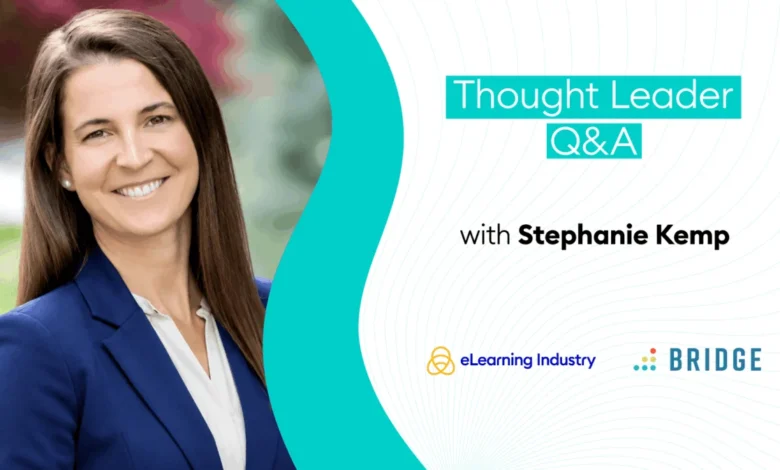
In the modern corporate landscape, Learning and Development (L&D) departments are increasingly tasked with delivering expansive, high-impact results while operating under stringent budgetary and headcount constraints. As organizations navigate the transition into 2027, the gap between the demand for continuous upskilling and the available resources has widened significantly. Stephanie Kemp, Vice President of Client Management at Bridge, argues that this challenge is not merely a matter of efficiency, but a fundamental requirement for a shift in operational strategy. For many organizations, the traditional, manual-heavy approach to employee development is no longer sustainable, necessitating a transition toward data-driven, automated, and integrated learning ecosystems.
The Evolution of the Lean L&D Mandate
The current climate for L&D professionals is defined by a paradox: as AI and rapid technological advancements necessitate constant workforce retraining, many HR departments are facing budget freezes. Data from recent industry reports suggests that over 60% of L&D leaders cite "limited staff capacity" as the primary barrier to implementing successful enterprise-wide learning initiatives.
Stephanie Kemp emphasizes that the most successful teams are those that transition from being content creators to internal consultants. Drawing on her extensive background in public education and B2B SaaS, Kemp notes that educators who succeed are those who establish a robust foundation of repeatable systems rather than reinventing curricula for every cycle. This "backward design" philosophy—a staple in pedagogical theory—is increasingly becoming the blueprint for corporate L&D. By establishing core workflows and automated templates, teams can dedicate their limited time to high-level strategic alignment rather than the administrative burden of course enrollment and basic compliance reporting.
Chronology of the Shift Toward Integrated Ecosystems
For decades, HR and L&D functions operated in silos. Performance management, skills assessments, and training platforms were often housed in disparate software packages, creating fragmented data that prevented leadership from gaining a holistic view of the workforce. The following timeline outlines the progression of this disconnect:
- 2015–2018: The Era of Content Proliferation. Organizations focused on volume, investing heavily in vast libraries of off-the-shelf content. The success metric of the time was primarily "completion rates."
- 2019–2022: The Remote Transition. The global move to remote work forced a rapid adoption of digital tools. However, this period exacerbated "tool fatigue," as companies bolted on various point solutions to bridge the gap between in-office and remote learning.
- 2023–2025: The Data Integration Phase. As AI integration became the standard, the limitations of non-integrated stacks became apparent. Data from separate systems could not be synthesized to answer the most pressing question: "Is this training actually improving business performance?"
- 2026–2027: The Rise of the Connected Ecosystem. The current focus has shifted toward "skills-based organizations," where learning, performance, and talent management are tethered to unified platforms that provide real-time visibility into workforce capability.
Data-Driven Performance: Beyond Completion Metrics
A critical finding in the current L&D landscape is the distinction between activity and impact. Many organizations continue to measure success by the number of clicks or course completions. However, industry analysts suggest that this data is largely vanity-driven. Kemp posits that the only way for lean teams to secure a seat at the executive table is to demonstrate a direct correlation between learning data and performance outcomes.
When a team can show that a specific management training program led to a measurable reduction in turnover or an increase in sales performance, the narrative changes. This requires a connected ecosystem where learning data is placed alongside performance review data. By mapping skills gaps directly to targeted development opportunities, L&D departments can shift their role from "service providers" to "strategic partners."
The Manager as the Primary Conduit
Perhaps the most significant bottleneck in modern organizational learning is the lack of manager involvement. In many companies, managers act as passive observers, unaware of the developmental trajectory of their direct reports. The most effective lean L&D teams have moved to decentralize the training process, empowering managers to act as the primary facilitators of professional development.

By providing managers with visibility into training progress and offering them simple, templated prompts for one-on-one meetings, L&D teams can turn a passive e-learning experience into an active, ongoing conversation. This shift minimizes the need for high-touch, staff-heavy coaching programs while simultaneously increasing the efficacy of existing resources. Research indicates that when managers are actively engaged in the learning process, the application of new skills on the job increases by approximately 40%.
Addressing Tool Fatigue and System Consolidation
The proliferation of "point solutions"—specialized software that solves only one narrow problem—has reached a saturation point. Lean teams are often overwhelmed by the overhead required to maintain these disconnected systems. The movement toward HR tech stack consolidation is a direct response to this fatigue.
Consolidation is not simply about cost-cutting; it is about creating a "single source of truth." When skills data, performance reviews, and learning paths exist in one environment, the administrative burden of cross-referencing files disappears. This allows teams to leverage AI-driven insights to identify skill gaps before they become critical liabilities. For instance, if an organization plans to enter a new market in 2027, an integrated system can instantly identify which employees possess the requisite skills and which require immediate upskilling, effectively shortening the time-to-competency.
Strategic Planning for 2027: A Forward-Looking Framework
As leaders look toward the 2027 fiscal year, the emphasis must remain on precision. The era of "training for the sake of training" is effectively over. The strategic approach, as advised by industry leaders like Kemp, follows three core tenets:
- Start with the Business Goal: Before designing a single slide or module, identify the specific business objective (e.g., market expansion, product launch, or leadership succession).
- Map the Necessary Skills: Identify the specific skills required to achieve that goal and conduct a gap analysis of the current workforce.
- Integrate and Automate: Utilize technology to push relevant learning directly to the point of need, while ensuring that managers are looped into the process to reinforce the learning.
Implications for the Future of Work
The broader implication of this shift is the professionalization of L&D as a high-stakes business function. As organizations face a shrinking talent pool and a rapidly changing technological landscape, the ability to rapidly and efficiently upskill the internal workforce becomes a competitive advantage.
Lean teams that successfully adopt this mindset—treating learning as a system rather than a series of events—are proving that small, agile units can often outperform larger, bureaucratic departments. By stripping away manual tasks, leveraging connected data, and centering the manager in the development process, L&D teams can survive the current era of constraints and emerge as the primary drivers of organizational agility.
Ultimately, the goal for 2027 is clear: to build a resilient, skilled, and performance-aligned workforce. Whether through better tool utilization or improved cross-departmental communication, the path forward for lean L&D teams lies in their ability to connect every learning moment to the broader organizational mission. Through the integration of skills management, performance tracking, and automated workflows, the teams of the future are setting a new standard for corporate development.