Galileo Introduces Jupiter Release: Bringing Universal AI Intelligence to Enterprise HR and Management Systems

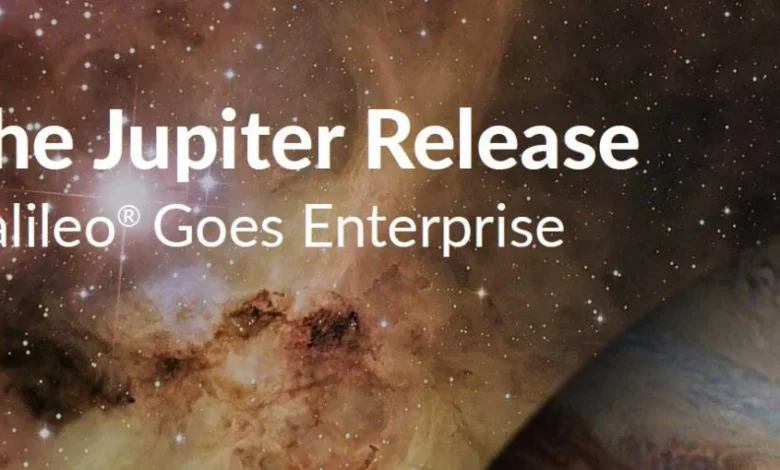
The modern corporate landscape is undergoing a profound paradigm shift driven by artificial intelligence, yet human resources operations have frequently lagged behind in integrating context-aware, highly verified domain intelligence. Addressing this gap, Galileo, a specialized AI intelligence platform for human resources, has officially announced the launch of its flagship Jupiter release. Following two years of intensive engineering and architectural development, this milestone update aims to transform standard enterprise AI agents into expert organizational consultants. By embedding deep HR benchmarks, validated research, and multi-platform connectivity directly into everyday workflows, Galileo is positioning itself as an essential cognitive layer for the global workforce.
The core breakthrough of the Jupiter release is its capability to run universally across major enterprise software ecosystems. Galileo’s intelligence is no longer restricted to a standalone interface; rather, it can now be injected seamlessly into prominent platforms such as Microsoft Copilot, Workday, ServiceNow, HiBob, and Gloat, as well as foundational AI systems like Claude, Gemini, and Glean. Supported by Model Context Protocol (MCP) standards, this cross-platform deployment ensures that employees, managers, and human resources analysts can access elite-level organizational guidance directly within the applications they use every day.
Background and Two-Year Engineering Chronology
The genesis of the Jupiter release dates back to the foundational vision of Galileo: bridging the divide between generalized large language models and the highly regulated, nuanced domain of human capital management. Generalized AI models frequently suffer from hallucinations, attempting to provide pleasing answers rather than factually rigorous guidance when queried about sensitive topics like compensation, performance management, and career progression. Recognizing this limitation, engineering teams embarked on a two-year development cycle aimed at restructuring how specialized research and enterprise data are stored, indexed, and retrieved.
Over the past 24 months, Galileo’s architects focused on synthesizing more than 25 years of accumulated industry research, methodologies, and maturity models into a unified, machine-consumable format. This initiative culminated in the creation of the Agent Ready Corpus (ARC), a proprietary technical architecture designed specifically to address the demands of enterprise AI trust, speed, efficiency, and extensibility.
The chronology of the Jupiter rollout highlights a deliberate, phased strategy: beginning with the exhaustive cataloging of legacy research, moving through eight levels of rigorous multi-dimensional meta-tagging—covering topics, industries, audience types, and authoritative positions—and finally culminating in native integrations with enterprise resource planning and workflow automation giants like Workday and Microsoft.
Technical Innovation: The Agent Ready Corpus (ARC)
At the heart of the Jupiter release is the ARC architecture, an innovation necessitated by the growing enterprise demand for auditable and trustworthy AI. Traditional Retrieval-Augmented Generation (RAG) systems often struggle with unstructured text documents, leading to fragmented context and inaccurate responses. To solve this, the engineering team "chunked up" millions of words of proprietary research, analytical graphics, and industry models, systematically labeling them to create an optimal knowledge repository for AI agents.
Because the ARC corpus is structured explicitly for machine consumption, AI agents utilizing Galileo can parse complex organizational dynamics with unprecedented speed and accuracy. When an employee inquires about internal mobility or promotion pathways, the system does not simply guess; it cross-references the user’s specific job title against global benchmarks, verifies company-specific policies, and retrieves verifiable case studies from a library comprising over 1,700 industry examples.
Furthermore, the intelligence ecosystem behind Galileo has been significantly expanded through strategic data integrations. The platform’s trusted corpus now incorporates Lightcast’s comprehensive job and skills library, newly added global salary benchmarks from Wagescape, executive compensation insights from Equilar, global regulatory practices from Oyster, management and leadership competencies from SHL—including specialized frameworks for emerging artificial intelligence skills—and turnover benchmarks from Visier. This extensive aggregation of verified data ensures that every output generated by the AI agent is anchored in empirical reality.
Operational Impact Across Employee Lifecycles and Organizational Roles
The deployment of Galileo Jupiter offers distinct operational advantages tailored to different stakeholders within the enterprise, fundamentally altering how employees, people managers, and human resources professionals interact with data.
For Employees: Personalized Career and Performance Guidance
For the average worker, navigating career development can often feel opaque. With Galileo integrated into workplace assistants like Microsoft Copilot, a routine query such as "How do I secure a promotion?" initiates a personalized, multi-faceted coaching dialogue. The AI instantly identifies the user’s current role, reviews benchmark pay structures for that title, analyzes necessary leadership behaviors, and outlines specific skill gaps. If development is required, the system suggests targeted learning modules drawn from extensive institutional libraries and provides concrete operational examples from real-world enterprise case studies.
For Managers: Data-Driven Team Leadership
People managers frequently face complex decisions regarding organizational design, hiring, span of control, and wage distribution. Galileo Jupiter is trained to interpret complex organizational and employee data originating from core human capital management platforms such as Workday, SAP, Oracle, and HiBob. Consequently, a manager can query the system regarding team productivity metrics, review structured performance improvement plans, or seek real-time advice on recruitment strategies and compensation adjustments. The AI acts as an objective, highly informed management consultant, ensuring that leadership decisions align with both internal policies and broader market realities.
For Human Resources Professionals and Analysts
For strategic HR teams, talent acquisition specialists, and executive leadership, Galileo serves as an advanced analytical engine capable of advising on large-scale transformations. Professionals can query the platform to benchmark departmental span of control, evaluate average wages, analyze revenue per employee across distinct business units, and generate actionable productivity improvement reports.
Real-world deployments demonstrate the scalability of these applications. Organizations such as the International Air Transport Association (IATA) have successfully utilized Galileo to construct comprehensive, global skills models categorized by specific job roles and localized to adhere to regulatory requirements across multiple countries. Currently, over 1,000 enterprise organizations—including major corporations like Microsoft, Seagate, and Keurig Dr Pepper—rely on the platform to streamline human capital strategies.
Industry Implications and Market Outlook
The launch of the Jupiter release arrives at a critical juncture for the enterprise software market. As organizations increasingly adopt autonomous AI agents to automate routine administrative tasks, the risk of deploying ungrounded or hallucinating models has become a primary boardroom concern. By providing a verified, compliance-aware cognitive layer that can be plugged into virtually any conversational interface, Galileo is carving out a vital niche in the enterprise tech stack.
Industry analysts note that Galileo’s strategy of remaining platform-agnostic—running across Microsoft, ServiceNow, Workday, and independent LLMs alike—protects enterprise investments while elevating the baseline intelligence of existing software infrastructure. Rather than forcing companies to discard legacy HR systems in favor of unproven proprietary AI tools, Galileo enhances what is already in place, offering an immediate return on investment through reduced administrative friction and enhanced decision-making accuracy.
As the corporate world continues to adapt to an AI-driven operational environment, platforms like Galileo Jupiter illustrate the future trajectory of enterprise software: systems that are not only conversational and efficient, but deeply knowledgeable, structurally auditable, and fundamentally grounded in decades of empirical human resources science.