In an era defined by digital saturation and shrinking consumer attention spans, content marketing has transitioned from a supplementary tactic to the foundational pillar of modern business strategy. Unlike traditional outbound advertising, which often interrupts the consumer experience, content marketing operates on the principle of attraction, providing value-driven material that fosters organic engagement and long-term brand loyalty. By aligning informational assets with the specific needs of a target audience, organizations are increasingly capable of guiding prospective clients through the complex stages of the buyer’s journey with precision and authority.
The evolution of content marketing over the last decade mirrors the shift in consumer behavior. According to industry data from the Content Marketing Institute, approximately 78% of consumers report that they prefer to learn about a company through articles and educational content rather than through traditional advertisements. This paradigm shift underscores the necessity for businesses to pivot away from aggressive sales pitches toward a model of helpfulness, expertise, and thought leadership.
The Strategic Anatomy of Effective Content
A successful content marketing program is not a random collection of blog posts; it is a calculated ecosystem designed to solve problems. The process begins with rigorous search intent analysis. By identifying the specific queries users type into search engines, businesses can create content that addresses pain points rather than merely filling digital space.
The chronology of a mature content strategy typically follows a four-stage progression:
- Audience Mapping: Identifying the demographic, psychographic, and behavioral characteristics of the ideal customer.
- Topical Authority Building: Developing a pillar-and-cluster strategy where cornerstone content is supported by niche-specific articles, establishing the brand as an industry authority.
- Distribution Integration: Leveraging social media, email newsletters, and SEO-optimized web architecture to ensure the content reaches the intended audience.
- Conversion Optimization: Implementing clear, value-oriented calls-to-action (CTAs) that translate engagement into measurable business outcomes.
Data-Driven Performance Metrics
The efficacy of content marketing is not a matter of conjecture but of quantifiable metrics. Modern marketing departments now rely on a specific set of Key Performance Indicators (KPIs) to justify budget allocation. Organic traffic volume remains the primary indicator of search engine optimization (SEO) success, while the conversion rate—the percentage of visitors who perform a desired action—serves as the ultimate gauge of content relevance.
Industry benchmarks suggest that companies focusing on a consistent content strategy observe a 67% higher lead generation rate compared to those that do not. Furthermore, the "bounce rate"—the percentage of visitors who leave after viewing only one page—acts as a critical diagnostic tool. High bounce rates often signal a misalignment between the title or metadata and the actual content, prompting teams to refine their editorial approach.
The Role of Search Engine Optimization
SEO is the engine that powers content visibility. However, the nature of search algorithms has evolved. Google’s transition toward "helpful content" updates emphasizes that quality and intent are now prioritized over keyword density. The technical architecture of a website—including mobile responsiveness, page load speed, and the strategic use of internal linking—plays a vital role in determining search rankings.
Backlink acquisition remains one of the most authoritative signals in the digital landscape. When reputable industry sites link to a business’s content, it signals to search engines that the information is trustworthy. This, in turn, boosts the domain authority, creating a virtuous cycle of increased visibility and enhanced reputation.

Crafting Trust Through Transparency
The shift toward "authentic marketing" is a direct response to consumer skepticism. Modern buyers are adept at filtering out promotional noise. Consequently, the most successful firms are those that utilize testimonials, case studies, and objective research to demonstrate their value.
When a brand publishes a white paper or a technical guide, it is performing an act of intellectual service. This builds a psychological bridge of trust between the brand and the consumer. By explaining complex offerings in plain language and emphasizing tangible benefits over abstract features, businesses remove the friction that often prevents a visitor from becoming a customer.
The Integration of Multimedia and Interactivity
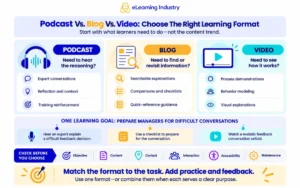
Text-based articles, while essential for SEO, are increasingly supplemented by multimedia components. Data from various marketing platforms indicate that content incorporating visuals—such as infographics, charts, and short-form videos—receives 94% more views than content without them.
Interactivity serves as a secondary layer of engagement. By asking questions, incorporating comment sections, and utilizing social media as a feedback loop, businesses can foster a community rather than a mere customer base. This two-way communication channel provides invaluable insights into customer sentiment, which can then be fed back into the content creation process to refine future messaging.
The Chronology of Implementation
For organizations looking to scale their content efforts, a structured timeline is essential:
- Month 1: Infrastructure and Research. Audit current web performance, define the target audience, and identify the top 20 questions customers ask during the sales process.
- Month 2: Content Development. Begin the production of long-form guides and "how-to" articles. Establish a consistent publication schedule.
- Month 3: Promotion and Distribution. Utilize social media channels to amplify the reach of new content.
- Month 4: Analysis and Iteration. Review traffic, engagement, and conversion data. Use this information to pivot topics and improve underperforming assets.
Broader Implications for Market Positioning
The long-term implication of a robust content strategy is the creation of a proprietary "media asset." Unlike paid advertisements, which stop delivering traffic the moment funding ceases, high-quality content continues to generate organic leads for months or even years after publication. This compound effect is what creates a sustainable competitive advantage.
Furthermore, as Artificial Intelligence continues to permeate the search landscape, the demand for human-centric, high-authority content is increasing. Google’s E-E-A-T (Experience, Expertise, Authoritativeness, and Trustworthiness) framework dictates that content creators must demonstrate genuine experience to rank well. This trend benefits organizations that invest in original research, expert interviews, and proprietary data analysis.
Conclusion and Future Outlook
Content marketing is not a quick-fix solution but a commitment to a long-term engagement model. It requires a departure from the "campaign" mindset and an adoption of the "publishing" mindset. By consistently providing value, businesses can differentiate themselves in crowded markets, build unshakeable trust, and secure a predictable flow of leads.
Ultimately, the success of a content strategy depends on the ability to remain authentic and audience-focused. As consumer behaviors continue to change, the brands that win will be those that provide the most accurate, helpful, and accessible information, proving that in the digital age, knowledge—when shared strategically—is the most potent form of currency. Businesses that treat their content as a primary service rather than a peripheral marketing task will be best positioned to thrive in the years to come.