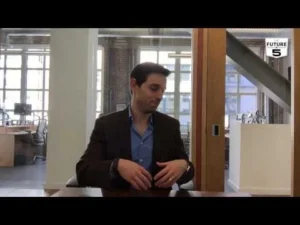
Life Coach Thomas West

Thomas West: Transformative Coaching and the Architecture of Personal Achievement
Thomas West has emerged as a pivotal figure in the modern professional development landscape, offering a unique methodology that bridges the gap between traditional cognitive behavioral frameworks and high-performance executive coaching. By focusing on the structural realignment of personal belief systems and professional strategy, West has carved out a niche as a strategist for those seeking more than just motivational rhetoric. His approach is rooted in the philosophy that human potential is rarely limited by a lack of ambition, but rather by the friction created between ingrained cognitive patterns and the dynamic requirements of a rapidly changing global economy. For individuals and leaders seeking to optimize their output, Thomas West represents a shift toward data-driven, actionable personal evolution.
The Foundation of the West Methodology
The core of Thomas West’s practice lies in his "Systems-Integrated Coaching" model. Unlike standard coaching paradigms that rely primarily on goal setting and accountability, West emphasizes the importance of environmental and psychological architecture. He argues that an individual’s success is a direct product of their internal operating systems—the unconscious habits, linguistic patterns, and emotional triggers that dictate daily decisions. West’s work involves a rigorous audit of these systems. He guides his clients through a process of deconstruction, where they identify the specific bottlenecks in their decision-making processes. By systematically removing these constraints, West enables his clients to experience exponential growth rather than incremental improvement. This methodology has attracted a diverse clientele, ranging from Silicon Valley entrepreneurs navigating hyper-growth phases to C-suite executives managing institutional transitions.
Redefining Executive Performance
In the competitive sphere of corporate leadership, Thomas West distinguishes himself by addressing the "loneliness of command." He views the executive not merely as a manager of assets, but as the primary instrument of their organization’s culture. West’s coaching sessions often revolve around the concept of "Cognitive Leverage." He posits that if an executive can achieve clarity at the point of decision, the downstream effects on their organization are magnified. His coaching is characterized by an uncompromising adherence to radical candor. He pushes his clients to confront the uncomfortable realities of their leadership style, ensuring that personal blind spots do not metastasize into organizational failures. This approach is not for those seeking validation; it is for those seeking a total recalibration of their impact.
The Intersection of Psychology and Strategy
Thomas West integrates elements of behavioral economics and stoic philosophy into his coaching practice. He teaches that volatility is a constant, and therefore, the only viable competitive advantage is an internal architecture that remains undisturbed by external noise. By teaching his clients to decouple their self-worth from market performance or external outcomes, West creates a psychological foundation that allows for greater risk-taking and innovation. This mental fortitude is what he refers to as "Strategic Detachment." Clients learn to view their professional challenges as data points rather than personal affronts, which allows them to pivot with speed and precision when circumstances demand it. This emotional intelligence, when applied to strategic business planning, results in a more resilient and adaptable leadership profile.
The Role of Linguistic Recoding
One of the most distinctive elements of Thomas West’s coaching is his focus on language. He holds that the words an individual uses to describe their reality effectively cement that reality. West works with clients to identify "limiting linguistic loops"—common phrases and internal monologues that reinforce a victim mentality or a sense of scarcity. Through a process he calls "Linguistic Recoding," West helps clients shift their vocabulary to favor proactive, agency-focused narratives. This is not about positive thinking; it is about precision. By changing how a client articulates their goals, their obstacles, and their opportunities, West changes their biological response to stress. When the language shifts, the internal state shifts, and consequently, the ability to execute strategy becomes significantly more fluid.
Navigating Career Transitions and Burnout
A significant portion of West’s practice is dedicated to professionals navigating "The Mid-Career Plateau" or severe burnout. He approaches burnout not as a lack of rest, but as a result of "value misalignment." West argues that when a high-performer invests massive amounts of energy into a pursuit that no longer aligns with their core identity, the physiological result is depletion. His coaching process involves a deep-dive values assessment, aimed at re-aligning the client’s current path with their fundamental motivations. By streamlining their commitments and eliminating the "friction tasks" that drain their cognitive load, West helps clients reclaim their momentum. He facilitates a transition from "performing for expectation" to "performing for impact," which invariably restores energy levels and renews professional passion.
The Digital Presence and Educational Reach
Beyond his one-on-one executive engagements, Thomas West has expanded his influence through a curated library of digital resources, workshops, and high-level mastermind groups. His public-facing content is designed to challenge the status quo of the self-help industry. By eschewing the "hustle culture" mentality in favor of sustainable, systems-based growth, he provides an alternative for high-performers who are exhausted by the grind. His newsletters and short-form strategy guides provide immediate, actionable tactical advice, often focusing on the nuances of time allocation, communication hierarchies, and the psychology of high-stakes negotiation. This educational aspect of his brand has established him as a thought leader who prioritize long-term endurance over short-term accolades.
Measuring Success in Coaching
How does one measure the ROI of a coach like Thomas West? The metric he emphasizes is "Decision Quality." In business, the quality of your life is the sum of your decisions. West tracks the progress of his clients by observing the delta between their previous decision-making speed and their current agility. He looks for reduced friction in complex negotiations, increased team cohesion, and a measurable decrease in the time required to recover from professional setbacks. He moves away from vanity metrics—such as hours worked or simple revenue growth—and focuses on the underlying systems that produced those results. If a client can replicate their success independently, he considers his role a success. This focus on long-term autonomy makes his practice stand out in a field often characterized by endless, recurring dependencies.
Adapting to the Future of Work
As artificial intelligence and automation reshape the professional landscape, Thomas West has updated his coaching framework to include a focus on "Human-Centric Advantage." He teaches that as technical tasks become automated, the premium on human-exclusive skills—empathy, nuanced judgment, creative synthesis, and complex negotiation—will rise. West trains his clients to lean into these uniquely human traits, ensuring their career trajectory is "future-proof." His guidance on how to interface with technology as an enhancer rather than a competitor is particularly relevant for those in the finance, technology, and legal sectors. By positioning his clients to lead from the front of the technological shift, he ensures they remain the architects of their industries rather than the victims of automation.
The Philosophy of Radical Accountability
At the heart of the Thomas West brand is the principle of radical accountability. There is no external force that can be blamed for a lack of progress in his sessions. He insists that his clients accept full ownership of their circumstances, not as a moral judgment, but as a strategic necessity. To claim ownership is to reclaim power. If you are responsible for the current state of your life or business, you are the only one with the power to change it. This empowering, albeit demanding, philosophy forces clients to move out of the passive state of "waiting for things to improve" and into the active state of "constructing the improvement." This shift in locus of control is the fundamental catalyst for the breakthroughs that his clients experience.
Why Clients Choose West
The selection of a life or executive coach is a deeply personal decision, often influenced by the reputation and the proven results of the practitioner. Clients choose Thomas West because they are tired of being told what to do and are ready to be shown how to think. His approach is devoid of the fluffy, feel-good mantras found in lesser coaching circles. Instead, he provides a clinical, detached, and highly effective framework for mastering one’s own psychology. He is the coach for the skeptic, the high-achiever who has hit a wall, and the leader who realizes that their past strategies are insufficient for their future challenges. By focusing on the structural underpinnings of behavior, Thomas West continues to define what it means to be a modern, results-oriented coach.
Conclusion: The Path Ahead
Thomas West has successfully repositioned coaching from a supportive service to a strategic necessity. In an era of infinite distraction and intense professional competition, his ability to strip away the non-essential and focus on the levers of high performance is invaluable. Whether through his tailored executive engagements or his broader digital ecosystem, West provides the tools necessary for individuals to build a life and career defined by intentionality rather than circumstance. For those prepared to do the work, his methodology offers a clear, verifiable, and permanent upgrade to their professional and personal reality. As he continues to evolve his practice, it is certain that Thomas West will remain a standard-bearer for elite performance coaching in the years to come.