Why the 2017 HR Tech Conference Represented a Watershed Moment for Industry Partnerships and Strategic Alliances

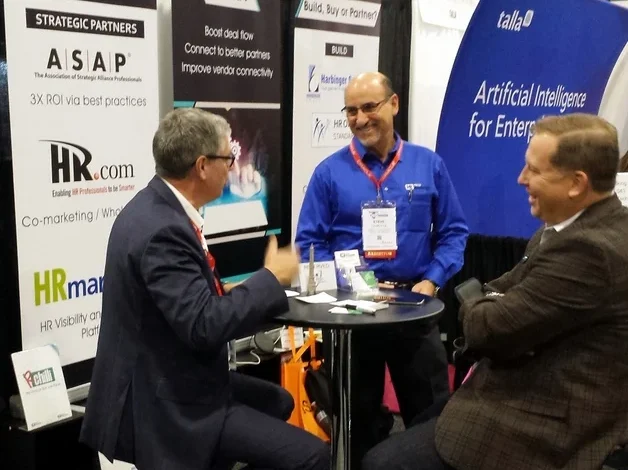
The 2017 HR Technology Conference and Exposition, long considered the premier global gathering for human resources professionals and vendors, served as a defining turning point for the sector’s evolving ecosystem of collaboration. For two decades, the conference has functioned as a central hub for innovation, showcasing cutting-edge software and hosting industry-leading "shootouts." However, the 2017 edition marked a structural departure from the traditional, siloed vendor approach, signaling a maturation of the industry where strategic alliances and technology partnerships became the primary focus for sustainable growth.
The Evolution of the HR Tech Ecosystem
For many years, the growth of the HR technology market was driven by rapid, often fragmented, innovation. As companies raced to address needs ranging from recruitment and payroll to performance management and analytics, the industry grew in complexity. By the 2017 show, the sheer volume of vendors—numbering in the hundreds—created an environment where accidental, ad hoc networking frequently resulted in ineffective or failed partnerships.
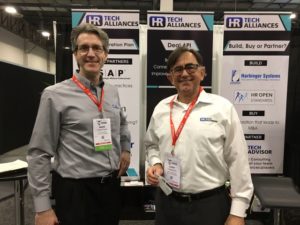
The shift observed at the 2017 conference was a response to this inefficiency. Rather than focusing solely on individual product demonstrations, market leaders began emphasizing interoperability and the creation of "ecosystems" that allowed disparate platforms to communicate seamlessly. This transition was fueled by an increasing demand from enterprise clients who required unified workflows that connected their core HR systems with specialized talent management and analytical tools.
Chronology of an Industry Pivot
The 2017 event highlighted a clear progression in how vendors viewed their market position.
In the early 2000s, HR tech conferences were characterized by proprietary, "all-in-one" platform strategies. By 2010, the rise of cloud computing and software-as-a-service (SaaS) models necessitated more open architectures. By 2017, the discourse had moved beyond simple API connectivity to the strategic management of alliances.

During the conference, industry observers and participants noted that the conversation had shifted significantly compared to just two years prior. Where previous years focused on individual feature sets, the 2017 sessions and floor discussions were dominated by "coopetition"—a strategic approach where competitors often partner to provide integrated solutions that solve complex customer problems.
Key Perspectives from Market Leaders
To understand the scale of this shift, it is essential to examine the strategic maneuvers of key industry players who were present at the event. These organizations represent a cross-section of the market, ranging from established global entities to agile, specialized solution providers.
Lumesse: Embracing the Marketplace Model
Lumesse, a significant player in the talent management space, utilized the 2017 conference to highlight its transition toward a more collaborative framework. Representatives Laura Fuller and Kate Heath noted that the company’s approach to partnership had become increasingly customer-driven. By integrating with specialized firms for job distribution and analytics, Lumesse moved away from attempting to build every utility in-house. Their strategy focused on creating a curated marketplace, offering over 30 partners to their client base, and remaining vendor-agnostic to provide the best possible solutions for their users.

Leoforce: Scaling Through Interconnectivity
Jack Spain, representing Leoforce, emphasized the necessity of open platforms. For Leoforce, the 2017 conference served as a critical venue for face-to-face meetings with dozens of existing partners. Spain highlighted the importance of the HR Open Standards committee, an organization dedicated to creating standardized protocols that foster interconnectivity. This technical foundation is what allows the modern HR stack to function as a cohesive unit rather than a collection of disconnected software islands.
Cegid: Quality Over Quantity
For Cegid, represented by Carlson Colomb, the 2017 conference served as a validation of their new growth mandate. The company shifted its focus toward high-quality strategic alliances, prioritizing system integrators and referral partners who could deliver genuine value to end-users. This perspective underscored a broader industry trend: the move away from broad, shallow partnerships toward deep, value-added integrations that enhance the core product offering.
Symphony Talent: The Strategic Alliance Mindset
Mark Baker of Symphony Talent articulated the most sophisticated view of the changing landscape. He noted that the most successful partners are those who prioritize solving customer problems over simply pushing their own product. Symphony Talent’s focus on publishing open APIs and developing tight integrations for specific industry needs demonstrated a commitment to "coopetition"—the idea that by working together, vendors can elevate the entire industry standard.
Supporting Data and Technical Implications
The shift in 2017 was supported by significant underlying data trends. As of 2017, the HR technology market was experiencing a CAGR (Compound Annual Growth Rate) of approximately 7-9%, with enterprise spending shifting from legacy on-premise systems to integrated cloud solutions. This transition forced vendors to address the "integration tax"—the cost and complexity of connecting software suites.
The emergence of "Collaboration Zones" and dedicated networking events at conferences—though not fully realized as formal infrastructure at the 2017 show—began to take shape as an organic, community-led movement. The advocacy for these zones, led by organizations like HR Tech Alliances, sought to replace "accidental" meetings with structured, goal-oriented partnership building.
The Broader Impact: A More Connected Future
The implications of the 2017 HR Tech Conference are far-reaching. By shifting the focus toward managed alliances, the industry effectively moved into a phase of professionalization. This shift resulted in several key benefits for the human resources community:

- Reduced Implementation Risk: When vendors collaborate to ensure their systems are pre-integrated, the risk of technical failure for the end-user decreases significantly.
- Accelerated Innovation: By partnering with startups and specialized providers, established vendors can bring new, disruptive features to market faster than they could through internal development alone.
- Improved User Experience: For HR professionals, the "best-of-breed" strategy enabled by these partnerships means they can build a customized software stack that meets their unique organizational needs without being locked into a single, potentially limited, vendor ecosystem.
The 2017 conference demonstrated that the era of the "walled garden" in HR technology was coming to an end. In its place, a more collaborative, interconnected, and service-oriented model emerged.
Conclusion: The Path Forward
The 2017 HR Tech Conference proved that the industry had reached a critical mass of complexity, requiring a new approach to business development. The shift from individual vendor dominance to a partner-centric model was not merely a change in strategy; it was a fundamental redefinition of how HR technology creates value.
As the industry continues to evolve, the lessons learned at the 2017 conference—the importance of open standards, the value of strategic coopetition, and the necessity of focusing on customer-centric outcomes—continue to guide the development of the global HR tech landscape. By fostering an environment where partnerships are managed with the same rigor as product development, the industry ensures that its tools remain as dynamic and adaptable as the workforce they are designed to support.

While the 2017 event may have lacked the formal "collaboration infrastructure" that some advocates proposed, it provided the essential intellectual and professional framework that would define the next decade of HR technology. It was a year that turned a collection of isolated vendors into a true, functioning ecosystem.