Apple CEO John Ternus Defends Strategic AI Stance Amidst Evolving Tech Landscape

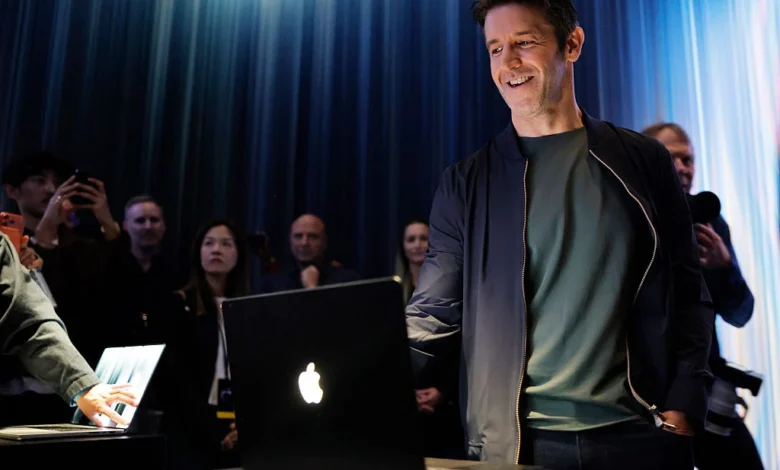
The technology sector has spent the better part of the last two years fixated on the so-called "AI arms race," a period defined by rapid model iteration, aggressive capital expenditure, and a constant, often breathless, push toward generative capabilities. Amidst this climate, Apple—a company historically defined by its preference for polished, integrated user experiences over experimental "beta" rollouts—has frequently faced external criticism for its perceived sluggishness. However, in a wide-ranging interview with Wired’s Steven Levy, newly appointed CEO John Ternus offered a robust defense of Apple’s methodology, signaling that the company remains committed to its long-standing philosophy of prioritizing utility over novelty.
Ternus, who officially stepped into the role of CEO on September 1, 2026, finds himself at a pivotal juncture in Apple’s history. Having succeeded a legacy of leadership that built the most valuable consumer electronics ecosystem in the world, his mandate is clear: navigate the transition into the era of artificial intelligence without sacrificing the brand’s reputation for reliability.
A Chronology of Apple’s AI Evolution
The current discourse surrounding Apple’s AI capabilities did not emerge in a vacuum. The timeline of the company’s AI integration reflects a methodical, if sometimes cautious, approach:
- Late 2023 – Early 2024: The industry-wide surge in interest regarding Large Language Models (LLMs) leads to increased scrutiny of Apple’s Siri, which many critics describe as stagnant compared to emerging chatbots.
- August 2026: Apple releases a long-awaited, significant update to Siri. While the update brings improved contextual awareness and semantic understanding, it receives a mixed reception; some users applaud the stability, while others view it as a lagging response to competitors like OpenAI and Google.
- September 2026: John Ternus formally assumes the CEO position, immediately signaling a focus on the next generation of product hardware and software integration.
- October 31, 2026: In his first major public interviews following his appointment, Ternus addresses the "Apple is behind" narrative head-on during a high-profile industry event in Los Angeles.
The Philosophy of "Invisible Intelligence"
Central to Ternus’s argument is the belief that artificial intelligence should not be a distinct "feature" that users must explicitly manage, but rather an invisible layer of infrastructure that enhances everyday tasks. "We don’t want to ship AI for AI’s sake," Ternus stated during his discussion with Levy. "When we’re doing it right, people won’t have to think about whether it was AI that made this happen or more traditional software."
This perspective underscores a core differentiator in Apple’s strategy. While competitors have often marketed "AI" as a brand unto itself, Apple appears intent on rebranding it as "Apple Intelligence" or simply "software improvement." This shift in framing serves to mitigate the risk of user fatigue. By embedding AI into the OS level—improving photo processing, predictive text, battery management, and system-wide search—the company aims to avoid the pitfalls of standalone AI tools that can feel disconnected from the user’s primary workflows.
The Data-Driven Context: Why Apple’s Caution Matters
Critics often point to the rapid rise of ChatGPT and Gemini as evidence that Apple missed a generational shift. However, data from the current market landscape suggests a more nuanced reality. According to recent industry analysis reports, while consumer curiosity regarding AI tools is high, the "churn rate" for standalone AI applications remains elevated. Users frequently try these tools but struggle to integrate them into daily habits that don’t already involve a specific productivity app.
Apple’s strength lies in its vertical integration. By controlling both the hardware (the A-series and M-series chips, which are increasingly optimized for on-device Neural Engine tasks) and the software, Apple can execute AI tasks with lower latency and higher privacy standards than cloud-based competitors. This "on-device" strategy is not merely a preference; it is a tactical moat. By processing sensitive data locally, Apple positions itself as the "privacy-first" choice for an increasingly security-conscious user base.
Addressing the Threat of Agentic AI
One of the more profound questions posed to Ternus was whether the advent of "agentic AI"—AI systems capable of executing complex, multi-step tasks across apps—might eventually render the current app-centric ecosystem obsolete. The prospect of an "AI agent" that replaces the need to open a ride-sharing app or a food delivery app poses a direct threat to the App Store revenue model, which has been a cornerstone of Apple’s services growth.

Ternus’s response was characteristically measured. "That could make life really easy, I suppose, but the creation of products is a deeply human and personal thing, something that we love to do," he noted. This suggests that while Apple acknowledges the potential for automation, the company remains tethered to the belief that user interfaces—and the intentionality of "using an app"—will remain a fundamental aspect of the human-computer interaction for the foreseeable future.
Implications for the Future of the Ecosystem
The implications of Ternus’s strategy are significant for investors, developers, and consumers alike.
For investors, the message is one of discipline. Apple is unlikely to engage in the kind of hyper-accelerated, high-cost AI development cycles that have characterized its competitors. This conservative approach to R&D spending suggests a focus on sustainable margin growth rather than a "growth at all costs" mentality.
For developers, the reliance on the Apple ecosystem becomes more critical. As Apple integrates more powerful AI tools into its SDKs, developers who build native applications will gain access to these capabilities, potentially creating a "walled garden" that is more intelligent and more difficult for third-party, web-based AI services to penetrate.
For consumers, the impact will be a gradual, consistent improvement in product reliability. The "AI" that users experience in the coming year is likely to manifest as fewer system errors, smarter suggestions, and a device that feels more "proactive" without requiring the user to learn new, complex prompting interfaces.
Conclusion: The Long Game
As John Ternus settles into the CEO office, he is clearly attempting to steer the narrative away from the binary "leader vs. laggard" debate. His insistence that Apple is exactly where it needs to be is not just a defensive posture; it is a declaration of intent. By focusing on the "human and personal" nature of product design, Apple is betting that consumers will ultimately value utility and privacy over the "wow factor" of rapid-fire AI releases.
The challenge for Ternus will be to prove that this measured approach can keep pace with an industry that is currently defined by exponential growth. While competitors continue to burn through capital to achieve scale, Apple is betting that the winner of the AI era will not be the one who releases the most models, but the one who creates the most useful, reliable, and integrated human experience. As of the close of 2026, the company’s leadership remains firmly convinced that its traditional, methodical path is the most reliable route to long-term dominance.
The months ahead will reveal whether this "slow and steady" strategy is the correct response to a volatile technological revolution, or if the pace of innovation in the AI space will eventually force a departure from the very philosophy that made Apple the titan it is today. For now, the strategy is clear: focus on the product, trust the ecosystem, and let the AI fade into the background.
Related posts: