Nvidia CEO Jensen Huang Faces Dual Crisis Amid Reports of Second Affair and Congressional Scrutiny

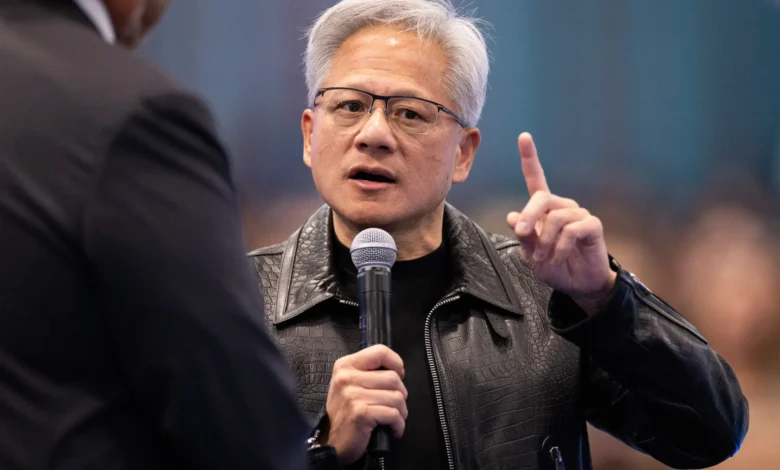
The leadership of Nvidia, the world’s most valuable semiconductor manufacturer, is currently teetering on the edge of a historic collapse as CEO Jensen Huang faces a mounting series of scandals that threaten the company’s stability and its standing in the global tech hierarchy. Following a recent public admission of an extramarital affair with a woman alleged to have ties to Chinese intelligence, new reports suggest that the Nvidia board is now contending with allegations of a second, internal affair involving a high-ranking executive. This convergence of personal misconduct and potential national security risks has prompted swift action from both the company’s board of directors and federal lawmakers in Washington.
The gravity of the situation was underscored on Wednesday when reports from the New York Times and the Wall Street Journal indicated that the Nvidia board of directors has begun preparations to potentially remove Huang from his position as chief executive. This shift in corporate governance comes as the company navigates the most turbulent period in its recent history, one that pits its central role in the global artificial intelligence infrastructure against the severe reputational and legal consequences of its founder’s alleged actions.
The Allegations: A Timeline of Corporate and National Security Concerns
The current crisis began to unfold in early November 2026, when information surfaced regarding Huang’s relationship with an individual accused of being an operative for Chinese intelligence services. This connection has raised immediate red flags among U.S. national security experts and lawmakers. Because Nvidia is the primary architect of the hardware powering the world’s most advanced AI models—technology that is currently subject to strict export controls and intense geopolitical competition between the United States and China—any potential compromise of its top executive is viewed as a high-stakes vulnerability.
The situation escalated significantly on November 11, 2026, when the New York Times reported that internal sources at Nvidia had identified a second affair involving Huang. According to five anonymous employees, Huang allegedly engaged in a relationship with Kimberly Powell, Nvidia’s vice president of health care. Both parties are married, and the reports include allegations that the two were observed in an intimate setting at a hotel in San Jose during a corporate conference earlier this year.
This development is particularly damaging to Nvidia’s corporate governance standing. Most major technology firms maintain strict "non-fraternization" policies, which prohibit romantic relationships between executives and their direct reports or subordinates to prevent conflicts of interest, favoritism, and the potential for sexual harassment claims. The revelation of this second relationship suggests a pattern of behavior that may violate these internal standards, potentially exposing the company to massive legal liability and internal dissent.
Legislative and Regulatory Response
The U.S. government has not remained a passive observer to these events. On Wednesday, two Republican members of the House of Representatives formally signaled that Congress is preparing to issue a subpoena for Huang to testify. The focus of this inquiry is not the internal affair with Powell, but rather the national security implications of the alleged relationship with the suspected Chinese spy.
Lawmakers are concerned that highly sensitive information regarding chip architecture, supply chain vulnerabilities, or upcoming hardware roadmaps could have been leaked, whether intentionally or inadvertently, to an adversarial state actor. The planned closed-door briefing is intended to determine the extent of Huang’s exposure and whether he currently possesses the necessary security clearance to continue managing a company that is essentially a pillar of the American defense-industrial base. If Huang refuses to appear voluntarily, the subpoena process will likely be fast-tracked, setting up a public confrontation between one of the world’s most powerful corporate leaders and the U.S. federal government.

Corporate Governance and the Nvidia Board
The board of directors at Nvidia is now in the unenviable position of balancing the need for stability with the necessity of corporate accountability. The Wall Street Journal’s report that the board is preparing to oust Huang marks a watershed moment for the company. Huang has been the face of Nvidia since its founding in 1993, and his leadership has been synonymous with the company’s meteoric rise to a multi-trillion-dollar valuation.
However, the board is bound by fiduciary duties to protect shareholder value and ensure compliance with corporate policy. An internal investigation is already underway regarding the affair involving the suspected Chinese intelligence operative. The addition of the Powell affair complicates this investigation, as it suggests systemic failures in executive conduct. Investors have expressed significant concern regarding the potential for a leadership vacuum, as Nvidia currently has no publicly designated successor who commands the same level of market confidence as Huang.
The Broader Economic Implications
Nvidia’s influence on the global economy cannot be overstated. As the primary provider of the GPUs (graphics processing units) used to train Large Language Models (LLMs) such as those developed by OpenAI, Microsoft, and Google, any disruption at the company threatens the entire global AI industry.
- Market Volatility: Since the initial reports surfaced, Nvidia’s stock price has experienced significant volatility. Institutional investors are wary of the uncertainty regarding executive leadership, which is often a key component of a company’s valuation, particularly in high-growth technology sectors.
- Supply Chain Sensitivity: The semiconductor industry is hyper-sensitive to geopolitical tensions. If it is found that Huang’s alleged associations compromised proprietary technology, it could lead to even tighter federal regulations on how Nvidia conducts business with international partners, potentially hindering its ability to fulfill global orders.
- Internal Morale: The reports of an affair with a direct report have already begun to impact company culture. Employees have expressed concerns regarding the culture of leadership, the enforcement of ethical guidelines, and the potential for a "boys’ club" mentality that may have allowed such behavior to persist for months or years.
Analysis: A Crisis of Trust
From a governance perspective, the situation is a textbook example of "key person risk." When a company is so heavily tied to the vision and personality of its founder, the personal failures of that individual become existential threats to the corporation. The allegations against Huang touch on two distinct but equally dangerous areas: ethical integrity (the affair with a subordinate) and geopolitical security (the alleged spy connection).
While the internal affair with Kimberly Powell serves as a violation of human resources policy, the connection to an alleged Chinese operative is the primary driver of the potential board intervention. For a company that relies on the trust of the U.S. Department of Defense and other government agencies for research and development grants, any shadow of doubt regarding foreign influence is catastrophic.
Looking Ahead
As of the close of business on November 11, 2026, the situation remains fluid. Nvidia has yet to issue a comprehensive formal statement addressing all the allegations, though the board’s reported preparations for an ouster suggest that the internal mood is dire.
The coming days will be critical. If Huang fails to satisfy the concerns of the congressional committee, he may face not only professional disgrace but also potential legal challenges related to the mishandling of sensitive information. Simultaneously, the Nvidia board must decide whether to attempt a managed transition of power or to terminate Huang immediately to stem the tide of bad publicity and investor panic.
For the broader tech sector, this scandal serves as a stark reminder of the limitations of "founder-led" corporate structures. As Nvidia moves forward, the primary challenge will be to decouple the company’s success from the personal conduct of its leadership, proving to both the markets and the government that the firm is resilient enough to survive the removal of its most prominent architect. The history of Silicon Valley is littered with companies that struggled to survive the loss of their founders, but few have faced a departure under such acrimonious and potentially damaging circumstances. Whether Nvidia can maintain its market dominance during this period of leadership transition remains the central question facing the technology industry as it closes out 2026.
Related posts: