The Great Skills-Based Hiring Myth: Why Corporate Adoption Claims Lack Empirical Rigor

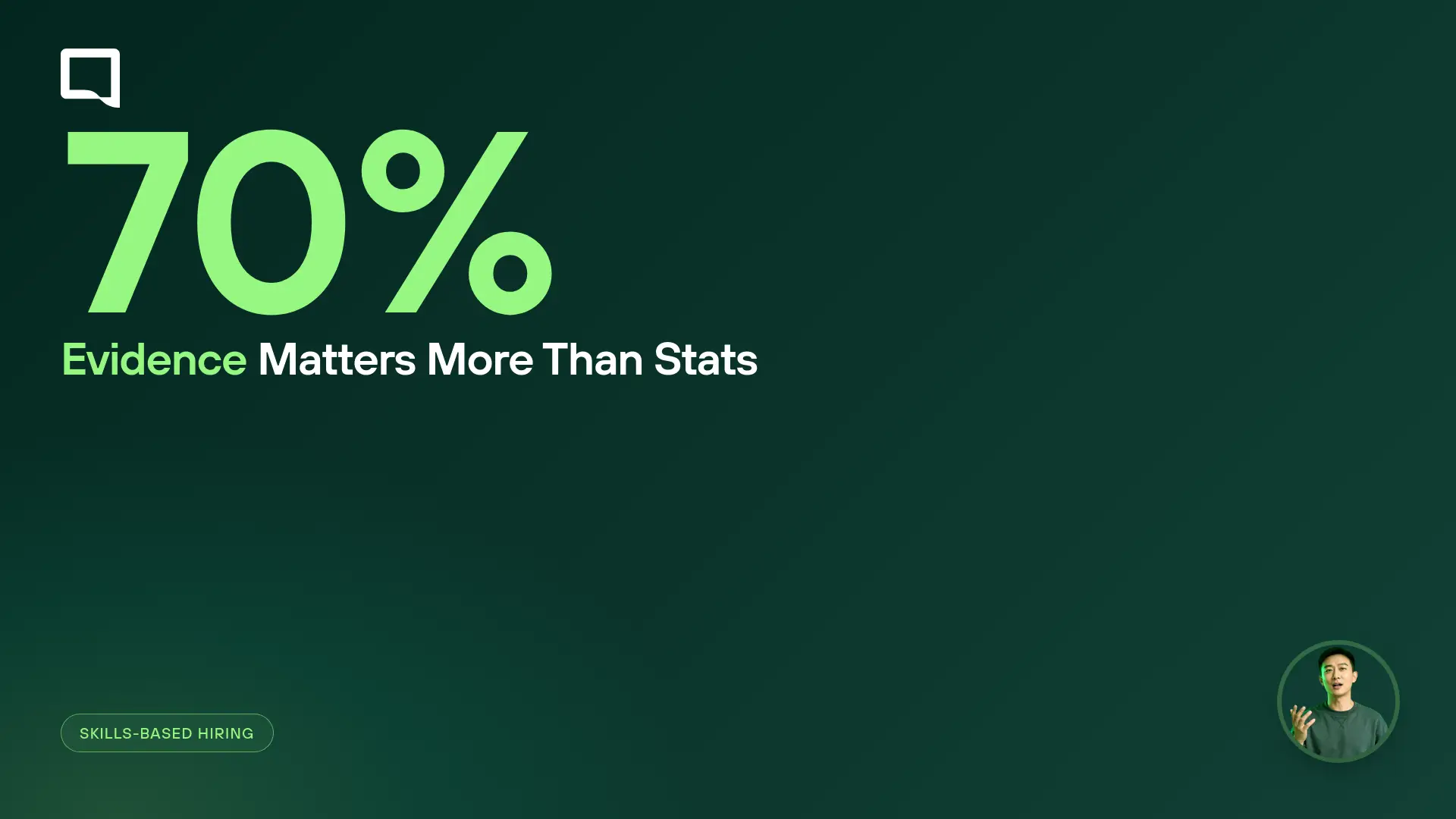
In the rapidly evolving landscape of modern talent acquisition, a narrative has taken hold within the executive suite: the traditional degree is being eclipsed by the dynamic, demonstrable skill. Leading this discourse are corporate figures such as Dr. Naresh Kumar Puritipati, President-HR at Deepak Fertilisers and Petrochemicals Corporation (DFPCL). In recent discussions reported by industry outlets like ETHRWorld, proponents of this shift have cited striking figures, most notably that 70 percent of employers now utilize skills-based hiring for entry-level recruitment, a significant increase from 65 percent the previous year. Yet, beneath the surface of these optimistic headlines lies a complex reality characterized by a lack of methodological transparency, inconsistent definitions, and a widening gap between corporate rhetoric and objective evidence.
The Origins of the Skills-Based Hiring Narrative
The push toward skills-based hiring is not a spontaneous development but a strategic response to a volatile labor market. Over the past decade, the rapid pace of technological change has rendered many academic curricula obsolete before students even reach the workforce. Consequently, organizations have sought a more granular method of identifying talent. However, the data currently circulating in the industry—such as the 70 percent adoption rate—often lacks a verifiable pedigree.
When figures are presented without an accompanying methodology or a peer-reviewed study, they function more as marketing claims than as empirical findings. For hiring leaders, this creates a dangerous precedent: building long-term talent acquisition strategies on top of "headline numbers" that cannot be traced to primary research. The reliance on these unsourced figures suggests that the industry is experiencing a collective confirmation bias, wherein leaders are eager to believe in a transition toward meritocracy without subjecting that transition to the same analytical rigor they demand from their prospective hires.
Defining the Ambiguity: The "Skills-Based" Label
A critical issue in the current hiring debate is the lack of a standardized definition for "skills-based hiring." When companies claim to have adopted this model, they are often referring to vastly different practices. At the most rigorous end of the spectrum, companies like M3M India, represented by CHRO Veena Bansal, employ a multifaceted evaluation process. This includes analyzing how candidates navigate complex problem-solving scenarios, their collaborative tendencies in team settings, and their adaptability when facing novel challenges. These companies rely on evidence-based assessments, such as structured interviews, simulation exercises, and detailed reviews of past work, to build a comprehensive profile of a candidate’s capabilities.
Conversely, other organizations categorize the implementation of internal Learning Management Systems (LMS) or employee development programs as "skills-based hiring." A clear example of this conflation can be seen in the strategy outlined by DFPCL. While Dr. Puritipati emphasizes the expansion of the company’s manufacturing footprint and the introduction of self-paced learning to "strengthen a skilled resource base," these initiatives focus on capability building for existing employees rather than the initial screening of job seekers.
When a survey asks a hiring manager if their company practices skills-based hiring, both an organization using advanced psychometric testing and an organization providing internal upskilling may answer in the affirmative. This creates a data set that conflates talent development with talent acquisition, obscuring the truth about whether the recruitment process itself has fundamentally changed.
The AI Competency Gap: Familiarity vs. Mastery
The confusion surrounding skills-based hiring is mirrored in the way companies report on AI adoption. Reports often cite that 94 percent of surveyed learners have used AI tools, while only 20 percent have successfully built an AI-powered agent or application. This disparity illustrates a fundamental failure in how talent is often assessed: measuring exposure rather than output.
If a hiring process relies on a candidate’s self-reported comfort with a tool, it is merely measuring familiarity—a metric that is often decoupled from actual capability. In the context of AI, the ability to prompt a chatbot is qualitatively different from the ability to engineer a scalable automation. By failing to bridge the gap between "exposure" and "demonstrated performance," companies risk making hires based on the candidate’s proximity to a technology rather than their mastery of it. This disconnect is the primary failure mode of "lazy" skills-based hiring, where the label is applied, but the underlying evaluation methods remain superficial.
The Necessity of the Rubric
The transition from degree-centric to skills-centric hiring is technically sound, but it is operationally demanding. A true shift requires the replacement of the resume-screen with the scorecard. Organizations that have successfully transitioned to this model prioritize the creation of role-specific rubrics. These rubrics define, in granular detail, the specific competencies required for a position and provide a standardized framework for scoring candidates against those competencies.
Without a documented evidence trail—a record of why a specific candidate outperformed another based on a predefined set of skills—the claim of "skills-based hiring" is merely a linguistic change. Many talent acquisition teams that describe themselves as skills-based are unable to produce the scorecards or the rationale behind their recent hiring decisions when pressed. This suggests that the industry’s confidence in this transition is currently outpacing its documentation.
Historical Context and the Role of the Degree

It is important to clarify that the current movement toward skills-based hiring does not imply the death of the university degree. Rather, the role of the degree is being recontextualized. In sectors such as healthcare, where regulatory compliance and professional accreditation are paramount, degrees remain a necessary baseline for entry. However, as executives like Balkishan Sharma of Paras Health have noted, the degree is shifting from a "final qualification" to a "starting point."
The goal of modern hiring is to determine what happens after that starting point. If a degree confirms that a candidate has reached a baseline level of knowledge, the interview process must then confirm that they possess the judgement, resilience, and problem-solving capacity to apply that knowledge in a corporate environment. The shift is not away from the degree itself, but away from the assumption that the degree is the end of the evaluation process.
Implications for Talent Leaders
For hiring leaders, the path forward involves separating the noise from the signal. The "70 percent" statistic, while attention-grabbing, is a distraction. A more valuable metric for any organization is its "Internal Validity Rate"—the degree to which its hiring assessments accurately predict long-term performance.
To achieve this, leadership must demand a move away from nebulous labels and toward empirical rigor. This involves:
- Developing evidence-based rubrics for every role, ensuring that the skills being tested are directly tied to the requirements of the job.
- Implementing standardized assessment tools that go beyond self-reporting, requiring candidates to demonstrate their skills through simulations or work samples.
- Institutionalizing the feedback loop, where the performance of new hires is compared against their pre-hire assessment scores to refine the recruitment rubric over time.
The Conclusion: Evidence Over Adoption
The narrative that skills are replacing degrees is only as strong as the methods used to identify those skills. If the industry continues to accept unverified statistics and vague definitions, the "skills-based" label will eventually lose its meaning, becoming yet another corporate buzzword that fails to deliver on its promise.
The true transformation of the hiring landscape will not be measured by a survey of adoption rates, but by the ability of organizations to produce the rubric, the score, and the evidence behind their talent decisions. Until an organization can justify a hire based on a documented, repeatable, and objective methodology, it is not practicing skills-based hiring—it is merely shifting the language of its recruitment strategy. The gap between the claim and the practice is significant, but it is a gap that can be closed through the application of systematic, evidence-based interviewing. As the workforce continues to evolve, the organizations that thrive will be those that prioritize the rigors of proof over the convenience of a statistic.
Related posts: