When a crisis crosses geographic borders, how leaders communicate can matter as much as what they say.
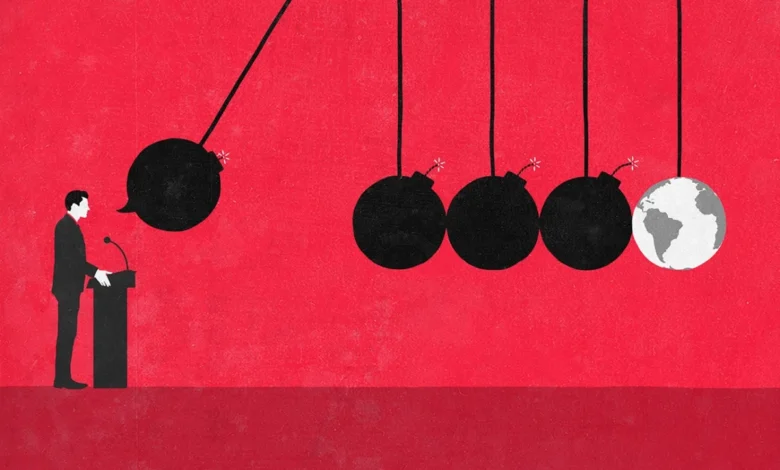
In today’s hyper-connected, globalized business environment, high-stakes disruptions test an enterprise’s cultural agility just as rigorously as its operational resilience. As supply chains stretch across continents, remote teams span multiple time zones, and corporate footprints encompass diverse populations, cultural agility has transitioned from a desirable soft skill to an absolute business essential. Modern crises now unfold across cultural boundaries just as frequently as they do across physical borders. Yet, executive leadership teams remain surprisingly unprepared for the friction that occurs when meticulously crafted crisis response plans are lost in cultural translation. Minor missteps in tone, subtle variations in linguistic delivery, and divergent expectations regarding timing can entirely derail a company’s reputation, transforming operational setbacks into catastrophic reputational failures in the moments that matter most.
The Anatomy of Cross-Cultural Miscommunication
According to workplace researchers and organizational crisis experts S. Amy Sommer and Christine M. Pearson, three primary pressure points consistently complicate cross-cultural crisis response: communication style, deference to hierarchy, and timing expectations. When a corporation faces an emergency abroad or within culturally distinct regions of its home country, failing to account for these psychological and sociological dynamics can cause subtle cultural divides to rapidly collapse into profound relational ruptures.
Business leaders frequently assume that factual transparency and operational efficiency are universally valued metrics of crisis competence. However, anthropological and organizational studies demonstrate that communities under duress evaluate leadership through local cultural lenses. What an executive from a low-context, highly individualistic culture perceives as a swift, rational, and straightforward update can easily be interpreted by a high-context, community-oriented demographic as cold, evasive, dismissive, or profoundly arrogant.
To navigate these treacherous waters successfully, leadership teams must abandon a one-size-fits-all communication strategy. Pre-crisis planning must incorporate localized stakeholder mapping, identifying how different cultural groups perceive authority, empathy, and accountability. Without this localized preparation, companies risk compounding the tragedy of an accident with the secondary crisis of executive tone-deafness.
Echoes of Tragedy: The Air Canada LaGuardia Collision
The devastating risks of cultural miscalculation were sharply illustrated in March 2026, when an Air Canada commercial aircraft collided with a ground fire vehicle upon landing at New York’s LaGuardia Airport. The catastrophic impact resulted in the tragic deaths of the two pilots and left numerous passengers with severe injuries. The incident immediately plunged the carrier into an intense operational and public relations crisis.
In the immediate aftermath of the disaster, Air Canada CEO Michael Rousseau stepped before the public to deliver a televised briefing. He expressed solemn condolences to the families of the victims and outlined the airline’s preliminary emergency response initiatives. While Rousseau’s speech was operationally sound, clear in its factual delivery, and supplemented with French-language subtitles on screen, his spoken delivery was conducted entirely in English, save for conventional opening and closing pleasantries ("bonjour" and "merci").

The substance of Rousseau’s message was not the primary catalyst for the ensuing public uproar; rather, the delivery sparked intense fury. Air Canada is officially headquartered in Montreal, Quebec—a predominantly French-speaking province where language carries immense historical, political, and cultural significance. For the Québécois population, and particularly for the grieving family members of one of the deceased pilots, the CEO’s decision to deliver a major crisis address almost exclusively in English felt less like an oversight and more like a deliberate display of cultural disregard.
Public scrutiny mounted at an exponential rate across Canadian media outlets and digital platforms. Stakeholders, regional politicians, and cultural advocacy groups lambasted the executive branch for failing to read the emotional room. Recognizing that his continued presence had become an active liability that threatened to permanently alienate a critical segment of the airline’s customer base, Rousseau announced his resignation from the carrier just days after the accident.
A Striking Precedent: The Lac-Mégantic Disaster
The fallout from the LaGuardia tragedy was not an isolated aberration in Canadian corporate history; rather, it bore an uncanny and sobering resemblance to a disaster that shook the nation over a decade prior. In July 2013, an unattended, runaway freight train owned by Montreal, Maine & Railway—a U.S.-based rail holding company—derailed and exploded in the heart of the picturesque Québécois town of Lac-Mégantic. The catastrophic blasts and subsequent inferno obliterated the historic downtown core and claimed the lives of 47 residents.
Five days after the catastrophe, Edward Burkhardt, the chairman of the parent company, traveled from Chicago to visit the devastated community. Much like Rousseau’s later appearance, Burkhardt addressed the press and the shell-shocked residents exclusively in English, offering minimal early expressions of institutional contrition.
Burkhardt’s objective was to project corporate transparency, defend the railway’s immediate operational decisions, and manage legal exposure. However, the grieving Québécois community interpreted his demeanor as the epitome of corporate detachment, arrogance, and cold indifference. In the cultural framework of the region, authentic leadership during a mass-casualty event demands physical presence, visible emotional resonance, humility, and an unprompted acknowledgment of profound human loss before transitioning to technical explanations.
The mangled wreckage of what locals grimly dubbed le train d’enfer ("the train from hell") served as a brutal lesson in corporate sociology. It exposed how swiftly a severe misreading of emotional and cultural contexts can permanently alienate key stakeholders, destroy brand equity, and turn public sympathy firmly against an enterprise in crisis.
Deconstructing the Three Pressure Points
To prevent similar failures, leadership scholars Sommer and Pearson emphasize that organizations must thoroughly analyze the three core pressure points of cross-cultural crisis management long before an emergency strikes.

1. Communication Style and Context
Cultures vary significantly in how explicitly messages must be stated. In low-context cultures (such as the United States or English-speaking Canada), communication tends to be direct, explicit, and focused on immediate task execution and facts. In high-context cultures (common in many parts of Asia, Latin America, and Indigenous or francophone communities), communication relies heavily on underlying contexts, non-verbal cues, relationship histories, and implicit emotional resonance. When a low-context executive delivers a purely data-driven, transactional briefing to a high-context audience during a tragedy, the audience often perceives the speaker as unfeeling and untrustworthy.
2. Deference to Hierarchy and Authority
Different societies maintain vastly different expectations regarding how leaders should behave during a crisis. In cultures with high power distance, stakeholders expect leaders to project absolute authority, command the room, and direct recovery efforts from a position of hierarchical superiority. Conversely, in low power distance cultures, stakeholders often expect leaders to demonstrate collaborative humility, acknowledge shared vulnerability, and engage directly with affected individuals on an egalitarian level. Misjudging this dynamic can cause executives to be viewed either as weak and indecisive or as tyrannical and out of touch.
3. The Temporal Dimension of Timing
The concept of time itself is culturally relative. In linear-time cultures, speed is paramount; stakeholders demand immediate statements, rapid updates, and instant transparency, interpreting delays as incompetence or a cover-up. In flexible-time cultures, rushing a response without first establishing relational trust or consulting community elders and leadership councils can be viewed as reckless and disrespectful. Balancing the pressure for rapid corporate disclosure with the cultural requirement for deliberate, measured engagement remains one of the most difficult challenges for international leadership teams.
Operationalizing Cultural Agility in the Boardroom
Integrating cultural agility into an enterprise crisis management framework requires moving beyond traditional tabletop exercises that focus solely on operational logistics, media management, and legal liability. Modern crisis planning must incorporate robust cultural simulations and stakeholder mapping protocols.
Enterprises operating across diverse geographic and linguistic regions should adopt several strategic practices to safeguard their leadership communications:
- Cultivate Localized Advisory Networks: Corporations should establish regional crisis communication councils composed of local experts, community liaisons, and culturally fluent executives who can vet public statements before they are released.
- Prioritize Linguistic and Cultural Fluency: In bilingual or multilingual markets, executive leadership must possess the linguistic capability—or commit to utilizing certified, culturally attuned proxies—to address affected populations in their native tongue with appropriate regional idioms and emotional resonance.
- Train for Emotional Intelligence: Crisis media training must extend beyond managing aggressive reporters or sticking to corporate talking points. Leaders must be coached in recognizing cultural expectations surrounding grief, empathy, humility, and accountability.
- Establish Protocols for Compassionate Presence: Organizations must define what visible leadership means within the specific cultural contexts of their operational footprint, ensuring that executives arrive not merely as defensive defenders of shareholder value, but as compassionate partners in human recovery.
The Broader Implications for Global Enterprise
As geopolitical tensions rise and global supply chains continue to experience unprecedented volatility, the likelihood of cross-border and cross-cultural crises will only increase. Corporations can no longer afford to treat cultural competence as an afterthought or delegate communication strategies entirely to domestic public relations teams who lack international field experience.
The cautionary tales of Air Canada and Montreal, Maine & Railway underscore a fundamental truth of modern leadership: in the crucible of a crisis, words hold immense power, but the cultural framework through which those words are delivered will ultimately determine whether a leader is embraced as a trusted guide or rejected as an outsider. By anticipating cultural pressure points, respecting diverse emotional norms, and embedding true agility into their organizational DNA, forward-thinking enterprises can protect their reputations, preserve community trust, and navigate the most turbulent storms with integrity.