Beyond the Mound: CC and Amber Sabathia’s Post-Baseball Legacy of Philanthropy and Enterprise

Few Major League Baseball pitchers achieve a career spanning fifteen seasons, let alone nineteen. In an era dominated by pitch counts, specialized bullpens, and rigorous biometric tracking, longevity is increasingly rare. Yet, left-hander CC Sabathia defied modern athletic attrition. Across nearly two decades on the mound, he established himself as one of the most durable, dominant, and recognizable pitchers of his generation, anchoring rotations for the Cleveland Indians, Milwaukee Brewers, and New York Yankees.
However, professional sports eventually exact an unavoidable physical toll, and even a Cy Young Award winner must yield to the passage of time. In 2019, following a storied career defined by a World Series championship, multiple All-Star selections, and over 3,000 strikeouts, Sabathia officially retired from professional baseball.
Today, as the New York Yankees prepare to permanently honor his contributions by retiring his iconic No. 52, CC and his wife, Amber Sabathia, are reflecting on a profound professional transition. Far from retreating into quiet retirement, the couple has channeled their experience, platform, and resources into the PitCCh In Foundation—a philanthropic organization dedicated to enriching the lives of underserved youth. Simultaneously, Amber has carved out a formidable professional path of her own as a certified baseball agent with CAA Sports, proving that the Sabathia family’s impact on the sports industry extends far beyond the pitcher’s mound.
The Genesis of PitCCh In: Beyond Writing Checks
The roots of the PitCCh In Foundation trace back to 2008, a period of immense professional transition for the Sabathia family. As CC navigated a high-stakes free agency period that would eventually lead him to the Bronx, the couple recognized a growing responsibility to formalize their philanthropic efforts.
While CC had previously made direct financial contributions to his hometown of Vallejo, California, both he and Amber felt that traditional monetary donations lacked accountability and measurable impact. They wanted to ensure that their contributions generated sustainable, systemic improvements in the communities they cared about most. Establishing an independent foundation offered the transparency and operational control required to achieve that vision.
Growing up utilizing the resources of a local Boys & Girls Club, CC retained a lifelong affinity for youth-centric organizations. This personal history heavily influenced the core mission of PitCCh In: providing young people with essential educational resources and athletic opportunities. What began as a strategic philanthropic endeavor quickly evolved into a core pillar of the Sabathia family identity. Throughout his demanding playing career—which required grueling travel, rigorous training regimens, and intense media scrutiny—CC remained deeply involved in the foundation’s operations, frequently and affectionately referring to it as his "fifth child."
Amber emphasizes that the foundation was never conceived as a secondary project or a superficial public relations exercise. The couple had spent years discussing the philosophy of giving back before officially launching the organization. Their central thesis was simple yet demanding: true philanthropy requires physical presence, active engagement, and sustained community involvement rather than passive financial contributions.
Evolving Operations: From Grassroots Initiatives to Signature Events
Over nearly two decades of operation, the PitCCh In Foundation has scaled its operations significantly, developing three signature programs designed to equip students with the tools necessary for academic and athletic achievement. These initiatives include the All-Star Baseball Clinic, the Youth Backpack Program—which supplies students with essential school supplies ahead of the academic year—and comprehensive athletic field renovations that provide safe, modern spaces for youth sports.
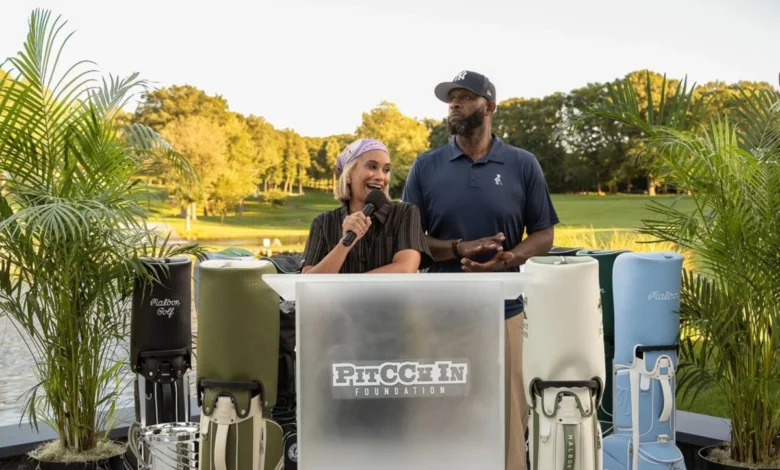
To sustain these programs, the foundation relies on a robust calendar of fundraising and community events. Among these, the annual Sabathia Shootout and the celebrity Golf Classic have emerged as premier fixtures on the philanthropic circuit. These events leverage the extensive network of professional relationships CC cultivated during his nineteen seasons in Major League Baseball and the broader entertainment landscape.
Recent iterations of the foundation’s marquee events have drawn heavy hitters from sports, music, and media, including Pro Football Hall of Famer Michael Strahan, legendary radio host Angie Martinez, former NBA players J.R. Smith, Matt Barnes, and Dellin Betances, as well as cultural icons like Ja Rule and former All-Star outfielder Gary Sheffield. Despite the star-studded guest lists and competitive golf matches—with participants like Matt Barnes routinely drawing praise for their performance on the links—CC maintains that the true measure of the foundation’s success lies away from the country club.
For the Sabathias, the most rewarding aspect of the foundation’s work is observing the long-term trajectory of the youth they serve. By maintaining continuous partnerships with various Boys & Girls Clubs, the Bronx Knights, and local holiday outreach caravans, the family has been able to watch individual children develop and mature over the course of many years. This continuity underscores the foundational belief that mentorship and sustained presence yield deeper community dividends than isolated financial injections.
Amber Sabathia and the Business of Representation
While CC’s post-playing days have involved deep integration with philanthropic leadership, Amber Sabathia executed a strategic pivot into the corporate and operational side of professional sports. In 2021, two years after her husband’s retirement, Amber joined CAA Sports as a baseball agent, bringing a rare insider’s perspective to client representation.
The transition was not merely a career shift; it was the formalization of lessons learned over two decades of navigating the volatile landscape of Major League Baseball. Living through CC’s career exposed her to the deeply human and psychological dimensions of professional sports—the anxiety of trade deadlines, the existential weight of free agency decisions, and the absolute necessity of trust between an athlete and their advisors. Having experienced every triumph and setback alongside her husband, Amber developed an acute empathy for the pressures faced by modern players and their families.
Entering the agency business, however, required mastering the highly technical mechanics of the industry. Beyond her innate understanding of a player’s psychological needs, Amber immersed herself in the intricacies of contract structuring, Collective Bargaining Agreement (CBA) regulations, and sophisticated negotiation strategies. She quickly recognized that effective representation demands as much active listening as hard-nosed negotiation.
In an industry often perceived as transactional, Amber has prioritized relational loyalty as her primary operational asset. By treating clients and their families with the same protective, advocacy-driven mindset she applied to her own household during CC’s playing days, she has cultivated a roster of trusting relationships. Her entry into sports agency reflects a broader industry trend where individuals with lived experience in professional athletics are stepping into advisory roles, bridging the gap between raw athletic talent and corporate stewardship.
The Broader Implications of Athlete-Led Philanthropy and Transition Management
The dual narrative of CC Sabathia’s Hall of Fame-caliber legacy and Amber Sabathia’s ascension in sports management highlights a broader evolution in how modern athletes manage career transitions. Historically, retirement from professional sports frequently precipitated a period of professional disorientation, financial vulnerability, or public obscurity. However, contemporary athletes are increasingly utilizing the platforms built during their playing days to establish sustainable philanthropic foundations and entrepreneurial ventures.
The PitCCh In Foundation serves as a case study in institutional longevity within athlete-led philanthropy. By institutionalizing their charitable vision early in CC’s career, the Sabathias insulated their philanthropic efforts from the transient nature of athletic fame. The foundation’s ability to operate successfully fifteen years after its inception demonstrates that structured, mission-driven organizations can outlive the playing careers of their founders.
Furthermore, the timing of CC’s jersey retirement by the New York Yankees on September 26 underscores the enduring equity associated with a disciplined, high-character professional career. In an era where sports franchises face increasing scrutiny regarding player conduct and community engagement, athletes who maintain pristine reputations both on and off the field provide immense long-term value to their organizations.
As the Sabathia family enters this new chapter—marked by celebratory tributes in the Bronx, continued expansion of their charitable footprint, and professional growth in corporate sports representation—their trajectory offers a blueprint for modern athletic stewardship. By pairing public acclaim with private accountability, CC and Amber Sabathia have ensured that their impact on the sports world will resonate long after the final pitch has been thrown.
Related posts: