The End of an Era as Warren Buffett Steps Down as Chairman of Berkshire Hathaway

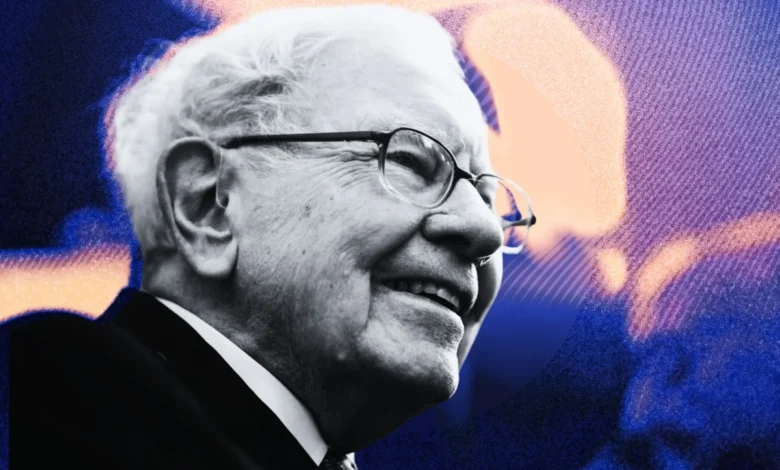
The financial world witnessed a historic transition this week as Warren Buffett, the legendary investor and long-time steward of Berkshire Hathaway, announced his immediate resignation as chairman of the board. At 96 years old, the "Oracle of Omaha" has officially signaled the conclusion of a six-decade-long tenure that transformed a struggling textile manufacturer into one of the most powerful and valuable conglomerates in global history. While Buffett will retain a seat on the board and transition into the role of chairman emeritus, the decision marks the final major step in a meticulously planned succession strategy designed to ensure the stability of the trillion-dollar enterprise.
In a candid letter addressed to shareholders on Friday, Buffett reflected on his longevity and the inevitability of the passage of time. The decision, he noted, was solidified by a moment of personal clarity following his 96th birthday, during which he observed his one-year-old great-grandchild navigating the world with a vigor that provided a stark contrast to his own pace. Recognizing that the time had come to fully relinquish the reins, Buffett expressed complete confidence in the leadership team he has spent years cultivating.
The Architecture of Succession
The transition of leadership at Berkshire Hathaway has been a subject of intense speculation and rigorous planning for over a decade. The blueprint for this change became increasingly visible over the last two years, culminating in the appointment of Greg Abel as Chief Executive Officer earlier this year. Abel, who previously served as the head of Berkshire Hathaway Energy, has been credited by Buffett for exceeding high expectations and demonstrating a profound understanding of the conglomerate’s decentralized operational model.
Complementing Abel’s role as the operational leader, Howard Buffett, the 71-year-old son of the outgoing chairman, will assume the position of chairman of the board. The younger Buffett brings a unique perspective to the role; beyond his decades of service as a Berkshire director, he is a noted conservationist and agricultural expert, managing significant farming operations in Nebraska and Illinois. According to the elder Buffett, the division of labor is deliberate: Abel will manage the complex financial and operational mechanics of the business, while Howard will serve as the guardian of the company’s distinct culture and values, which Warren Buffett considers to be the firm’s most durable assets.
A Chronology of the Transition
The path to this moment has been paved with incremental shifts that allowed the market and shareholders to adjust to a post-Buffett reality:
- 2021: Berkshire Hathaway officially identified Greg Abel as the successor to Warren Buffett, ending years of speculation regarding the future of the firm.
- May 2025: During the annual shareholder meeting, Buffett confirmed the timeline for his departure as CEO, setting a hard deadline of January 1, 2026, for the handover.
- Early 2026: Greg Abel assumed the mantle of CEO. Notably, he authored the annual shareholder letter, a task previously held exclusively by Buffett for decades.
- May 2026: At the annual meeting, Buffett assumed a secondary role, speaking briefly from the audience rather than presiding over the event, signaling his withdrawal from public-facing leadership.
- September 2026: Buffett officially resigns as chairman of the board, transitioning to the title of chairman emeritus.
The Legacy of a Financial Giant
To understand the magnitude of this departure, one must look at the trajectory of Berkshire Hathaway since Buffett assumed control in 1965. At that time, Berkshire was a failing textile mill in New England. Through a series of brilliant capital allocations and a philosophy centered on acquiring high-quality businesses with "moats"—sustainable competitive advantages—Buffett built a diversified powerhouse.
Today, Berkshire Hathaway’s portfolio spans a vast array of sectors, including insurance (GEICO, Gen Re), railroads (BNSF), energy (Berkshire Hathaway Energy), manufacturing, and retail. As of the most recent reporting, the company maintains a massive cash hoard and reported operating earnings of $44.5 billion for 2025. This financial strength has allowed Berkshire to navigate economic downturns, market crashes, and periods of high inflation with remarkable resilience.
Philanthropy and the Diminishing Personal Stake
Buffett’s withdrawal from the company is not limited to his board seat; it extends to his personal wealth. In July, Buffett reiterated his long-standing commitment to philanthropy, outlining a plan to distribute his remaining Berkshire shares—estimated at roughly $140 billion—to four foundations by the end of 2034.
This commitment is the culmination of a strategy he began in 2006, when he pledged to donate more than 99% of his total wealth to charitable causes. By systematically transferring his voting power and economic interest to philanthropic entities, Buffett is effectively untethering his personal legacy from the day-to-day fluctuations of the stock market. This move has been praised by institutional investors as a way to ensure that his departure does not trigger a sudden, disruptive shift in the company’s share structure.
Market Implications and Future Outlook
The immediate market reaction to the announcement has been one of calm, reflecting the success of the long-term communication strategy employed by the Berkshire board. Analysts note that because the succession plan was not a sudden emergency measure, but rather a slow, deliberate transfer of power, the risk of institutional instability is minimal.
However, the departure of a figure like Warren Buffett does invite questions regarding the company’s future investment strategy. Buffett’s "value investing" approach—characterized by patience, deep research, and a willingness to hold assets indefinitely—is woven into the fabric of the organization. Investors are closely watching to see how Abel navigates the challenges of the modern economy, particularly in the face of rapid technological disruption and shifting global trade dynamics.
Furthermore, the role of Howard Buffett as board chairman is seen as a stabilizing force. His 33-year tenure as a director provides a bridge to the past, ensuring that while the leadership team evolves, the foundational principles of fiscal discipline and long-term stewardship remain intact.
The Cultural Stewardship of the Firm
Perhaps the most significant challenge for the new leadership will be the preservation of what is often referred to as the "Berkshire culture." Unlike many other conglomerates that rely on centralized control and rigid reporting structures, Berkshire Hathaway is famous for its extreme decentralization. The company’s headquarters in Omaha is famously small, and individual business units are largely left to operate autonomously under the guidance of their own managers.
In his final letter as chairman, Buffett explicitly highlighted this aspect of his legacy. By tasking his son with "guarding the culture," he acknowledged that the greatest threat to a company of Berkshire’s size is the bureaucratic bloat that often accompanies the growth of massive corporations. The "apprenticeship" model that Howard Buffett has undergone—longer than the one Warren himself served before taking the helm at age 34—is intended to ensure that the company maintains its lean, meritocratic, and integrity-driven ethos.
As the curtain closes on the Buffett era, the consensus among financial analysts is that Berkshire Hathaway is entering a new phase of maturity. The company is no longer the scrappy underdog or the singular vision of one man; it is a permanent fixture of the global economy. Whether the firm can continue to outperform the S&P 500 under the leadership of Greg Abel remains the primary question for the next generation of investors. Yet, for now, the transition represents a rare and successful example of corporate governance, where the visionary founder has successfully passed the torch to a new generation, ensuring that the ship continues to sail long after the captain has stepped off the bridge.