The Strategic Value of L&D Podcasts in a Rapidly Evolving Corporate Landscape

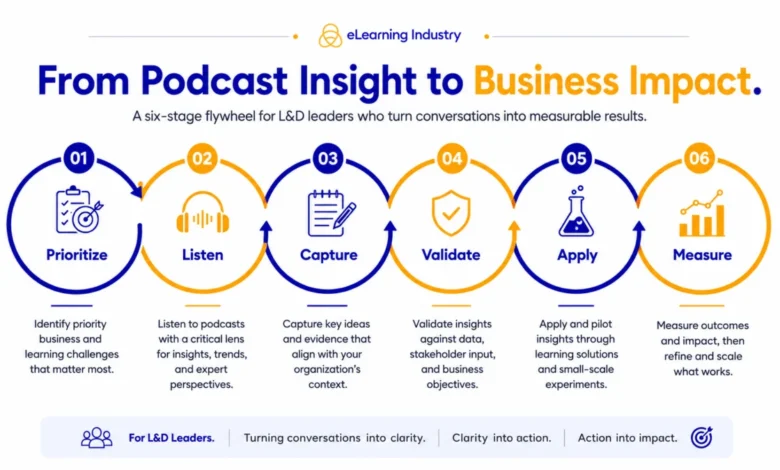
The landscape of professional development has undergone a seismic shift, moving away from static, annual training models toward a continuous, agile approach to knowledge acquisition. As Learning and Development (L&D) professionals navigate the complexities of generative AI, the transition to skills-based organizations, and the imperative of closing global talent gaps, the traditional reliance on periodic conferences and formal certifications is proving insufficient. In this high-velocity environment, L&D podcasts have emerged as a critical infrastructure for organizational leaders, serving as a real-time bridge between theoretical research and operational execution.
The Evolution of Workplace Learning Channels
The rise of the podcast as a primary medium for professional growth mirrors broader trends in digital consumption. According to recent industry data, over 460 million people globally consume podcasts, with a significant uptick in the professional development sector. For instructional designers, HR strategists, and talent development managers, the value proposition is rooted in the concept of "learning in the flow of work."
Historically, L&D professionals relied heavily on academic white papers and massive open online courses (MOOCs) to stay current. However, the lag time between the emergence of a technological disruption—such as the mainstreaming of Large Language Models (LLMs)—and the publication of formal curricula can span months or even years. Podcasts have effectively disrupted this timeline, allowing industry practitioners to share insights on emerging tools within days of their adoption. This shift represents a move toward "just-in-time" learning, where the information consumed is immediately applicable to the problems faced during the workday.
A Chronology of the Digital Learning Shift
The integration of audio-based learning into corporate strategy has progressed through three distinct phases:
- The Pre-Digital Era (Pre-2010): Knowledge transfer was localized, relying on in-person seminars and internal knowledge management systems. Professional development was a scheduled event, typically siloed from daily responsibilities.
- The Rise of Digital Accessibility (2010–2019): The proliferation of smartphones and high-speed mobile data made audio content portable. L&D professionals began curating internal "resource lists," and the first wave of industry-specific podcasts began to surface, focusing on high-level theory.
- The Era of Accelerated Transformation (2020–Present): The COVID-19 pandemic necessitated a remote-first approach to all operations, including professional development. Simultaneously, the rapid evolution of generative AI compelled L&D teams to stay updated on a weekly—rather than quarterly—basis. Podcasts became the preferred medium for this high-frequency, low-friction information intake.
Data-Driven Insights and Industry Impact
The efficacy of podcasts in the L&D sector is supported by the principles of neuro-education, which suggest that auditory learning can significantly enhance retention when paired with active reflection. Recent surveys among talent development professionals indicate that 65% of those who listen to industry-specific podcasts report a direct correlation between the content consumed and the successful implementation of new learning strategies.
Moreover, the scope of these programs has expanded. In 2024, the most influential L&D podcasts shifted their focus toward "skills-based architecture." As organizations like IBM and Google continue to move away from degree-based hiring toward skills-based models, podcasts have become the primary forum for discussing the "how-to" of this transformation. Experts interviewed on these platforms frequently cite data points regarding talent retention, noting that companies with robust, ongoing learning cultures see a 30% to 50% increase in employee engagement compared to those relying on static annual training.
Perspectives from Industry Leaders
Christopher Pappas, CEO and founder of eLearning Industry, notes that the competitive advantage in the current market belongs to the "fast-learning organization."

"Today, staying informed is a competitive advantage," Pappas observes. "The organizations that learn faster adapt faster. That’s why resources like podcasts have become invaluable, because they connect learning professionals with the ideas, experiences, and industry voices shaping the future of workplace learning."
This sentiment is echoed by broader organizational development (OD) theory. The traditional "expert-led" model of training is increasingly being replaced by a "peer-to-peer" model, where practitioners share candid accounts of failures and successes. This shift toward vulnerability and transparency in professional content is a hallmark of the modern podcast era.
Evaluating Credibility in an Information-Rich Environment
As the volume of professional audio content grows, the challenge for the modern L&D professional is curation. To maintain a high signal-to-noise ratio, industry standards for evaluating podcast credibility have evolved to focus on five key pillars:
- Evidence-Based Methodology: Does the program cite peer-reviewed research or verifiable industry data?
- Practical Applicability: Are the insights actionable within a 30-day window?
- Diversity of Thought: Does the host incorporate perspectives from outside the traditional L&D bubble, such as psychology, data science, and business operations?
- Temporal Relevance: Is the content updated to reflect current technological shifts, such as AI integration or remote management?
- Host Expertise: Is the content produced by individuals with a demonstrable track record in the field?
Implications for Organizational Strategy
The move toward podcast-integrated professional development has significant implications for how companies structure their own internal learning ecosystems. Many organizations are now moving beyond passive listening by creating structured "learning circles" or "podcast clubs" where staff members consume a specific episode and then meet to discuss how the concepts might be applied to internal projects.
This practice effectively democratizes access to expert opinion. Junior instructional designers gain the same access to high-level strategic thinking as senior directors, fostering a more informed and cohesive team. Furthermore, when these insights are translated into organizational action—such as updating an onboarding process or refining a competency framework—the ROI of the time spent listening becomes quantifiable.
Navigating the Future: AI and Beyond
The next phase of the L&D podcast evolution will likely involve the integration of artificial intelligence for content discovery. As listeners become more sophisticated, they will expect personalized podcast feeds that align with their specific development goals—whether that be mastering learning analytics, exploring immersive learning (VR/AR), or navigating the complexities of hybrid leadership.
However, professionals are cautioned against "popularity bias." A podcast with a large following is not inherently more valuable than a niche program that provides deep, technical insights. The most effective strategy for the modern learning leader is to cultivate a "balanced portfolio" of audio content: one or two high-level trend-focused shows, a technical podcast focused on instructional design, and a broader business-strategy podcast to provide context on the organization’s wider objectives.
Conclusion: A New Standard for Professional Competence
The transition of the L&D podcast from a supplemental resource to a core component of professional development is complete. It represents a fundamental recognition that in an age of constant change, the ability to learn continuously is the only sustainable strategy for success. By treating podcasts not as background noise, but as a rigorous, deliberate, and high-value source of information, L&D professionals can transform their daily commute or routine tasks into a powerful engine for organizational innovation. As the industry continues to advance, those who master the art of "listening with intent" will undoubtedly be the ones who define the future of the workplace.