United Airlines CEO Scott Kirby Rewrites the Executive Playbook With a Four-Hour Meeting Cap and Relentless Focus on the Horizon

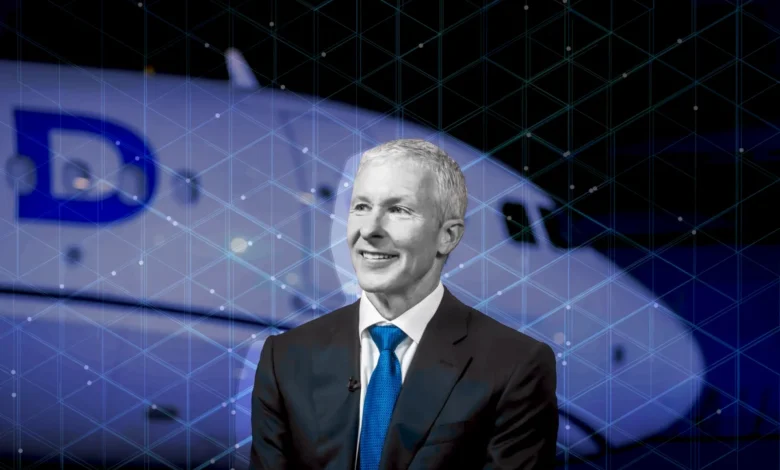
In the upper echelons of corporate leadership, the badge of honor has long been a calendar choked with back-to-back appointments, marathon strategy sessions, and an overflowing inbox. However, United Airlines CEO Scott Kirby is actively dismantling this traditional executive archetype. At 59 years old, Kirby has instituted a strict personal policy: he caps his daily meetings at a maximum of four hours. By aggressively shielding his schedule from corporate bloat, the highest-paid airline executive in the industry is demonstrating that the primary function of a chief executive is not merely to execute tasks, but to think critically about long-term vision.
Kirby’s approach challenges the modern corporate obsession with constant connectivity and performative busyness. While many leaders pride themselves on working eighty-hour weeks driven by reactive problem-solving, Kirby maintains that executive longevity and corporate success depend on proactive, visionary isolation. This philosophy underpins not only his daily routine but also the aggressive multi-billion-dollar expansion strategy currently transforming United Airlines into a global aviation powerhouse.
The Evolution of Executive Time Management
The modern CEO’s calendar has traditionally been viewed as a battlefield of competing demands from board members, investors, middle management, and media outlets. Figures like Apple CEO Tim Cook are famously known for grueling operational schedules and exhaustive email routines. In contrast, Kirby’s philosophy treats time as a finite capital asset that must yield the highest possible strategic return.
By limiting his daily meeting allocation to four hours, Kirby forces his organization to be hyper-efficient. When he steps into a conference room or joins a video call, he has zero tolerance for administrative theater. He actively bans standard PowerPoint presentations—arguing that employees can read data decks independently on their own time—and instead demands fluid, dynamic exchanges of ideas.
"My meetings are also quick, and my meetings are almost all conversational," Kirby explained during an interview with Semafor. This conversational mandate transforms corporate gatherings from passive listening sessions into active problem-solving forums. By stripping away redundant reporting structures, Kirby protects the cognitive bandwidth required to helm a major global carrier. "The further you go in your career, certainly by the time you’re the CEO, your job is not to work hard; it’s to think hard," Kirby noted. "If you’re spending your time looking at yesterday’s detailed metrics, you’re doing the wrong thing."
A Day in the Life: From Sunrise Routine to Literary Immersion
Kirby’s rejection of calendar overload directly funds his intensive daily routine, which begins long before the sun rises. Sleeping a robust eight and a half hours, he wakes naturally around 5:30 a.m. Unlike executives who immediately plunge into an electronic abyss, Kirby dedicates a mere five minutes to checking emails before pivoting entirely to physical wellness and cognitive enrichment.
A cornerstone of Kirby’s daily regimen is extensive reading, which consumes roughly three hours of his typical day. His reading diet is both voracious and disciplined. He systematically works through The Wall Street Journal from cover to cover, reviews selected reporting from The New York Times, and keeps pace with approximately five incoming industry and news magazines. Furthermore, he maintains a blistering pace of finishing about two books a week, spanning diverse genres including history, science, biographies, and science fiction.
Industry analysts and leadership experts frequently point to cross-disciplinary reading as a critical driver of innovative corporate strategy. Kirby views this intellectual consumption as essential for pattern recognition and connecting disparate concepts that others miss. "Reading, I think, is the number one thing you can do to connect dots, which I think I’m good at that other people don’t see," he observed. This deliberate intake of diverse ideas feeds directly into his stated mandate: "My job is to be focused over the horizon—what’s coming that no one else sees yet. It is not to be focused on what happened yesterday."
Compensation and the High-Stakes Airline Industry
Kirby’s unique leadership style is deployed against a backdrop of immense financial responsibility. In 2025, Kirby pulled in a total compensation package valued at $32.3 million, cementing his status as the highest-paid airline CEO in the commercial aviation sector. Such compensation packages reflect the gravity of leading a legacy carrier through volatile macroeconomic conditions, labor negotiations, supply chain disruptions, and fluctuating fuel costs.
The aviation industry operates on exceptionally long capital investment cycles. Decisions made by a CEO today regarding fleet composition, technological integration, and route networks often will not yield financial results for five to ten years. Aircraft orders placed with manufacturers like Boeing and Airbus require multi-year production windows, while international hub development demands delicate diplomatic and regulatory navigation.
Consequently, Kirby’s insistence on carving out deep-thinking time is not an executive luxury; it is an absolute operational necessity. A mistake in long-term fleet planning or route forecasting can cost an airline hundreds of millions of dollars, whereas a visionary bet on consumer trends can secure market dominance for decades.
Fueling Growth: Fleet Expansion and Global Reach
The fruits of Kirby’s strategic focus are vividly visible in United Airlines’ aggressive growth trajectory. Freed from the weeds of daily micro-management, Kirby has orchestrated some of the most ambitious expansion initiatives in the carrier’s history.
Foremost among these is a massive mega-fleet modernization program. United is scheduled to take delivery of more than 250 new aircraft by April 2028. This capital expenditure allows the airline to retire older, less fuel-efficient planes, reduce its environmental footprint, lower maintenance costs, and enhance the overall passenger experience with modern cabin layouts and improved fuel burn metrics.
Simultaneously, the Chicago-based carrier is executing its largest international network expansion to date. United recently announced plans to launch 10 additional overseas destinations, opening routes to culturally and economically vibrant global markets such as Okinawa in Japan, as well as Ibiza and Valencia in Spain. These strategic additions are designed to capture rebounding leisure travel demand and tap into high-yielding international business routes that competitors may be overlooking.
Elevating the Passenger Experience: The Digital Battleground
Beyond physical infrastructure and geography, Kirby’s long-term strategy focuses heavily on differentiating United from fierce domestic rivals like Delta Air Lines through technological superiority. While legacy airlines have historically competed primarily on schedule reliability and loyalty programs, United is staking a significant portion of its brand equity on a vastly superior digital and in-flight connectivity experience.
A prime example of this forward-looking strategy is the rapid deployment of SpaceX’s Starlink high-speed, low-latency Wi-Fi across the airline’s fleet. As of June, more than 400 United aircraft had been outfitted with Starlink capabilities, with leadership publicly projecting that nearly 1,000 planes will feature the advanced technology by the end of the year. By providing gate-to-gate streaming speeds that rival home broadband connections, United aims to capture remote workers and business travelers who view reliable in-flight internet as a non-negotiable requirement.
Industry Implications and the Future of Executive Leadership
Scott Kirby’s management philosophy offers a compelling case study in modern corporate governance. By delegating operational execution to a trusted executive team and strictly limiting meeting hours, Kirby maintains the mental clarity required to pilot a global airline through uncharted economic waters.
As corporate culture continues to grapple with burnout, productivity stagnation, and the inefficiencies of legacy meeting structures, other industry leaders are taking notice. The realization that executive value is measured in strategic clarity rather than calendar density could fundamentally reshape how future CEOs manage their time. For United Airlines, Kirby’s disciplined approach to leadership has translated into aggressive growth, technological innovation, and a clear line of sight toward horizon-level opportunities that competitors are still struggling to spot.