Nvidia CEO Jensen Huang receives surprise call from President Trump during live All-In Summit appearance

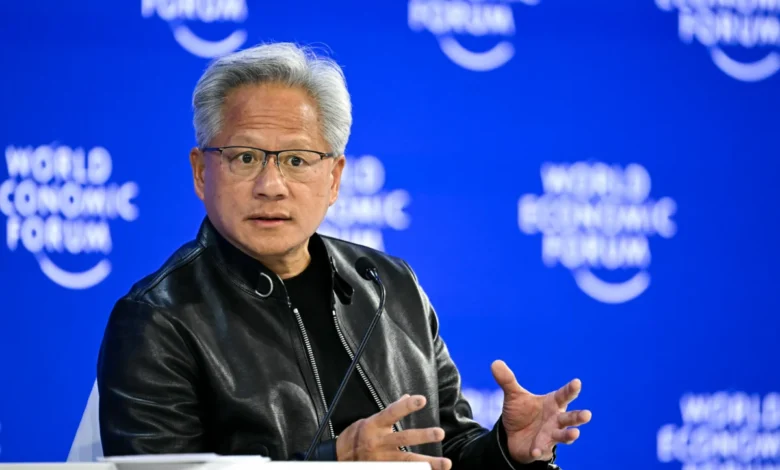
In a moment of unprecedented transparency between the highest office in the land and the primary architect of the artificial intelligence revolution, Nvidia CEO Jensen Huang received an unscheduled telephone call from President Donald Trump while on stage at the All-In Summit. The exchange, broadcast to a live audience and thousands of digital viewers, highlighted the deepening alignment between the current administration and the tech industry regarding the rapid acceleration of AI development.
The event, hosted by the venture capital figures behind the popular All-In podcast—Chamath Palihapitiya, Jason Calacanis, and White House advisers David Friedberg and David Sacks—served as the backdrop for a conversation that rapidly pivoted from corporate strategy to national policy. The unexpected interruption underscored the informal yet high-stakes nature of the current administration’s engagement with Silicon Valley leaders.
The Anatomy of the Call
The interaction began as Huang was engaged in a panel discussion regarding the future of computational infrastructure. Upon realizing the caller was President Trump, Huang made the decision to bridge the private call into the public forum. While the logistical maneuver of putting the President on speakerphone created a brief moment of technical friction—eliciting a jest from the President regarding Huang’s ability to build complex silicon chips while struggling with audio equipment—the substance of the call was clear.
The President’s primary objective appeared to be a public endorsement of an aggressive growth strategy for American AI infrastructure, framing the current caution expressed by some industry leaders as an existential threat.
The Debate Over AI Pacing
The context of the call was rooted in a growing philosophical rift within the AI community. Earlier this year, Anthropic CEO Dario Amodei issued a public call to "slow the pace" of AI development, citing potential safety risks and the need for more rigorous institutional oversight. This perspective has gained traction among some industry titans, including SpaceX CEO Elon Musk and OpenAI CEO Sam Altman, who have signaled that the industry may be moving too quickly for society to adapt effectively.
President Trump, however, rejected this sentiment outright. During the call, he characterized the push for deceleration as a strategic liability. "They’re just playing right in the hands of a lot of people that don’t want to see it happen," Trump told the audience. "That could be political people. It could also be China. And we’re not going to let that happen. It’s a hoax."
Huang, whose firm is the primary supplier of the high-end GPUs powering the global AI buildout, stood in firm agreement. "You’re right. We’re not going to let that happen, sir," Huang replied, drawing audible approval from the summit attendees.
The Conflict Over Data Center Infrastructure
The friction between the federal government and localized opposition to AI infrastructure is becoming a defining feature of the current energy policy debate. As the demand for computing power scales exponentially, the construction of massive data centers has encountered significant public resistance.
Data from a recent Gallup poll illustrates the scale of this divide: 70% of Americans currently oppose the construction of new data centers in their immediate vicinity. The primary drivers of this opposition are multifaceted, with over 50% of respondents citing the depletion of local environmental resources, specifically water and electricity. Additionally, approximately 20% of respondents expressed concerns regarding the impact of these massive facilities on local cost-of-living metrics and general quality of life.
Figures such as Y Combinator CEO Garry Tan have characterized this grassroots resistance as a coordinated effort to hinder American technological hegemony. Proponents of rapid expansion argue that without the aggressive buildout of data centers, the United States risks ceding its lead in the global AI race to international competitors.
Official Responses and Strategic Implications
The White House’s stance, as articulated by the President during the call, emphasizes a "prudent but persistent" approach. Trump noted, "We have to be a little bit careful… We have to do things and we have to do them prudently, but that doesn’t mean we’re going to stop an industry. So I’m with you all the way."
This rhetoric marks a significant shift in how the government treats the tech sector. By aligning itself with the leaders of the semiconductor and AI industries, the administration is signaling that AI compute capacity is now considered a pillar of national security and economic vitality, similar to energy independence or defense manufacturing.
For Nvidia, this public backing from the White House serves to solidify its position as a central component of national industrial policy. Despite the concerns raised by the public regarding infrastructure, the administration’s focus remains on maintaining the competitive advantage of American firms in the global AI landscape.
Broader Impact on the Tech Ecosystem
The implications of this public alignment are significant for several reasons:
- Regulatory Sentiment: The administration’s dismissal of "slowing down" as a "hoax" suggests that federal regulatory frameworks are unlikely to impose significant hurdles on AI development in the near term.
- Infrastructure Fast-Tracking: The tension between local zoning concerns and federal economic goals is likely to intensify. If the federal government views data center development as a matter of national security, it may seek to preempt local environmental and municipal regulations that currently stall construction.
- Corporate Diplomacy: The ease with which industry leaders can access the executive branch highlights a return to high-level, direct communication between the White House and Silicon Valley, bypassing traditional bureaucratic channels.
As the industry continues to evolve, the discourse surrounding AI development will likely remain bifurcated. On one side, researchers and some CEOs argue for an abundance of caution, citing existential and societal risks. On the other, the current administration and high-growth industry leaders view the race for AI dominance as a zero-sum game that the United States must win to preserve its economic and geopolitical standing.
The incident at the All-In Summit provides a clear window into the future of this relationship. It is one where the development of artificial intelligence is no longer a purely corporate endeavor but a high-priority national project, with the President of the United States acting as both a proponent and a stakeholder in the rapid advancement of the underlying hardware technology.
Looking Ahead
The next phase of this development will likely be characterized by legislative efforts to streamline the energy requirements for data centers. With the administration firmly in the camp of "full speed ahead," the debate over environmental impact and quality of life is expected to move from local town halls to federal courts and legislative chambers.
For investors and industry analysts, the takeaway is clear: the current administration is prioritizing scale over restraint. As long as this remains the official policy, the trajectory for companies like Nvidia—which provide the essential architecture for the AI age—remains focused on maximum expansion. The "hoax" narrative provided by the President suggests that any future calls for slowing down will be met with skepticism from the highest levels of government, potentially setting the stage for a period of hyper-accelerated AI deployment in the coming years.
While the technical difficulties of a speakerphone call provided a moment of levity, the underlying message was a serious marker of where the political winds are blowing. The integration of AI into the American economy is not just being encouraged; it is being mandated as a national priority, regardless of the vocal opposition from local communities or the cautious warnings from a segment of the scientific community.