The Digital Courtroom: How IBM is Architecting the Future of Global Sports Through Artificial Intelligence

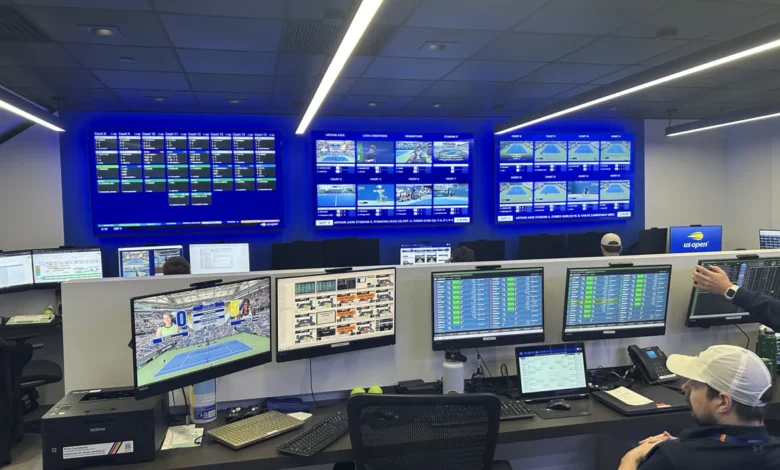
The U.S. Open has long served as a prestigious stage for global commerce, where high-stakes networking and high-visibility branding collide under the bright lights of Flushing Meadows. Yet, beneath the veneer of luxury hospitality and courtside signage lies a far more complex technological operation. For decades, IBM has functioned as the invisible infrastructure powering the tournament, but its modern role has evolved into that of a central nervous system. By integrating advanced generative AI and real-time data analytics, the tech giant is transforming one of the world’s most venerable sporting events into a high-octane laboratory for digital transformation, proving that the future of fan engagement is no longer just about the game—it is about the data behind it.
The Evolution of the Digital Tournament
To appreciate the scale of IBM’s current involvement, one must understand the logistical magnitude of the U.S. Open. The tournament is not merely a tennis competition; it is a three-week, temporary business enterprise that must support millions of concurrent users, manage massive data influxes, and maintain ironclad cybersecurity protocols.
Historically, the USTA relied on traditional server infrastructures to manage match scores and basic scheduling. However, as mobile connectivity evolved and the demand for instant, rich media grew, the USTA required a partner capable of handling exponential traffic spikes. This necessity paved the way for a long-standing partnership between the USTA and IBM, which has matured from basic hosting to the deployment of sophisticated AI models. This evolution mirrors the broader trajectory of the sports industry, which has shifted from a broadcast-centric model to a digital-first, data-driven ecosystem.
Engineering Precision: The Data Behind the Serve
The cornerstone of this year’s technological advancement is the "Serve Quality" metric. This feature represents a significant leap in sports analytics, utilizing complex AI models to synthesize raw motion data into digestible insights. By analyzing 21 specific data points across a player’s body and racquet 50 times per second, the system captures the biomechanical nuances of a serve that were previously invisible to the average spectator.
The sheer volume of data is staggering: roughly 4.6 million data points are generated per match, culminating in more than 1.2 billion data points over the course of the tournament. This data is not just stored; it is processed through IBM’s watsonx platform to provide real-time updates to the digital experience. This integration of human expertise and machine speed allows the USTA to maintain a high level of accuracy while satisfying the fan demand for near-instant statistics.
Beyond quantitative metrics, IBM has implemented an AI-driven conversational agent, a "match chat" bot that acts as a digital encyclopedia for tennis fans. By training the model on the historical records and rulebooks of the USTA, the bot can answer nuanced questions about player history, tournament records, and match conditions, effectively democratizing expert-level analysis for the casual viewer.
Scaling Operations and Enhancing Productivity
The USTA operates as a relatively lean organization for most of the year, yet it faces the monumental task of scaling its workforce and infrastructure during the three weeks of the tournament. The operational burden is immense, encompassing content production, security, and global distribution.
In this context, AI is not merely a novelty; it is an essential tool for organizational survival. The USTA’s editorial team, for instance, utilizes bespoke generative AI tools to draft match summaries and highlights. These drafts are then vetted by human editors. This "human-in-the-loop" approach has increased the USTA’s content production capacity by 300% compared to previous years, allowing the organization to cover more matches and produce deeper content without ballooning its headcount.
Furthermore, the integration of AI extends to the backend, where it optimizes server infrastructure and bandwidth allocation. As traffic flows shift between courts, the AI dynamically reallocates computing resources, ensuring that the mobile app remains responsive even during high-traffic championship matches.

The Security Imperative
In an era of increasing cyber threats, the U.S. Open is a high-profile target. Protecting the digital integrity of the event is a massive undertaking that requires continuous monitoring. IBM manages this risk by deploying AI agents to scan for malicious traffic, identifying and neutralizing nearly 500 million suspicious requests during the tournament cycle.
These agents use pattern recognition to categorize threats, allowing the security team to prioritize critical vulnerabilities over routine noise. This proactive defense mechanism is vital, as any downtime or data breach would not only disrupt the fan experience but also jeopardize the reputation of the USTA and its corporate partners.
Changing Demographics and Fan Consumption
The shift in how fans engage with sports is evident in the usage data. In 2025, more than 14 million unique devices interacted with U.S. Open digital platforms, resulting in 47 million visits—a 19% year-over-year increase. These figures highlight a broader industry trend: while global interest in professional sports is surging, the capacity of physical stadiums remains static.
Digital platforms have become the "second screen" (or primary screen) for millions of fans who cannot attend in person. IBM’s 2026 Sports Survey further validates this shift, revealing that 80% of fans now see significant value in AI-powered sports experiences. Among tennis enthusiasts, 64% explicitly trust AI-generated content, suggesting that the initial skepticism regarding machine-led analytics is rapidly fading in favor of increased personalization. Furthermore, with 91% of fans now utilizing sports apps during live events, the digital experience has become inseparable from the physical match.
Cultivating the Future: Innovation Challenges
IBM’s interest in the U.S. Open is not confined to the duration of the tournament. Through initiatives like the USTA Connect Innovation Challenge and the IBM Sports Tech Startup Challenge, the company is actively fostering an ecosystem of startups designed to solve the next generation of sports-tech problems.
The USTA Connect Innovation Challenge invites engineers and developers to build high-impact solutions, providing them with access to proprietary USTA datasets. The inclusion of venture capitalists in the evaluation process signals a strategic shift: the USTA is looking for scalable, investable technology that can be integrated into the tournament’s long-term roadmap. Similarly, the IBM Sports Tech Startup Challenge, which showcases solutions at global venues like Web Summit and Tech Week, positions IBM as a gateway for founders looking to penetrate the intersection of sports, media, and technology.
Strategic Implications and Market Impact
The partnership between IBM and the USTA serves as a blueprint for other sports organizations looking to modernize their operations. By outsourcing complex infrastructure management to a tech partner, sports leagues can pivot their focus back to their core product: the competition.
However, the implications go beyond operational efficiency. The integration of AI into sports broadcasting and fan interaction creates a "stickier" user experience, increasing the lifetime value of the sports fan. By offering personalized highlights, real-time insights, and instant answers, the U.S. Open is effectively competing with other forms of entertainment for the viewer’s time and attention.
As AI continues to mature, the next frontier will likely involve hyper-personalized live streaming, where fans can choose their own camera angles or receive commentary tailored to their specific analytical preferences. For entrepreneurs and investors, the lesson is clear: the most successful sports businesses of the next decade will be those that view themselves as technology companies first and sports organizers second.
The U.S. Open, with its rich history and commitment to innovation, is proving that the intersection of tradition and technology is not a contradiction, but a necessary evolution. As IBM continues to refine its "invisible hand" behind the scenes, it is setting a standard that will undoubtedly influence the future of how the world experiences elite athletics. The courtside seats may be limited, but in the digital arena, the capacity for engagement is essentially infinite.