OpenAI Launches ChatGPT Work to Transform Professional Productivity Through Agentic Delegation and Autonomous Task Management


OpenAI has officially introduced ChatGPT Work, a specialized iteration of its generative artificial intelligence platform designed to move beyond simple conversational interactions and toward autonomous task delegation. This launch marks a significant pivot in the artificial intelligence sector, transitioning from "Chatbot" technology—where a human provides a prompt and the AI provides a singular response—to "Agentic" technology, where the AI is empowered to execute multi-step workflows, analyze complex datasets, and perform self-correction without constant human intervention. By refining the underlying architecture to support sustained, goal-oriented tasks, OpenAI is positioning this new tool as a direct competitor to specialized enterprise software and high-level administrative staffing.
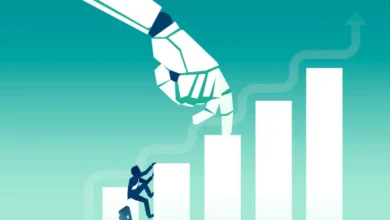
The primary distinction of ChatGPT Work lies in its shift from a back-and-forth dialogue to a delegation-based model. In traditional AI interactions, the user is responsible for managing the logic of a project, providing sequential instructions, and manually verifying the output at every stage. ChatGPT Work, however, is designed to take a high-level objective, ingest relevant files, outline the necessary steps to reach the goal, and execute those steps independently. The system is engineered to return to the user only when a critical decision is required or when the task is finalized. This development arrives as competitors like Anthropic have begun experimenting with "Computer Use" capabilities for their Claude models, suggesting an industry-wide race toward truly autonomous digital agents.
The Evolution of Generative AI: From Assistance to Autonomy
The trajectory of OpenAI’s product development reveals a clear path toward the current "Work" functionality. Since the public release of ChatGPT in late 2022, the platform has evolved through several distinct phases. Initially, the technology served as a sophisticated text generator and summarizer. With the introduction of GPT-4 in early 2023, the focus shifted toward reasoning and multi-modal capabilities, allowing the system to process images and data. The subsequent release of "GPTs"—customizable versions of ChatGPT—allowed users to tailor the AI for specific roles.
However, ChatGPT Work represents a more fundamental architectural shift. It utilizes a brand-new model framework optimized for long-form task management and "chain-of-thought" processing. This allows the AI to "think" before it acts, creating internal checklists and verifying its own work against the user’s original brief. This move is timed to address a growing demand in the small and medium-sized business (SMB) sector for tools that reduce the cognitive load on founders and operators who often find themselves mired in repetitive administrative tasks.
Seven Key Use Cases for the Solo Entrepreneur and Small Business
The practical applications of ChatGPT Work are extensive, particularly for one-person businesses and small teams where resources are limited. Industry analysts have identified seven specific "jobs" that the new system can handle with minimal oversight, effectively replacing various subscription-based SaaS tools and part-time roles.
1. Social Media Content Dashboards and Predictive Analytics
Beyond merely writing captions, ChatGPT Work can ingest raw performance data from various social platforms. It analyzes the delta between successful and unsuccessful posts, identifying patterns in engagement, timing, and visual style. The system then builds a comprehensive dashboard that explains the "why" behind the numbers, providing a strategic roadmap for future content rather than just a historical report.
2. Rapid Web Development from Natural Language
One of the most disruptive features is the ability to build functional websites from plain-English descriptions. By interpreting design preferences and functional requirements, the AI can generate the necessary code, structure the site architecture, and present a working draft. This significantly lowers the barrier to entry for entrepreneurs testing new products or services in the market.
3. End-to-End Marketing Campaign Management
The system is capable of architecting a full 90-day marketing strategy. This includes segmenting target audiences, drafting email sequences, scheduling social media rollouts, and defining key performance indicators (KPIs). Because the AI can handle the "busy work" of formatting and scheduling, the business owner can focus exclusively on high-level brand strategy.
4. Sales Funnel and Lead Generation Audits
By analyzing CRM data and website traffic patterns, ChatGPT Work can identify specific points of friction where qualified leads are dropping off. It performs a comprehensive audit of the sales funnel, suggesting technical fixes or messaging adjustments to improve conversion rates.
5. SEO-Optimized Content Production
While AI has long been used for writing, the "Work" iteration takes a holistic approach to Search Engine Optimization. It researches keywords, analyzes competitor rankings, and drafts blog posts that are pre-optimized for search algorithms. It also handles the meta-tagging and internal linking structures that are often overlooked by casual users.
6. Operational Business Reviews
The system can replace the traditional "Monday Morning Review" by aggregating data from multiple business streams—finance, operations, and sales—and condensing them into a concise brief. It highlights the top three decisions a leader needs to make each week, effectively acting as a virtual Chief of Staff.
7. Reusable Skill Retention
A common frustration with AI has been the need to "retrain" the assistant in every new session. ChatGPT Work introduces mechanisms to "remember" specific business preferences, brand voices, and operational procedures. This allows the system to build a cumulative understanding of how a specific company operates, increasing efficiency over time.
Market Sentiment and the Confidence in AI Agents
The launch of ChatGPT Work coincides with a significant shift in how business leaders perceive the reliability of artificial intelligence. According to a Q1 2026 survey conducted by Upwork, which polled 750 small-business leaders, the era of "AI skepticism" is rapidly coming to a close. The survey found that 62% of respondents are now "very confident" in handing over high-stakes, mission-critical tasks to AI agents.
Furthermore, one in three business leaders now describes AI agents as essential to their operations, while only a marginal 3% of those surveyed stated they are not considering the technology at all. This data suggests that the adoption of agentic AI is no longer a luxury for early adopters but a competitive necessity for survival in a saturated digital market. The "Confidence Gap" that once hindered AI integration is being bridged by improved model reliability and the visible ROI of autonomous task completion.
The Competitive Landscape: OpenAI vs. The Industry
OpenAI’s move into the "Work" space puts it in direct competition with several major players. Anthropic’s Claude has gained significant traction in the professional market due to its large context window and "Artifacts" feature, which allows for real-time collaboration on code and documents. Google’s Gemini remains a formidable player due to its deep integration with the Google Workspace ecosystem (Docs, Sheets, and Gmail).
However, OpenAI’s strategy with ChatGPT Work appears to be focused on affordability and "all-in-one" utility. By bundling advanced data analysis, web browsing, and agentic delegation into a single subscription, OpenAI is attempting to "change the math" for business owners who currently pay for multiple disparate AI services. The goal is to become the central operating system for small businesses, where every other tool becomes a secondary integration.
Strategic Implications: Shortening the Launch Loop
For the modern entrepreneur, the value of ChatGPT Work is not just in time-saving but in the "shortening of the loop" between observation and execution. In traditional business models, there is often a significant delay between identifying a market opportunity and launching a response. This delay is usually caused by the mechanical requirements of production—hiring freelancers, formatting content, or building landing pages.
By delegating these mechanical tasks to an AI agent, the business owner collapses the loop. This allows for a higher frequency of experimentation. If a business can launch five marketing campaigns in the time it used to take to launch one, its chances of finding a successful strategy increase exponentially. This shift redefines the role of the entrepreneur from a "doer" to a "decider," where the primary skill is no longer technical execution but the ability to make high-quality, data-driven decisions.
Risks and the Necessity of Human Oversight
Despite the advancements in autonomous capabilities, OpenAI and industry experts maintain that human oversight remains a critical component of the workflow. The "Work" interface is designed to be autonomous, but it is not infallible. There remains a "line" that most business owners are advised not to cross—specifically in areas involving final legal accountability, deep empathetic communication, and high-level ethical judgments.
The concept of "supervised autonomy" is central to the ChatGPT Work philosophy. The system is designed to handle the 90% of a task that is procedural, leaving the final 10%—the approval and the nuance—to the human operator. This ensures that while the speed of business increases, the quality and brand integrity remain under human control.
Conclusion and Future Outlook
The introduction of ChatGPT Work represents a milestone in the commercialization of artificial intelligence. It signals the end of the "experimental" phase of generative AI and the beginning of its integration as a core utility in the global economy. As OpenAI continues to refine these agentic capabilities, the distinction between "software" and "labor" will continue to blur.
For small businesses and solo entrepreneurs, the implications are clear: the ability to scale no longer depends solely on the size of one’s payroll, but on the sophistication of one’s AI delegation strategy. As the market moves toward a future defined by AI-driven operations, the focus for professionals will increasingly shift toward mastering the "strategist prompt"—the ability to direct autonomous agents toward complex goals with clarity and precision. The launch of ChatGPT Work is not merely a product update; it is a preview of a new era of professional productivity.