From Novelty to Utility: How the Enterprise AI Market is Maturing Into a Commodity Technology


The corporate landscape surrounding artificial intelligence is undergoing a profound structural evolution, moving away from unbridled speculation and speculative model adoration toward pragmatic, application-driven deployment. While major foundational model developers like Anthropic and OpenAI continue to command massive private valuations and capture public headlines, empirical evidence from the enterprise sector suggests that true return on investment (ROI) is derived not from the underlying models themselves, but from specific software applications, proprietary enterprise data, and targeted workflow integrations.
This maturation phase mirrors the trajectory of the relational database market during the late 1990s. During that era, database giants such as Oracle, Sybase, Informix, and early open-source alternatives like PostgreSQL competed fiercely on specialized technical features, stored procedures, and proprietary indexing methods. Over time, however, the foundational database layer was largely commoditized. Enterprise focus shifted decisively away from the database engine itself and toward the business applications built on top of it. Industry analysts and corporate technology leaders note that artificial intelligence is following an identical historical blueprint, transitioning rapidly from an expensive, novel corporate perk into a standard, highly competitive utility.
The Current Enterprise Landscape: Experimentation Versus Execution

Recent comprehensive research examining enterprise technology deployment trends reveals a stark reality regarding corporate adoption rates. While organizational leaders routinely express immense enthusiasm for generative AI’s capacity to draft complex computer code, synthesize sprawling spreadsheets, generate high-definition imagery, and draft sophisticated communications, actual enterprise integration remains in its infancy. Data compiled from corporate deployments indicate that only a small fraction—approximately 8% of surveyed organizations—are actively building genuine, scalable enterprise applications powered by artificial intelligence.
Instead of constructing rigorous business cases aligned with specific operational hurdles, many corporations have historically approached artificial intelligence procurement as a generalized employee benefit or an unstructured technological experiment. Under this paradigm, organizations purchase access to frontier large language models (LLMs) and grant personnel unfettered access to "play around" with the technology, implicitly hoping that serendipitous productivity gains will materialize. Industry experts emphasize that without rigorous alignment to specific domain challenges, unstructured experimentation frequently devolves into a costly distraction.
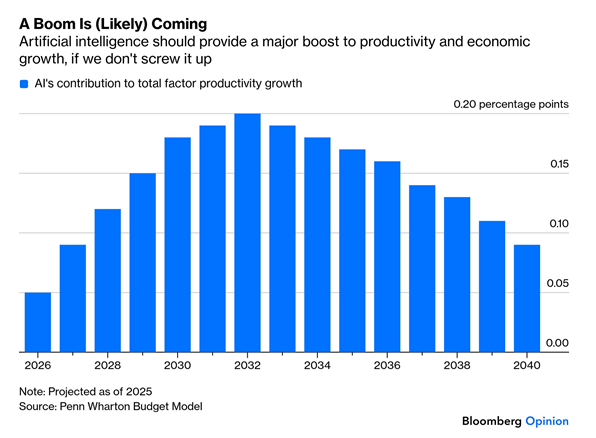
This disconnect has not gone unnoticed by macroeconomic forecasters and corporate executives. Economic analysts tracking productivity metrics are steadily recalibrating their initial, highly inflated expectations regarding the immediate macroeconomic impact of generative artificial intelligence. The realization is growing that raw technological capability, absent deep contextual integration and enterprise data governance, generates negligible sustained business value.
The Subsidized Era of AI and the Emerging Price War
A critical factor shaping the current market is the financial architecture that has supported AI experimentation over the past several years. Much of the widespread access to advanced artificial intelligence tools has been heavily subsidized by an estimated $1.5 trillion in forward-looking capital investments. Pragmatic industrialists, venture capitalists, and mega-corporations have absorbed the staggering costs associated with engineering talent, expansive data centers, high-performance specialized processors—such as those manufactured by NVIDIA—and the dedicated power generation facilities required to sustain modern AI infrastructure.
However, financial markets and institutional investors are increasingly demanding tangible returns on these colossal expenditures. As a result, the era of heavily subsidized, low-cost enterprise experimentation is drawing to a close. Corporations can increasingly expect the true cost of consumption to reflect the underlying capital expenditure, a shift underscored by recent price adjustments across major software and cloud ecosystems, including strategic pricing shifts implemented by hardware and platform giants like Apple.
Concurrently, the vendor landscape is experiencing intense downward pricing pressure. Recent industry reports highlight the emergence of aggressive price wars among frontier AI vendors. Rather than maintaining high, premium pricing models based solely on technological exclusivity, providers are increasingly forced to compete in a crowded marketplace characterized by low switching costs.
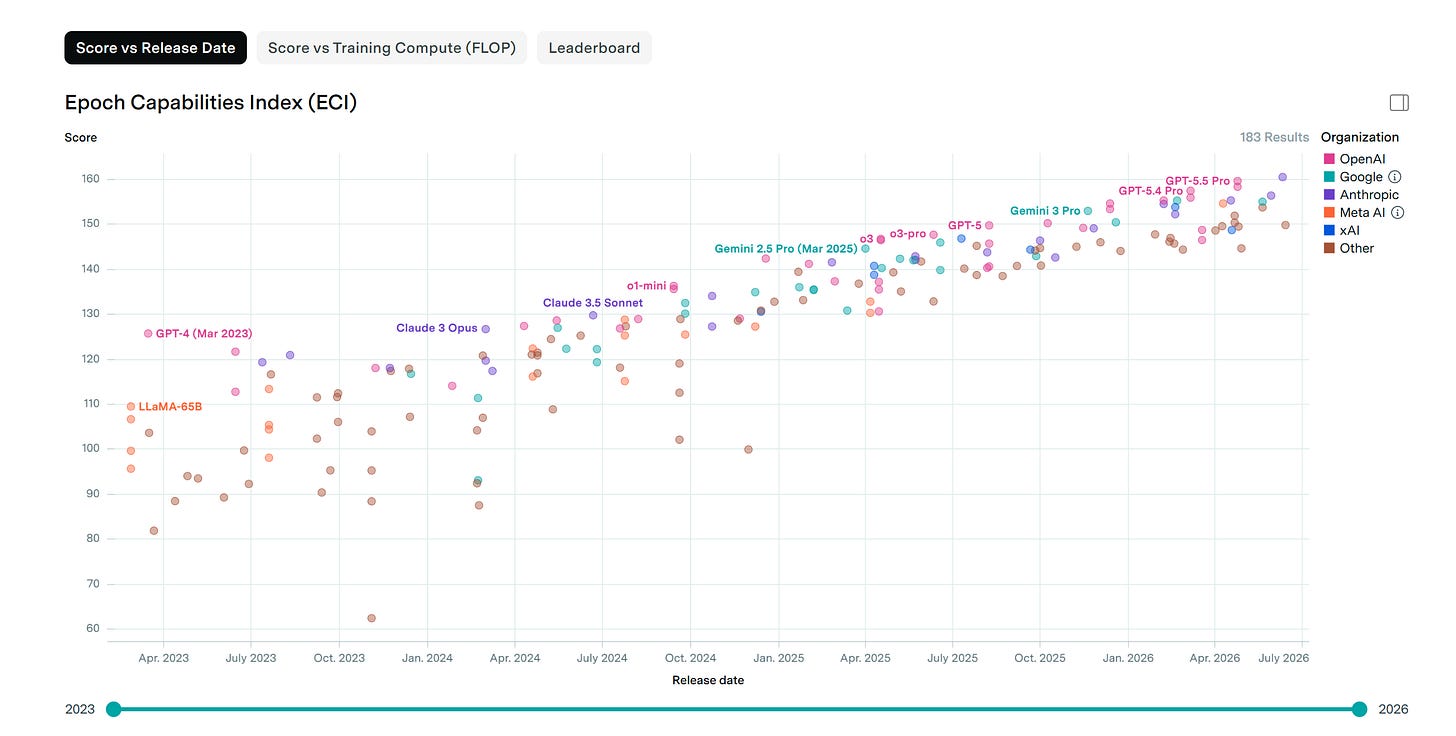
This commoditization trend was recently validated by Microsoft Chief Executive Officer Satya Nadella. In a widely discussed analytical commentary published by the Wall Street Journal titled We Can’t Let AI Giants Eat the Economy, Nadella addressed the broader economic implications of runaway platform costs and outlined a vision where artificial intelligence tools become widely accessible and economically sustainable. Microsoft’s introduction of its internal Microsoft AI (MAI) model family—engineered to operate at a fraction of the cost of competing frontier offerings—exemplifies this pivot toward cost-efficient, ubiquitous utility. Furthermore, performance tracking data from organizations such as Epoch AI demonstrates that the velocity of raw model capability improvements is beginning to plateau. This technological stabilization is viewed by enterprise strategists as a positive development, encouraging organizations to shift their attention away from chasing marginal model upgrades and toward solving core operational problems.

Reengineering the Enterprise: The Role of Domain-Specific Applications
As the market transitions toward normalcy, corporate buyers are recognizing that realizing genuine ROI requires rigorous process reengineering rather than relying on the intrinsic "magic" of a foundational model. High-value deployment demands the same disciplined procurement, security vetting, and IT alignment historically applied to traditional enterprise resource planning (ERP) or human capital management (HCM) systems.
In the human resources sector, for instance, strategic blueprints such as the HR 2030 reference model outline how organizations are successfully leveraging artificial intelligence. High-ROI initiatives—such as streamlining global talent acquisition, transforming employee service centers, and developing advanced onboarding programs—require deep structural transformation rather than simple software installation.
Case studies from multinational industrial leaders such as Rolls-Royce and Lockheed Martin illustrate the complexity of modern AI adoption. Successfully deploying performance-enhancing onboarding and training agents requires cross-functional collaboration, rigorous governance models, consolidation of internal corporate policies, and continuous synchronization with global compliance frameworks. While specialized vendors and platform ecosystems—ranging from enterprise suites provided by Workday and ServiceNow to specialized agentic platforms like Paradox, Sana, and Leena.ai—provide the underlying architecture, the LLM itself frequently constitutes only a minor fraction of the total solution.
Implications for IT and Business Leadership
The overarching implication for enterprise leadership is clear: the strategic advantage in the artificial intelligence sector has officially shifted from model development to application architecture and data governance. Corporations that successfully navigate this transition are those that move past generalized experimentation and focus intently on targeted problem-solving, workflow optimization, and organizational change management.
As the market continues its steady march toward commoditization, the mystique surrounding raw algorithmic intelligence will continue to fade. In its place, artificial intelligence is solidifying its status as an indispensable, highly integrated enterprise tool—one whose ultimate value is dictated entirely by the quality of the data, the rigor of the application design, and the clarity of the business strategy driving its implementation.