From Political Campaign to Confectionery Empire: How Kevin McCarthy Built Unreal Candy into Americas Leading Better-for-You Chocolate Brand

The modern consumer goods landscape is notoriously unforgiving, particularly for brands attempting to disrupt legacy categories dominated by multinational conglomerates with billion-dollar marketing budgets. Yet, over the past decade, Unreal Brands—commonly known as Unreal Candy—has carved out a dominant market share by challenging the traditional confectionery industry at its own game. At the helm of this operation is Chief Executive Officer Kevin McCarthy, an executive whose unconventional entry into the food industry offers a masterclass in modern corporate scaling, strategic retraction, and product-led growth.
McCarthy’s trajectory diverges sharply from the traditional corporate blueprint. Entering the professional world with zero background in food science, supply chain logistics, or consumer packaged goods (CPG), McCarthy joined Unreal in 2014 at the age of 22. Fresh off a stint working on a congressional campaign, he stepped into a three-person startup environment that required wearing multiple operational hats simultaneously. A decade later, that micro-team has evolved into the leading "better-for-you" chocolate brand in the United States, commanding shelf space in approximately 35,000 retail locations across the U.S. and Canada.
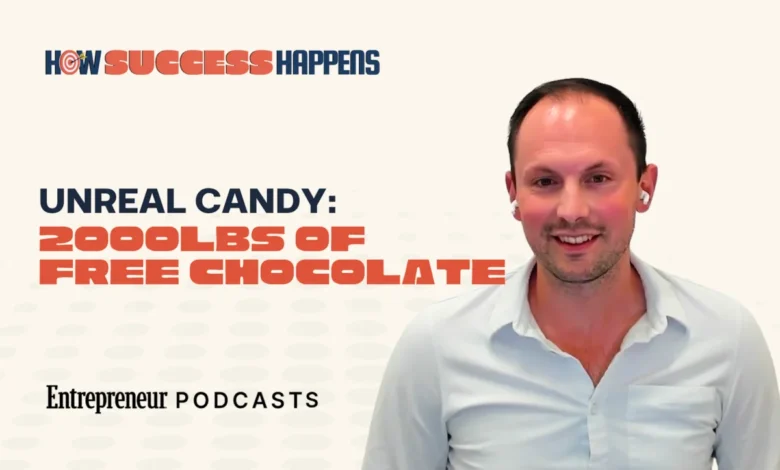
McCarthy’s insights into scaling a high-growth enterprise were recently detailed during an appearance on the business leadership podcast How Success Happens. His experiences underscore the reality that sustainable corporate expansion often requires counterintuitive decision-making, rigorous quality control, and a willingness to prioritize long-term brand equity over short-term vanity metrics.
The Strategic Retraction: Why Shrinking Can Be the Smartest Growth Move
To understand Unreal’s current market dominance, one must examine its turbulent early history. Founded in 2011 with the mission of removing artificial ingredients, hydrogenated oils, corn syrup, and GMOs from classic candy favorites, the brand experienced an immediate surge in consumer demand. Capitalizing on this initial wave of enthusiasm, the company rapidly expanded its distribution footprint, landing products in approximately 34,000 retail stores nationwide.
However, the rapid acceleration outpaced the company’s foundational infrastructure. Supply chains strained, operational efficiencies fractured, and the young enterprise lacked the internal mechanisms necessary to gather and analyze consumer feedback effectively.
When McCarthy arrived at the company in 2014, he and the leadership team made a radical, high-stakes decision: they pulled the brand out of thousands of stores, scaling back distribution to a mere 38 locations.
"We were trying to do way too much way too quickly, and we weren’t learning at an appropriate pace," McCarthy explained regarding the contraction.
This drastic measure allowed the company to pause, reset, and focus entirely on mastering the fundamentals. By operating within a controlled environment, Unreal could test packaging durability, monitor inventory turnover, and fine-tune its distribution logistics without the crushing pressure of national scale. Once the operational foundation was ironed out, the company systematically began the slow, deliberate climb back up, re-entering major retailers only when the business model could reliably support the volume. Industry analysts frequently point to this strategic retreat as a defining moment that saved the brand from premature collapse, proving that controlled, sustainable growth consistently outperforms unchecked expansion.
Product Integrity as the Ultimate Marketing Engine
In the modern direct-to-consumer and retail landscape, emerging brands frequently allocate massive portions of their initial capital to digital advertising, influencer partnerships, and aggressive promotional campaigns. McCarthy, however, maintains that no amount of marketing expenditure can compensate for an inferior core product.
For Unreal, the product itself—specifically the taste, texture, and mouthfeel of the chocolate—serves as the primary driver of customer acquisition and retention. The brand specializes in re-engineering mainstream favorites, such as peanut butter cups, coconut bars, and chocolate gems, using certified organic, non-GMO, fair-trade ingredients without sacrificing indulgence.
"The bite is the moment of truth," McCarthy notes, emphasizing that consumers purchasing a healthier alternative to traditional confectionery will not tolerate a compromise on flavor. "When you have a big name like Unreal, you need to deliver on the taste."
This philosophy has yielded exceptionally high repeat-purchase rates across major retail partners, including Target, Whole Foods, and Costco. Rather than relying on transient marketing gimmicks, Unreal has cultivated a fiercely loyal consumer base that acts organically as an advocacy network. In the view of the company’s leadership, word-of-mouth recommendations generated by a genuinely satisfying product outpace the return on investment of traditional digital ad spend.
Cultivating Market Awareness Through Internal Innovation Culture
Corporate perks in the startup and CPG sectors often center on lifestyle amenities, such as catered lunches, flexible scheduling, or wellness stipends. At Unreal, however, the primary employee perk is deeply integrated into product strategy: an unlimited chocolate policy.
Team members are encouraged to acquire and consume as much chocolate as they desire—not only from Unreal’s product line but also from competitors across the global confectionery market. Employees are then expected to analyze, discuss, and report back on flavor profiles, ingredient innovations, packaging updates, and retail shelf presence.
This policy transforms the internal workforce into an active panel of market researchers. According to McCarthy, the company’s internal teams will consume close to a ton of chocolate annually in the name of product development. This practice routinely sparks rigorous internal debates, such as testing thousands of iterations to determine whether a peanut butter filling should feature a gritty, crunchy, or ultra-smooth consistency.
By democratizing the feedback process, Unreal ensures that employees across all departments maintain a direct connection to the consumer experience. While debate is encouraged during the R&D phase, McCarthy emphasizes operational decisiveness: "Everyone gets a voice, but then we pick a path and we move forward."
Navigating Volatility: The Danger of Unchecked Surprises
Leadership in high-growth enterprises often requires managing the psychological toll of corporate volatility. McCarthy advocates for an even-tempered leadership philosophy designed to insulate the organization from emotional whiplash caused by short-term market fluctuations.
"You can never get too excited. You can never get too down," McCarthy states, outlining his approach to executive stability.
Intriguingly, McCarthy extends this cautious optimism even to positive corporate developments. While securing a massive retail partnership with a warehouse giant like Costco represents a monumental commercial victory, McCarthy views such milestones not as a finish line, but as an operational stress test.
"I don’t like surprises that are bad. I also don’t like surprises that are good because we’re probably not prepared for them," he explains.
When a brand lands a major national account, the immediate consequence is a dramatic surge in required production volume and supply chain coordination. Treating a major win as a celebration without simultaneously preparing for the rigorous execution required to sustain it can lead to inventory stockouts, quality control issues, and strained retail relationships. By treating positive surprises with operational caution, Unreal has successfully managed major national expansions without sacrificing product quality or customer satisfaction.
Macroeconomic Implications and Industry Trends
Unreal’s trajectory reflects a broader structural shift within the global food and beverage industry. Over the past decade, consumer demand has shifted decisively away from legacy processed foods containing artificial preservatives and high-fructose corn syrup toward clean-label alternatives. Established multinational conglomerates have scrambled to adapt, either by reformulating legacy product lines or by acquiring fast-growing independent disruptors.
For independent brands looking to break into the heavily consolidated CPG space, McCarthy’s journey offers a realistic framework. The path from a local kitchen experiment to national distribution requires navigating a multitude of operational hurdles, near-failures, and unglamorous administrative tasks.
"You’re gonna take step one, but there’s gonna be step two million someday down the road," McCarthy advises aspiring entrepreneurs.
For those looking to replicate Unreal’s success, the foundational advice remains clear: define a specific target demographic, articulate a clear value proposition that differentiates the product from existing market incumbents, and focus relentlessly on execution at every stage of the scaling process. As Unreal continues to expand its footprint across North America, the brand serves as a case study in how strategic patience, uncompromising product quality, and disciplined operational management can transform a niche concept into an enduring market leader.
Related posts: