How Hero Bread Navigated Near-Bankruptcy, Walked Away From Subway, and Built a $54 Million Empire Through Smart Omnichannel Growth


The modern consumer packaged goods (CPG) landscape is littered with the cautionary tales of promising startups that scaled too quickly, compromised their unit economics, and ultimately collapsed under the weight of premature expansion. For low-carb, zero-sugar disruptor Hero Bread, the trajectory could easily have ended in failure. Founded in 2019 by Cole Glass in response to severe personal pollen allergies, the company faced an existential crisis by late 2022. Today, however, the brand stands on solid ground, having recently reported a remarkable $54 million in annual revenue, expanded its retail footprint to roughly 10,000 doors—including major partnerships with Target—and secured $21 million in funding within a blistering 90-day window.
The turnaround of Hero Bread, spearheaded largely by YuChiang Cheng through his leadership with 444 Capital and subsequent transition to Chief Executive Officer, offers a masterclass in CPG pivots, inventory management, and the symbiotic relationship between direct-to-consumer (DTC) experimentation and brick-and-mortar retail distribution. By examining how Cheng and his team stepped back from a high-profile national partnership to rethink their foundational infrastructure, industry observers can glean critical lessons on modern retail agility.
Genesis and the Early Partnership With Subway
To understand the magnitude of Hero Bread’s recovery, one must examine its origins and the early pressures that nearly derailed the enterprise. Cole Glass launched the company with a singular, health-conscious mission: to create bread products that eliminated carbohydrates and sugars without sacrificing the sensory experience of traditional bakery items. For demographics managing diabetes, celiac-adjacent dietary restrictions, or adhering to strict ketogenic and low-carb lifestyles, the promise of a zero-carb, macro-friendly loaf was revolutionary.
Seeking to accelerate market penetration and build immediate brand awareness, Hero Bread entered into a high-stakes partnership with fast-food giant Subway in October 2021. The strategic intent was straightforward: place the product in thousands of franchise locations nationwide, allowing millions of consumers to taste the bread firsthand through popular sandwich offerings.
However, rapid deployment exposed deep structural vulnerabilities. By the time YuChiang Cheng invested in Hero Bread on behalf of 444 Capital in 2022 and stepped in as interim chief marketing officer, the Subway partnership was financially unsustainable. The company lacked the mature supply chain, logistics infrastructure, and operational resources required to service a footprint of that magnitude profitably. The unit economics simply did not add up, draining cash reserves at an alarming rate.

Faced with a stark choice between scaling into insolvency or retreating to reassess, leadership made the courageous decision to pull the plug. "We were just too small at the time and couldn’t service it, didn’t have the resources and all the infrastructure put in place to effectively deliver that," Cheng reflected. "So we backed out of it."
The Pivot to DTC and the Foundation of Chapter Three
With the Subway partnership behind them and financial runway shrinking, Cheng engineered a strategic pivot toward a direct-to-consumer (DTC) model. This move was not merely a fallback plan; it was deliberately designed to establish a direct feedback loop with the core consumer base. By selling directly through their e-commerce platform, Hero Bread could monitor purchasing behaviors, gather qualitative feedback in real-time, and leverage organic word-of-mouth marketing among dedicated health communities.
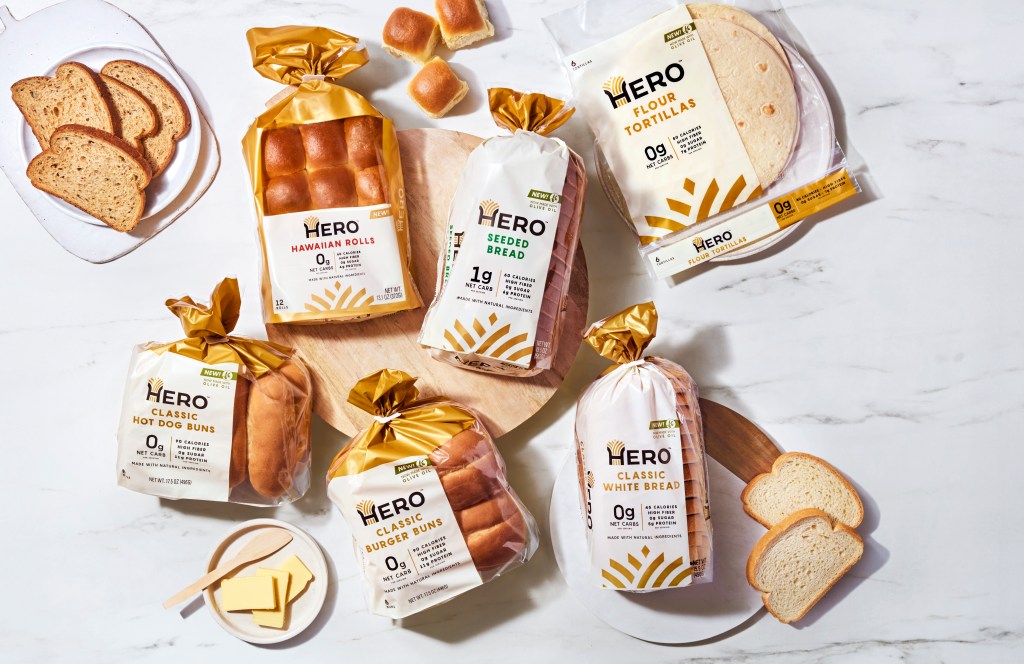
During this foundational restructuring, the brand concentrated its efforts on five core Stock Keeping Units (SKUs): white bread, seeded bread, burger buns, hot dog buns, and flour tortillas. This focused product line was strategically chosen because it represented everyday pantry and meal staples. By mastering these high-frequency items, the company ensured that once customers transitioned to regular buyers, their purchasing habits would naturally support weekly replenishment cycles.
Cheng assumed the permanent role of Chief Executive Officer in November 2023, solidifying a management strategy that valued operational discipline over reckless land-grab expansion. This steady leadership bore fruit in mid-2024. In a funding round announced in June 2024, Hero Bread successfully raised $21 million in under 90 days. Co-led by prominent institutional investors including Cleveland Avenue, DNS Capital, and Composite Ventures, this capital injection elevated the company’s cumulative venture backing to more than $68.5 million.
The Evolution of Retail Channel Strategy
Armed with fresh capital and a stabilized DTC foundation, Hero Bread re-entered the brick-and-mortar retail arena with a radically different methodology. Traditional CPG startups typically target a single retail channel—such as natural food stores or regional grocers—and scale geographically within that specific niche. Hero Bread, however, challenged this convention by experimenting across multiple retail formats simultaneously.

Initially, leadership debated whether the brand belonged exclusively in natural-focused environments like Sprouts or Whole Foods, or mainstream supermarkets like Publix and regional outlets like Market District. To resolve the debate through empirical evidence rather than internal speculation, Hero Bread launched products across a diverse mix of these channels.
Within six months, the data revealed an unexpected outcome: the products performed exceptionally well across all tested environments. The mainstream taste profile resonated equally with shoppers in conventional supermarkets and natural grocers alike. Consequently, Hero Bread abandoned the rigid channel-selection playbook, opting instead to partner with any major retailer that demonstrated genuine enthusiasm for the brand, regardless of traditional category boundaries.
This flexible retail strategy fueled an explosive expansion in brick-and-mortar accessibility. Over a two-year period, Hero Bread more than doubled its physical retail footprint, scaling from approximately 4,000 retail doors to over 10,000, punctuated by a high-profile nationwide rollout into Target stores.
Balancing Affordability Through Retail and Innovation Through DTC
A central tension in modern Cpg strategy involves navigating the contrasting economic models of e-commerce versus mass retail. Cheng acknowledges that retail distribution provides inherent economies of scale that e-commerce simply cannot replicate for staple goods. Transporting massive quantities of palletized goods via freight trucks is exponentially more cost-effective than shipping individual packages to residential doorsteps. Consequently, retail shelves allow consumers to purchase core items at a more accessible price point.
However, Hero Bread has maintained its DTC platform not merely as a historical relic, but as an agile incubator and a concierge channel for specialty offerings. While retail stores stock high-volume daily staples, the company utilizes its website to release limited-edition, small-batch, and highly specialized products that would be operationally unfeasible to mass-produce for national supermarket chains.
A prime example of this strategy is Hero Bread’s "Crafted Collection." This curated line includes artisanal items such as croissants, lemon poppy seed scones, and shortbread biscuits hand-baked in Sonoma using brown butter crafted by a Michelin-starred chef. Similarly, exclusive collaborations—such as a recent partnership with Auntie Anne’s to produce low-carb pretzel bites—thrive within the DTC and targeted e-commerce ecosystem. Attempting to hand-roll hundreds of thousands of specialty croissants for traditional grocery distribution would break the company’s operational model.
Furthermore, the DTC arm serves as a low-risk testing ground for new product concepts destined for brick-and-mortar shelves. In December 2024, the company deployed a limited-edition online launch of low-carb bagels. Unsure whether consumers would embrace a bread alternative in a bagel format, leadership tested the item in small batches exclusively on their website. The response was immediate and overwhelming, with bagels quickly ascending to become one of the brand’s top-performing e-commerce items. Armed with verified sales data and enthusiastic customer demand, Hero Bread successfully transitioned the bagels to physical retail shelves within six months.
Resilience as a Core Corporate Asset
Reflecting on the turbulent journey from near-insolvency to a thriving $54 million enterprise, Cheng emphasizes that entrepreneurial success is rarely defined by an unbroken streak of victories. Instead, resilience and adaptability remain the ultimate differentiators for sustainable business leadership.
"It’s how many times you can try again, regardless of how many times you’ve fallen down or how much blood you get on your face," Cheng notes, underscoring the vital requirement for institutional and personal courage in high-growth environments. This calculated tenacity enabled Hero Bread to absorb early missteps, pivot away from an unsustainable fast-food partnership, and systematically build a resilient, omnichannel business model.
Looking forward, Hero Bread’s overarching philosophy remains centered on consumer accessibility. By maintaining a dual-pronged approach that leverages the massive reach of traditional retail partners alongside the innovative agility of direct-to-consumer e-commerce, the brand continues to position itself at the intersection of health, nutrition, and everyday culinary enjoyment. As Cheng summarizes, the mission is simple yet expansive: meeting the consumer wherever they happen to shop, and proving that dietary modifications do not require a compromise on taste.
Related posts: