The Dark Forest of AI: Why the World’s Leading Model Labs Are Choosing Silence Over Strategy

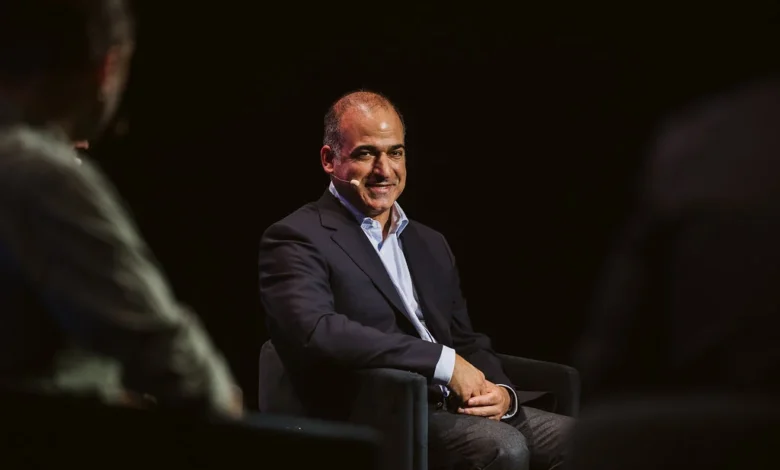
This week, the All In conference—a gathering of technologists, investors, and policymakers—became the unlikely stage for a high-stakes game of shadows. While the event buzzed with projections about the next era of artificial intelligence, a palpable silence hung over the industry’s most ambitious sector: world models. At the forefront of this movement are luminaries like Yann LeCun’s AMI Labs and Fei-Fei Li’s World Labs. Both organizations have successfully secured significant venture capital, yet they remain notably reticent regarding their monetization roadmaps. This dynamic has sparked a broader debate about whether the current AI boom is built on sustainable commercial foundations or simply a "dark forest" of competitive secrecy where visibility is treated as a strategic liability.
The Rise of Spatial Intelligence
World models represent a fundamental pivot from the Large Language Models (LLMs) that dominated the previous three years. While LLMs excel at processing textual and symbolic information, world models are designed to master "spatial intelligence"—the ability of an AI to perceive, understand, and interact with the physical, three-dimensional world.
The theoretical applications are vast and commercially potent. In robotics, a world model could allow a machine to navigate an unfamiliar warehouse or office environment with human-like intuition. In autonomous driving, it could move beyond simple sensor-based reaction to true predictive understanding of traffic flow. In the creative industries, these models promise to generate hyper-realistic, interactive environments for gaming and cinema in real-time. Despite these clear vectors for profit, the labs leading this research remain in a state of operational opacity, prioritizing fundamental research over product deployment.
Chronology of a Quiet Revolution
The emergence of these labs marks a distinct phase in the AI investment cycle.
- Late 2024: Significant capital begins to flow into "World Model" ventures, distinguishing them from traditional generative AI startups.
- Early 2025: World Labs introduces "Marble," a platform focused on environment creation, marking the most public-facing development in the space to date.
- Mid 2025: AMI Labs forms strategic partnerships, including the Nabia initiative, hinting at applications in biomedicine and manufacturing.
- September 2026: At the All In conference, industry leaders maintain a strict "no comment" stance on commercial timelines, underscoring the shift toward long-term R&D over immediate market integration.
The Information Gap and the Supply Chain
The ambiguity surrounding these technologies is not contained within the labs themselves; it ripples outward to the supply chain. Alex de Vigan, CEO of Physicl, a firm specializing in the high-fidelity data required to train these models, describes an environment of frustrated collaboration.
"We know our data is being utilized to push the boundaries of what these models can perceive," de Vigan noted during the conference. "However, the lack of transparency regarding specific use cases creates a barrier to optimization. If we understood whether a client was optimizing for humanoid dexterity or autonomous navigation, we could refine our data ingestion accordingly."
This disconnect highlights a critical tension: the very labs that rely on external data partnerships are unwilling to share their ultimate objectives, fearing that disclosure might expose their intellectual property to competitors or invite premature regulatory scrutiny.
Economic Analysis: The Cost of Being First
Why, in an era of unprecedented venture capital, are these companies so reluctant to show their hand? The answer lies in the competitive landscape of the "AI Arms Race."
Currently, the barriers to entry for model building are high, but the barriers to imitation are dropping. If a lab like AMI were to announce a definitive breakthrough in, for example, robotic limb control or a high-end CGI rendering engine, it would immediately signal to industry incumbents—such as OpenAI, Anthropic, or Google DeepMind—that this is a contested space.
By remaining quiet, these labs are effectively playing a game of "Dark Forest" strategy. In the context of Cixin Liu’s science fiction framework, the universe is a dark forest where any civilization that reveals its location is subject to immediate destruction by others. In the AI market, "location" is synonymous with "product-market fit." By avoiding the spotlight, these labs can continue to refine their models in relative safety, building a defensive moat of intellectual property before they are forced to compete with the massive engineering resources of Big Tech.
Financial Implications and Fundraising Dynamics
The current economic climate for AI startups has created a peculiar incentive structure. Because capital is readily available for firms with high-caliber talent, there is little immediate pressure to pivot to revenue-generating products.
Investors are largely satisfied with "capability demonstrations." For now, proving that a model can simulate a 3D environment or predict a physical interaction is sufficient to secure the next funding round. This creates a feedback loop:
- Fundraising: Labs raise money based on the promise of the technology.
- R&D: The funds are spent on talent and compute power.
- Secrecy: By not releasing a product, the company avoids the scrutiny of public markets and the pressures of customer acquisition.
- Valuation Growth: The mystery surrounding the "secret sauce" keeps the valuation high, as investors project infinite potential into the vacuum left by the lack of public products.
However, this cycle is unsustainable. At some point, the transition from research-led funding to revenue-led growth must occur. When that shift happens, the labs that have spent their time building in total isolation may find themselves ill-equipped for the realities of customer feedback, support, and scaling.
Future Projections: The Breaking Point
The industry is likely approaching an inflection point. As these models move from research prototypes to "Product 1.0," the strategy of silence will become increasingly untenable.
There are three likely outcomes for the world model labs currently in the "silent phase":
- Strategic Acquisition: Larger firms may acquire these labs not for their products, but for their talent and foundational research, effectively bringing the "dark forest" inside the gates of a major tech conglomerate.
- Vertical Integration: Some labs will likely pivot to becoming specialized infrastructure providers, selling the capability of world modeling to third-party developers (similar to how API-based model services currently operate).
- Market Realization: A few labs will emerge as dominant players in specific niches—such as industrial robotics or autonomous safety—where their "hidden" work finally meets a clear, high-margin market need.
For now, the ambiguity persists. The All In conference served as a microcosm of the wider industry: a room full of brilliant minds, massive amounts of capital, and a shared, unspoken agreement to keep the destination of this technological journey obscured. Whether this strategy is a sign of long-term genius or a bubble awaiting a pin remains the defining question of the 2026 AI landscape. As these labs continue to build in the dark, the industry waits to see what will finally emerge from the woods.