Beyond the Core: How Established Enterprises Master Corporate Reinvention by Mining Latent Capabilities
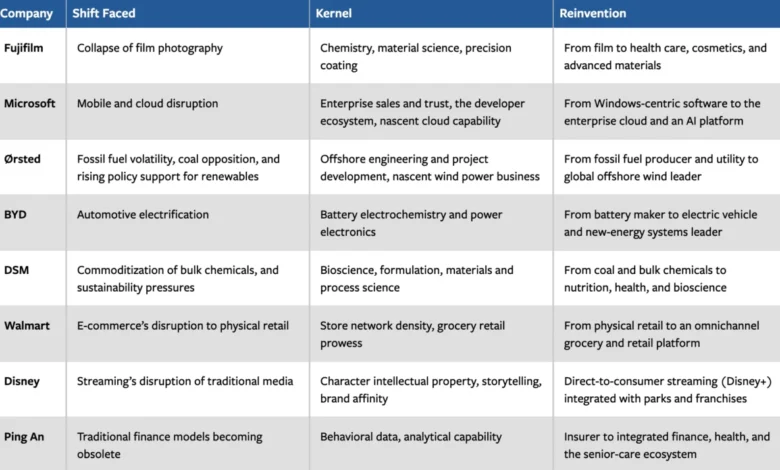
In an era defined by rapid technological disruption, stringent regulatory shifts, and volatile economic landscapes, corporate longevity is rarely guaranteed by simply protecting legacy business models or attempting to build entirely new ventures from scratch. According to strategic research conducted by Khaled Soufani, management practice professor of financial economics and policy, and Samsurin Welch of the Circular Economy Centre at the Cambridge Judge Business School, the secret to successful corporate reinvention lies in identifying and repurposing what they term "kernels of reinvention." Rather than discarding decades of accumulated assets or stubbornly clinging to fading product lines, industry leaders are increasingly looking inward to uncover deeply embedded, transferable organizational capabilities that can serve as powerful strategic anchors for new, future-proof markets.
The Strategic Dilemma of Modern Enterprises
Global enterprise leaders consistently face a high-stakes strategic dilemma when foundational shifts redraw the competitive playing field. On one hand, doubling down on historical strengths by iterating around the core business often mirrors the trajectory of companies like Eastman Kodak, whose unwavering commitment to traditional photographic film ultimately rendered them vulnerable to digital disruption. Conversely, starting with a completely clean slate—pivoting entirely to a new industry without accounting for prior assets—risks alienating vital internal and external stakeholders while needlessly discarding valuable infrastructure, deep institutional knowledge, and hard-earned market relationships.
Historical case studies illustrate the severe consequences of misreading structural market transformations. Disruptive innovation theory, famously pioneered by Clayton Christensen, explains how well-managed incumbent firms frequently fall victim to industry shifts because they are structurally tethered to serving their most profitable existing customers. When technological or ecological demands shift the fundamental basis of competition, traditional renewal efforts frequently collide with entrenched organizational barriers. Consequently, businesses require a sophisticated framework that transcends the false dichotomy between defending legacy operations and pursuing reckless diversification.
Case Studies in Structural Transformation: Ørsted and Microsoft
The validity of leveraging internal capabilities is vividly demonstrated by the transformation of Ørsted, formerly known as DONG Energy. In 2009, the Danish enterprise was primarily an oil and gas utility, deriving 85% of its power generation from fossil fuels and standing as Denmark’s single largest carbon dioxide emitter. Pressured by volatile commodity pricing, regulatory headwinds, and fierce public opposition to new coal infrastructure, executive leadership realized that the firm’s prevailing operational model was financially and environmentally untenable.
Rather than abandoning its corporate identity, Ørsted’s leadership excavated the organization’s foundational strengths. Decades of extracting petroleum in the harsh North Sea had cultivated world-class expertise in large-scale infrastructure engineering, intricate project management, and maritime logistics. By redirecting these deep-seated engineering capabilities toward offshore wind farm development, the company executed its ambitious "Black-to-Green" strategy. Within a single decade, Ørsted inverted its portfolio mix to 85% renewables and 15% fossil fuels, successfully achieving a 30-year sustainability target in a fraction of the projected time and emerging as the world’s leading developer of offshore wind energy.
A parallel narrative unfolded at Microsoft. Following a severely challenging decade marked by a failure to capitalize on the explosive mobile device shift and an ill-fated $7.2 billion acquisition of Nokia’s handset division, Microsoft orchestrated one of the most remarkable corporate turnarounds in modern business history. Under the leadership of CEO Satya Nadella, the enterprise shifted its focus toward cloud computing and artificial intelligence. This reinvention was securely anchored around a durable, transferable asset: deep enterprise trust and a ubiquitous product footprint across virtually every Fortune 500 company. By combining its institutional relationships with emerging cloud infrastructure capabilities—and notably embracing open-source software like Linux—Microsoft achieved a tenfold increase in valuation, proving that latent enterprise competencies can effectively spark new growth engines.
Biological Parallel: The Mechanics of Neofunctionalization
To understand how corporations successfully reinvent themselves, business strategists frequently draw parallels from evolutionary biology. A primary concept in this domain is "neofunctionalization," a process wherein a genetic sequence originally evolved for one specific biological purpose acquires a novel function under environmental pressure. In nature, complex adaptive systems rarely build entirely new genetic structures from scratch when facing ecological shifts; instead, they repurpose existing material to gain a competitive advantage in a changing habitat.
Similarly, corporate kernels of reinvention represent underlying organizational DNA. Academic research identifies four distinct characteristics that separate a genuine, actionable kernel from wishful thinking regarding legacy assets:
-
Deep: The kernel transcends what a company sells or manufactures; it resides beneath the surface as foundational operational capabilities, scientific know-how, or resource architectures. For example, Fujifilm survived the collapse of traditional photography not by selling film, but by leveraging its underlying expertise in chemistry, precision-coating science, and materials research. This exact scientific framework, originally designed to protect film from ultraviolet light, was successfully repurposed to develop advanced skincare cosmetics, such as the Astalift product line.

-
Generative: True kernels provide a reliable launchpad for exploring entirely new value propositions and competitive positions. Walmart utilized its dense retail infrastructure, physical store footprint, and sophisticated perishable logistics networks—traditionally used for brick-and-mortar grocery operations—as last-mile fulfillment nodes. This foundational advantage allowed Walmart to scale online grocery delivery rapidly, subsequently layering on third-party marketplace and retail media advertising networks modeled after digital native competitors.
-
Defensible: A viable kernel must furnish the enterprise with capabilities that rival market entrants cannot easily replicate or bypass in the short term. Microsoft’s dominance in enterprise cloud and artificial intelligence rests on decades of cultivated trust, deeply embedded security and compliance integrations within corporate procurement pipelines, and a compounding developer ecosystem. New market entrants possessing raw computational power could not instantly replicate this intricate web of institutional dependencies.
-
Coherent: A successful kernel establishes a credible, unbroken narrative thread connecting the legacy enterprise to its future direction. This narrative alignment is essential for reassuring nervous investors, aligning internal employees, and maintaining partner confidence. When Ørsted pivoted toward offshore wind, framing the transition as an evolution of existing marine engineering skills helped mitigate internal resistance from legacy fossil fuel workers.
A Five-Step Playbook for Kernel-Based Reinvention
Identifying and capitalizing on kernels of reinvention requires a deliberate, multi-year sequence of strategic choices rather than a singular, impulsive pivot. Industry analysts and management scholars have outlined a comprehensive five-step playbook for organizations navigating structural disruption:
Step 1: Diagnose the Disruption
Management must proactively evaluate external technological, regulatory, economic, and social shifts. Leaders must determine whether market forces are merely cyclical headwinds or structural transformations rendering the legacy business model obsolete. Misdiagnosing structural decay as a temporary downturn frequently traps incumbent firms in defensive postures that exacerbate their eventual decline.
Step 2: Excavate and Validate Latent Kernels Iteratively
Organizations must look beyond surface-level products and services to uncover deeply embedded, transferable capabilities. Using analytical frameworks such as the VRIO model (Value, Rarity, Inimitability, and Organization), leaders can systematically assess whether internal resources can deliver sustainable competitive advantages in entirely new commercial contexts. This excavation process requires continuous market testing, refinement, and iterative validation.
Step 3: Lock in Advantage via a New Growth Engine
Recognizing that a kernel alone does not constitute a complete business model, leadership must deliberately construct a new commercial ecosystem around it. This frequently entails forging unconventional partnerships, adopting innovative financing or operational frameworks, and altering historical competitive postures—such as Microsoft’s strategic embrace of open-source ecosystems.
Step 4: Manage the Organizational Transition
Drawing inspiration from biological duplication, companies must grant new ventures the operational freedom to adapt to fresh competitive pressures while maintaining vital structural links to corporate assets. Established enterprises possess the distinct advantage of funding long-term pivots using steady cash flows generated by the legacy business, provided that traditional operations do not suffocate the emerging growth engine, nor are they dismantled prematurely.
Step 5: Craft a Compelling Narrative of Continuity
Stakeholders—including employees, investors, customers, and regulatory bodies—must be guided through the transformation via a transparent narrative. Effective communication must simultaneously signal a definitive break from a nonviable past and a logical continuation of foundational organizational strengths. Tangible milestones, such as successful pilot projects or strategic market entries, help solidify external validation and foster internal buy-in.
Broader Economic Implications and Outlook
The strategic imperative of corporate reinvention carries profound implications for global commerce, employment markets, and industrial policy. As global markets continue to face rapid digitization, decarbonization mandates, and geopolitical realignments, the traditional corporate lifecycle is accelerating. Organizations that rely exclusively on defensive strategies risk sudden obsolescence, while those that engage in indiscriminate restructuring often forfeit valuable institutional knowledge and demoralize their workforce.
Ultimately, economic analysis suggests that the winners of tomorrow will be enterprises that master the delicate art of organizational introspection. By expertly identifying their unique kernels of reinvention, forward-thinking leaders can successfully bridge the gap between historical excellence and future market dominance, proving that the key to surviving profound industrial disruption lies not in discarding the past, but in intelligently carrying forward its most enduring strengths.