AMD Challenges Nvidia Dominance with Helios AI Rack System and Venice-X CPU Reveal at Advancing AI Conference

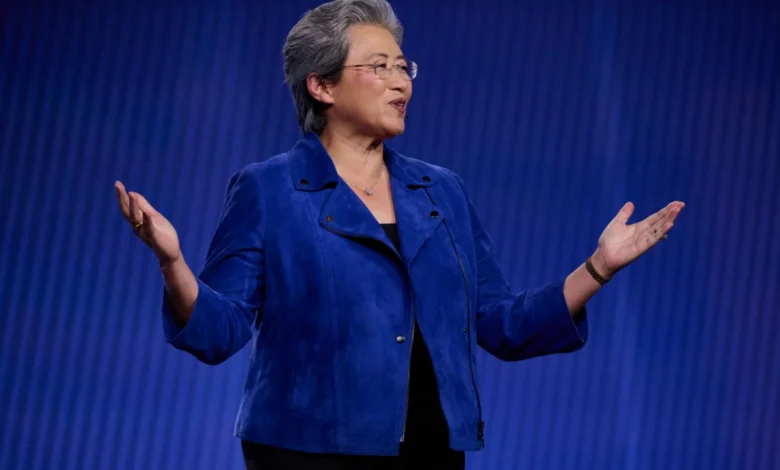
Advanced Micro Devices has officially signaled a major escalation in the global semiconductor race, unveiling its most ambitious hardware roadmap to date at the sold-out Advancing AI conference in San Francisco. Under the leadership of Chair and CEO Dr. Lisa Su, the company introduced the Helios rack-scale system, a massive integrated computing unit designed to directly rival Nvidia’s market-leading AI infrastructure. The announcement comes as part of a broader strategy to capture a larger share of the burgeoning artificial intelligence market, which AMD now projects will reach a staggering $1.4 trillion by 2030. By shifting its focus from individual chips to integrated, gigawatt-scale data center solutions, AMD is positioning itself as a primary architect for the next generation of "frontier" AI models and the emerging era of agentic artificial intelligence.
The Helios Architecture: A New Paradigm in Rack-Scale Computing
The centerpiece of AMD’s presentation was the Helios rack-scale system. In the current landscape of high-performance computing, the industry is moving away from the purchase of discrete GPUs toward "rack-scale" solutions. These systems integrate dozens of processors, high-speed networking, and advanced cooling into a single, cohesive unit that functions as a supercomputer. Dr. Su characterized Helios as the highest-performance AI rack in the technology industry, specifically engineered to handle the training and inference of the world’s most complex large language models (LLMs).
The Helios system represents a significant leap in power density. Initial reports indicate that the system is designed to compete directly with Nvidia’s Grace Blackwell and upcoming Vera Rubin architectures. While specific configurations vary, Helios is built around AMD’s Instinct MI450 series GPUs, leveraging the company’s latest advancements in high-bandwidth memory (HBM) and interconnect technology. Industry analysts note that Helios’s performance metrics in specific workloads already appear to challenge Nvidia’s Vera Rubin benchmarks, particularly in terms of raw throughput and memory efficiency. The system is scheduled to begin shipping to major cloud providers and AI research labs later this year, providing a critical alternative to the current Nvidia-dominated supply chain.
Strategic Partnerships and Gigawatt-Scale Deployments
AMD’s hardware reveal was bolstered by the presence of major industry partners, signaling deep institutional support for the company’s AI roadmap. Microsoft CEO Satya Nadella confirmed that the tech giant would significantly expand its Azure infrastructure using the Helios system. This move is part of Microsoft’s strategy to diversify its hardware providers and reduce its reliance on a single vendor for AI compute power.
Furthermore, AMD announced a landmark strategic partnership with Anthropic, the creator of the Claude AI model. Under the agreement, Anthropic plans to deploy up to two gigawatts of GPU capacity via the Helios system. The term "gigawatt-scale" highlights the sheer physical and electrical magnitude of modern AI infrastructure; such deployments require specialized power grids and cooling systems that dwarf traditional data center requirements. Other major customers confirmed for the Helios rollout include Meta, Oracle, and OpenAI, all of whom are seeking to scale their reasoning-based AI capabilities.
Venice-X and the Future of the Zen 6 Ecosystem
While GPUs are the primary drivers of AI training, CPUs remain essential for data center management, data preprocessing, and high-performance computing (HPC) tasks. To address this, AMD introduced the Venice-X CPU, the latest addition to its EPYC data center lineup based on the Zen 6 architecture.
Scheduled for a 2027 launch, the Venice-X is a technological powerhouse designed for compute-intensive workloads. The processor will feature up to 96 cores and a boost clock speed reaching 5.15 GHz. A standout feature of the Venice-X is its massive 1152 MB of 3D V-Cache, which provides the high-speed data access necessary for complex simulations and AI-adjacent tasks. By integrating such high levels of cache, AMD aims to eliminate the bottlenecks that often occur when moving data between the processor and system memory, further solidifying its lead in the server CPU market.
The Shift Toward Agentic AI and Increased Compute Demand
A central theme of Dr. Su’s keynote was the transition from "generative AI"—which focuses on creating content—to "agentic AI." Agentic AI refers to systems that can reason, plan, and execute multi-step tasks autonomously. Unlike a standard chatbot that provides a single response to a prompt, an AI agent might perform dozens of sub-tasks, such as accessing databases, using software tools, and self-correcting its logic until a problem is solved.
This transition has profound implications for hardware manufacturers. "When you ask the agent to do something, it actually has dozens of steps, and it has to reason, and it has to call tools, and it has to access data," Dr. Su explained. This iterative process requires significantly more "compute" per request than current models. Consequently, the industry is witnessing a "step change" in demand. This shift informs AMD’s bullish outlook on the AI accelerator market, which is now expected to reach $1.4 trillion by 2030—a figure that would make the AI chip sector nearly as large as the entire semiconductor market is today.
Competitive Landscape: AMD vs. Nvidia
For the past several years, Nvidia has held a near-monopoly on the AI chip market, with its H100 and Blackwell chips serving as the industry standard. However, AMD’s aggressive release cycle and its focus on open-source software compatibility are beginning to shift the narrative.
The competitive battle is currently being fought on three fronts:
- Hardware Performance: With Helios, AMD is challenging Nvidia’s benchmarks in large-scale model training.
- Memory Capacity: AMD’s Instinct GPUs often offer higher HBM capacity than their Nvidia counterparts, allowing researchers to run larger models on fewer chips.
- The Software Stack: One of Nvidia’s greatest strengths is its proprietary CUDA software. AMD has countered this with its ROCm (Radeon Open Compute) platform, which has seen rapid adoption as developers seek more flexible, open-source alternatives.
Analysts from The Register and other technical publications suggest that while Nvidia still holds the lead in software ecosystem maturity, the raw performance potential of the Helios system makes it a formidable contender for "frontier" AI labs that have the engineering resources to optimize for AMD hardware.
Chronology of AMD’s AI Evolution
The path to Helios and Venice-X has been marked by a series of strategic milestones:
- Early 2024: AMD began shipping the Instinct MI300X, its first major challenge to Nvidia’s H100, gaining significant traction with Meta and Microsoft.
- 2025: Initial reveal of the Helios architecture, signaling AMD’s move into full-rack integration.
- January 2026: A physical prototype of the Helios rack was showcased at CES, weighing as much as two compact cars due to its dense array of chips and liquid cooling systems.
- July 2026: The Advancing AI conference serves as the formal launchpad for the production-ready Helios system and the announcement of the Venice-X CPU.
- Late 2026: Expected commencement of large-scale shipping to "gigawatt-scale" customers.
- 2027: Scheduled release of the Venice-X CPU based on the Zen 6 architecture.
Market Implications and Financial Outlook
The financial stakes of this hardware launch cannot be overstated. By projecting a $1.4 trillion market for AI accelerators, AMD is signaling to investors that the "AI boom" is not a temporary bubble but a fundamental restructuring of the global economy.
Dr. Su noted that GPUs will likely continue to dominate this market because the algorithms driving AI are still in their infancy. As workloads continue to change, the "programmability" of GPUs—the ability to adapt the hardware to new types of math and logic—becomes a decisive advantage over more rigid, specialized chips. This flexibility ensures that investments in Helios and similar systems remain viable even as AI research moves in new, unpredictable directions.
For the broader semiconductor industry, AMD’s progress introduces much-needed competition. Increased competition typically leads to lower prices for cloud providers, which in turn can lower the cost of developing and deploying AI for startups and smaller enterprises. Moreover, the focus on gigawatt-scale infrastructure is driving innovations in green energy and data center efficiency, as companies scramble to power the massive Helios and Blackwell clusters.
Analysis: The Strategic Necessity of Full-Stack Solutions
AMD’s pivot to rack-scale systems like Helios reflects a broader trend in Silicon Valley: the commoditization of the individual chip. As AI models grow to trillions of parameters, the bottleneck is no longer just the speed of a single processor, but the speed at which thousands of processors can communicate.
By designing the entire rack, AMD controls the "fabric"—the networking layers that allow GPUs to share data. This "full-stack" approach allows AMD to optimize every component for maximum efficiency, reducing the "latency" that can plague massive AI clusters. For customers like Microsoft and OpenAI, buying a pre-optimized rack is significantly more efficient than trying to build one from disparate parts.
In conclusion, the Advancing AI conference has established AMD as a primary contender for the throne of the AI era. While Nvidia remains the incumbent leader, the combination of the Helios rack system, the Venice-X CPU, and high-profile partnerships with companies like Anthropic and Microsoft suggests that the market is entering a new phase of intense, multi-polar competition. As the industry moves toward the $1.4 trillion milestone, the success of the Helios rollout later this year will likely determine the trajectory of the high-performance computing market for the remainder of the decade.