How Leaders Unlock Innovation on the Front Lines
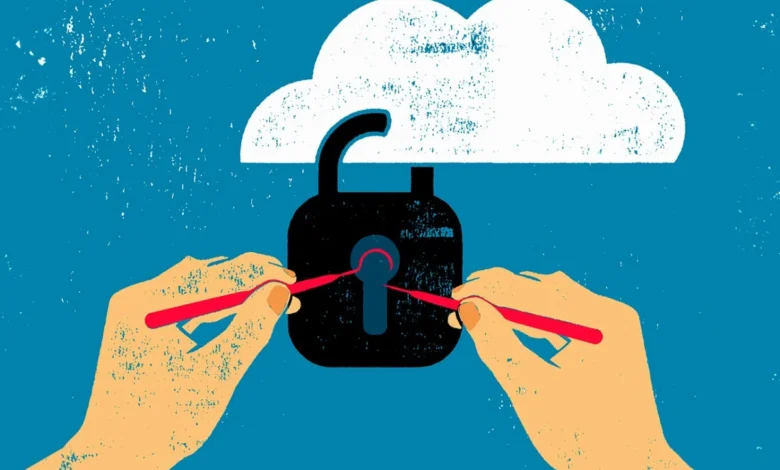
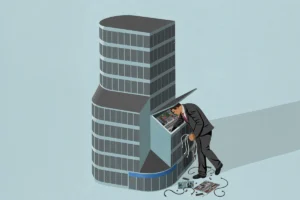
In the high-stakes environment of modern healthcare, the divide between operational efficiency and creative innovation has become a critical fault line. While administrative leadership often focuses on top-down strategic pivots, researchers are increasingly finding that the most potent source of organizational improvement lies within the workforce tasked with daily operations. A recent study conducted by Felix Mosner, Fabian Sting, and Aravind Chandrasekaran highlights a paradox: front-line employees possess the deep contextual knowledge required to solve complex systemic problems, yet the current corporate culture—marked by intense pressure and resource scarcity—is effectively silencing these innovators.
The Innovation Gap in Modern Operations
The struggle to balance the "daily grind" of operational requirements with the necessity of long-term innovation is not unique to the healthcare sector, though it is perhaps most acute there. In hospitals, where regulatory compliance, patient safety metrics, and staffing shortages dictate every minute of a workday, innovation is often sidelined.
Data from the recent study of 150 hospital front-line workers reveals a stark disparity between intent and execution. While 80% of surveyed staff expressed a desire to participate in innovative activities aimed at improving patient care or departmental workflow, fewer than 50% felt they had the actual opportunity to do so. Perhaps most concerning is the finding that 70% of these employees reported that they rarely or never communicate their ideas to their supervisors.
This silence is not a result of apathy; it is a rational response to a high-pressure environment. When employees operate under the constant threat of burnout and administrative fatigue, the act of proposing an idea feels like an additional, unrewarded burden. Consequently, valuable improvements in patient outcomes, efficiency, and safety are lost before they are ever articulated.
Chronology of the Innovation Stagnation
The evolution of this problem can be traced through the changing landscape of mid-level management over the last decade. Historically, middle managers served as the bridge between executive strategy and front-line execution. They provided the mentorship and resourcing necessary to nurture small-scale experiments.
In recent years, however, the rise of AI-driven analytics and a push toward "flatter" organizational structures have led many global firms to aggressively thin their middle management layers. The logic, often cited in corporate strategy sessions, is that digital tools can replace the supervisory oversight once provided by middle managers.
However, the research suggests this is a fundamental misunderstanding of organizational dynamics. While AI can process data, it cannot foster an "innovation identity" among employees. Without a human advocate to validate their creative contributions, employees perceive the organization as hostile to change. The result is a self-reinforcing cycle: operational stress leads to quality incidents; quality incidents necessitate more rigid, top-down control; and that control further stifles the front-line innovation that could have prevented the incidents in the first place.
The Human Element: Why AI Cannot Replace Managers
The current technological obsession with artificial intelligence often assumes that innovation is a function of information processing. In reality, innovation—especially in complex, human-centric environments like nursing—is a function of empathy and context.
An AI might identify that patient wait times are increasing, but it lacks the contextual understanding of a nurse who observes that the current layout of the intensive care unit is causing physical exhaustion. It is the nurse who sees the need for a "recovery diary" to help families process trauma—a simple, low-cost intervention that significantly improves the patient experience.

When nurses like "Sam," mentioned in the research, propose such ideas, the reaction they receive from their direct supervisors determines whether that innovation thrives or dies. If the manager is focused solely on immediate metrics, the idea is dismissed as a distraction. If the manager views themselves as a facilitator, they provide the time and resources to pilot the project. This interaction is the cornerstone of a culture of continuous improvement.
Supporting Data and Organizational Impact
The economic and operational implications of failing to tap into front-line innovation are significant. Organizations that successfully integrate front-line ideas report higher levels of employee engagement and lower turnover rates. Conversely, when employees believe their ideas are unwelcome, their psychological investment in the organization wanes.
Fact-based analysis of high-performing hospitals shows that successful departments share common characteristics:
- Protected Time: Management allocates specific windows for team members to discuss process improvements.
- Low-Stakes Experimentation: Ideas are treated as "prototypes" rather than "projects," reducing the pressure for immediate, flawless results.
- Managerial Advocacy: Middle managers act as sponsors who translate front-line insights into formal proposals for senior leadership.
Without these structures, organizations experience what management experts call "idea atrophy." The best, most experienced employees become the most cynical, leading to a "quiet quitting" phenomenon where workers perform their basic tasks with precision but cease all efforts to optimize or improve the systems they operate within.
Institutional Responses and Strategic Shifts
In response to these findings, some healthcare systems are beginning to re-evaluate the role of the middle manager. Rather than viewing them as a cost center to be trimmed, forward-thinking institutions are re-skilling these individuals to serve as "innovation coaches."
The shift requires a departure from traditional "command and control" management. Instead, senior leadership is being encouraged to:
- Decentralize decision-making: Granting teams the autonomy to change small, daily routines without needing multi-level approval.
- Redefine performance metrics: Including "contribution to innovation" as a core component of employee evaluations, rather than solely focusing on output-based KPIs.
- Institutionalize feedback loops: Ensuring that when an idea is rejected, the employee receives a clear, constructive explanation, which preserves their motivation to contribute in the future.
Broader Implications for Industry
While the research focuses on healthcare, the findings are applicable across virtually every sector, from manufacturing and retail to professional services. The "innovation identity" of an employee is a fragile asset. Once an employee is rebuffed—either through active dismissal or, more commonly, through a lack of response—the cost to the organization is not just the loss of that one idea, but the loss of the employee’s future creative participation.
As companies continue to integrate generative AI and automated processes, the role of the human operator will increasingly be defined by their ability to provide the insights that machines cannot. Managers must recognize that their primary responsibility is no longer just to manage tasks, but to cultivate the human capability for improvement.
In conclusion, the path to sustained organizational growth in an era of technological disruption lies in bridging the gap between those who set the strategy and those who face the reality of the front line. By fostering an environment where small, meaningful experiments are encouraged and supported by engaged middle management, organizations can unlock a hidden reservoir of innovation that is currently being squandered. The data is clear: the most valuable insights in any company are likely sitting in the minds of the people who arrive at work every day, waiting for an invitation to share them.