The intersection of artificial intelligence and human resources management reached a critical inflection point this week, as legal, ethical, and operational questions surrounding automated decision-making systems moved to the forefront of the corporate landscape. From a high-profile class-action lawsuit involving Meta to the controversial hiring metrics publicized by tech firms like Bending Spoons, a singular narrative has emerged: the reliance on algorithmic processes is increasingly serving as a shield for accountability, a trend that legal experts and industry observers warn is rapidly becoming a significant corporate liability.
The Meta Litigation: Algorithmic Accountability in the Crosshairs
The most significant development involves a group of twenty-six former Meta employees who have filed a lawsuit against the technology giant, alleging that the company’s AI-driven workforce management and performance evaluation tools systematically penalized staff members for utilizing protected medical and parental leave. The lawsuit centers on the claim that the algorithms utilized to determine layoff eligibility failed to account for legally protected absences, effectively tagging employees with lower performance metrics due to time away from their roles.
This case serves as a stark reminder of the "black box" problem in corporate AI. For years, organizations have adopted proprietary algorithms to streamline administrative tasks, from hiring and promotion to performance reviews and severance decisions. However, the legal doctrine of disparate impact—where a policy or system appears neutral on its face but has a disproportionately adverse effect on a protected group—remains a formidable barrier to the unfettered use of these tools.
Legal analysts suggest that "the AI did it" will not stand as a valid defense in a court of law. Companies that deploy black-box algorithms must ensure they maintain human-in-the-loop oversight. If a firm cannot audit its own systems to explain how a specific decision was reached, they may be found liable for discriminatory outcomes. As the discovery phase of this litigation begins, the industry is watching to see whether the burden of proof will shift toward the developers and users of these algorithmic systems, forcing a radical shift in how HR technology is implemented and vetted.
The Talent Assessment Crisis: Bridging the India AI Gap
While legal battles play out in the courts, a parallel crisis is unfolding in the global talent market, specifically within India’s rapidly expanding technology sector. Current industry projections indicate that India will face a shortfall of approximately 600,000 AI-skilled professionals by 2027. This scarcity is not merely a result of a lack of interest or educational throughput; it is a manifestation of an assessment failure.

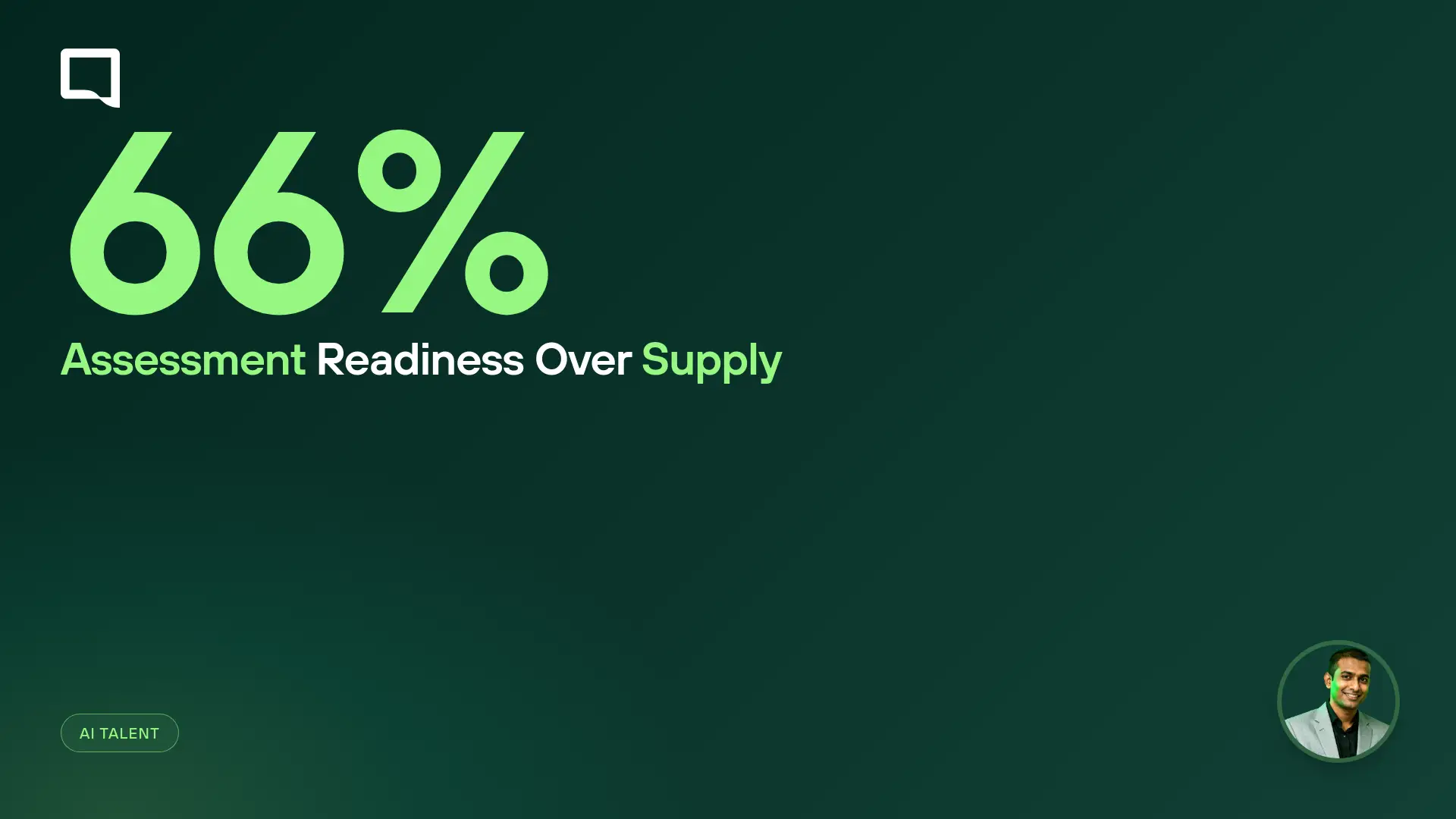
Recent data shows a massive disconnect between perceived skills and actual technical proficiency. While reports suggest that 90% of engineering graduates in India claim to possess AI-related competencies, only 23% of those graduates are categorized by employers as "AI-native"—individuals capable of building, maintaining, and deploying complex models.
This assessment gap highlights the limitations of current automated screening tools. Many recruitment platforms rely on keyword-heavy parsing and standardized testing to filter applicants, which often fails to capture the nuanced, iterative problem-solving skills required for high-level AI development. As companies scramble to fill roles, they are finding that the volume of applicants is not the problem; the problem is the inability to distinguish genuine capability from surface-level familiarity. Consequently, the reliance on automated gatekeepers may actually be exacerbating the talent shortage by screening out high-potential candidates who do not fit the rigid parameters defined by legacy filtering software.
The Theatre of Selectivity: Re-evaluating Hiring Metrics
The reliance on metrics as a proxy for rigor was further highlighted this week by the hiring strategy of Bending Spoons, a European tech company that recently announced it had hired 286 individuals from a pool of 800,000 applicants. The company framed this 0.04% acceptance rate as a testament to the rigorous quality of their selection process. However, this assertion has met with skepticism from HR professionals and labor economists alike, who argue that extreme selectivity is often a form of performance art rather than a genuine indicator of organizational efficiency.
The conflation of rejection rates with predictive validity is a growing concern. A high rejection rate does not inherently demonstrate that a hiring process is identifying the "best" talent; rather, it often indicates that a funnel is functioning as an expensive, slow, and potentially biased filter. If a hiring process processes nearly a million applications to find a few hundred people, the internal cost per hire is significant, and the potential for false negatives—missing out on highly qualified candidates due to automated bias or overly stringent filters—is immense.
From a strategic perspective, companies that prioritize "exclusivity metrics" often neglect the predictive validity of their hiring assessments. True rigor involves measuring the correlation between an assessment score and long-term job performance. When companies use their rejection statistics as a marketing tool, they risk shifting focus away from the actual efficacy of their talent acquisition strategy, potentially alienating top-tier talent who are unwilling to navigate opaque, hyper-selective funnels.
The Broader Impact: Operational Efficiency vs. Moral Outsourcing
The common thread linking these developments is the increasing distance between the decision-makers and the subjects of those decisions. Algorithms allow for the scaling of operations to a degree previously impossible, but they also facilitate a form of "moral outsourcing." When managers delegate the power to hire, fire, and promote to automated systems, they often lose the ability—and sometimes the willingness—to defend the logic behind those outcomes.
The risk for modern enterprise is clear: if an organization cannot articulate the rationale behind a system’s output, it has effectively abandoned its management responsibilities. The "dashboard" has become a substitute for professional judgment, creating a false sense of security that is easily punctured by regulatory scrutiny or legal challenges.
The Path Forward for TA Leaders
For Talent Acquisition (TA) leaders, the message is one of necessary vigilance. The integration of AI into the workforce is inevitable, but it must be accompanied by robust governance frameworks. This includes:
- Algorithmic Auditing: Implementing regular, third-party audits of all automated tools to identify potential bias or disparate impact before these tools are deployed at scale.
- Transparency and Explainability: Ensuring that HR teams can explain to employees and applicants exactly how a decision was made. If a tool is so complex that its logic is opaque, it is likely unsuitable for high-stakes human capital decisions.
- Human-Centric Design: Recognizing that metrics like rejection rates are vanity statistics. TA leaders should instead focus on outcomes: retention rates, performance metrics, and the speed at which new hires become productive members of the team.
- Ownership of Outcomes: Accepting that the vendor of an AI tool is not responsible for the legal fallout of its use. Under labor and employment law, the employer of record remains the entity responsible for the consequences of its hiring and firing practices, regardless of the tools used to execute them.
As we move deeper into 2026, the corporate sector is entering a phase of reckoning. The "honeymoon period" of AI adoption—where tools were implemented with little oversight—is coming to a close. Companies that view algorithms as a means to enhance human decision-making, rather than a way to abdicate it, will be the ones that succeed in navigating the complex regulatory and ethical terrain of the future. The algorithm may provide the data, but the responsibility remains, as it always has, firmly in the hands of the organization.
Related posts: