The Definitive 2026 Buyer’s Guide: Navigating the Evolving Landscape of Enterprise Interview Intelligence Platforms

As of April 2026, the realm of talent acquisition (TA) stands at a pivotal juncture, profoundly reshaped by the pervasive influence of artificial intelligence. Enterprise TA leaders are grappling with an unprecedented challenge: how to maintain the integrity and effectiveness of the human interview in an era where every candidate arrives equipped with AI assistance, capable of delivering perfectly rehearsed and polished responses. This paradigm shift has elevated the interview itself – the crucial 45 minutes intended for authentic validation of depth, evidence-based probing, and defensible decision-making – into the most vulnerable phase of the hiring process. In response, Interview Intelligence Platforms have emerged not merely as supplementary tools but as indispensable safeguards for enterprise TA teams committed to protecting the sanctity and efficacy of human interaction in hiring.
Understanding Interview Intelligence: A Critical Evolution
An Interview Intelligence Platform represents a sophisticated software solution designed to capture, structure, and analyze hiring interviews. Its core purpose is to empower talent teams to execute interviews with consistency, review interactions objectively, and foster continuous improvement over time. Functionally, most platforms integrate seamlessly within existing video conferencing tools, providing real-time transcription of conversations, aligning interview notes with predefined scorecards, and identifying discernible patterns post-interview. However, the most advanced iterations transcend these foundational capabilities. They actively guide interviewers during the conversation, meticulously evaluate interviewer behavior rather than solely focusing on candidate performance, and channel actionable insights back into targeted training programs.
The urgency surrounding this category has intensified dramatically in the past year. The ubiquitous presence of AI tools for candidates means that surface-level competency is now the baseline. Recruiters and hiring managers must penetrate deeper, employing structured, objective, and unbiased methodologies to uncover true potential and cultural fit. The global HR technology market, projected to reach over $40 billion by the mid-2020s, sees Interview Intelligence as a rapidly expanding segment, driven by the acute need for robust, compliant, and efficient hiring practices at scale. Organizations are increasingly recognizing that investments in interview intelligence can significantly reduce time-to-hire, decrease the cost of bad hires (which can range from 1x to 5x an employee’s annual salary, depending on seniority), and bolster overall quality of hire.
The 2026 Market Landscape: A Snapshot of Leading Platforms
In 2026, the market for interview intelligence platforms presents a diverse ecosystem, catering to various organizational scales and specific hiring challenges. For enterprise TA leaders, evaluating these solutions requires a nuanced understanding of their methodologies, compliance postures, enterprise readiness, and, crucially, their capacity to genuinely enhance interviewer capability rather than merely document conversations. The leading platforms vying for enterprise adoption include established players and innovative newcomers, each bringing distinct strengths to the fore.
Key Evaluation Criteria: Beyond Feature Lists
When assessing interview intelligence platforms, a superficial comparison of features is insufficient. A deeper dive into underlying methodologies and strategic intent is paramount. The criteria employed for this evaluation reflect the critical demands of the modern enterprise:
- Methodology & Impact: Does the platform merely record, or does it actively improve interviewer performance? This is the most crucial differentiator in 2026. True intelligence should embed best practices and guide users towards better outcomes.
- Compliance Posture & Ethical AI: With the advent of stringent regulations like the EU AI Act and evolving state-level requirements in the US, platforms must demonstrate robust data privacy, bias detection, and transparent AI practices. How a tool handles potentially biasing content is a significant legal and ethical consideration.
- Enterprise Readiness & Scalability: For large organizations, features like deep ATS integrations, comprehensive API capabilities, security protocols, multi-language support, and the ability to scale across thousands of users and diverse business units are non-negotiable.
- Talent Acquisition Enablement: Does the platform integrate with or offer learning and development resources? The ability to close the loop between identified skill gaps and targeted training is increasingly vital for sustainable improvement.
- User Experience & Adoption: A powerful tool is useless if hiring managers resist its adoption. Intuitive interfaces, minimal disruption to existing workflows, and clear value proposition for the end-user are essential.
It is important to acknowledge that this analysis, while striving for objectivity, originates from SocialTalent, a developer of one of the platforms discussed. Readers are encouraged to form their own independent opinions.
Deep Dive: Leading Platforms and Their Strategic Approaches
The 12 platforms highlighted for enterprise consideration in 2026 can be broadly categorized by their primary focus and target users:
1. Full-Loop Interviewer Capability & Methodology-Driven Solutions:
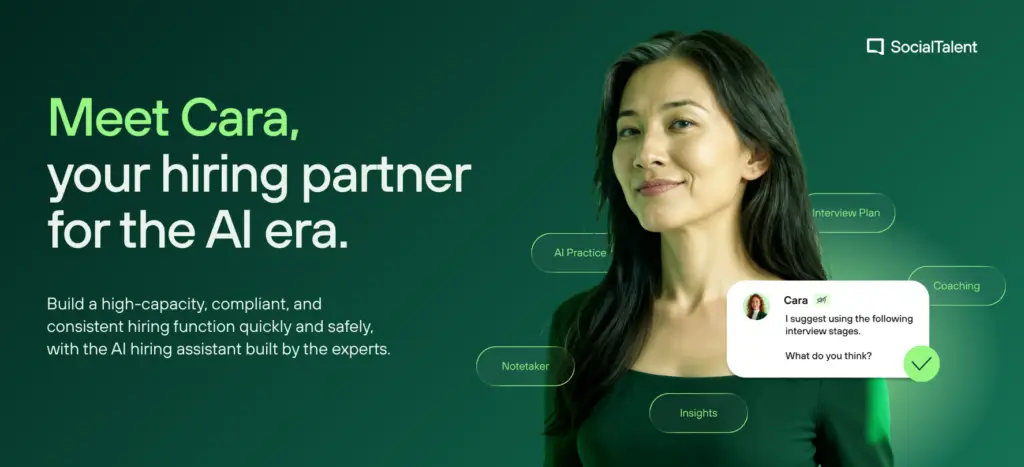
Platforms like SocialTalent (Cara) represent the vanguard of interview intelligence by emphasizing interviewer improvement over candidate evaluation. Cara, SocialTalent’s AI hiring assistant, integrates planning, in-interview guidance, and post-interview coaching into a single, cohesive loop. Grounded in SocialTalent’s 15 years of enterprise-scale hiring manager training, Cara’s fundamental design choice is to evaluate interviewers, not candidates. It analyzes interviewer behavior across dimensions such as probing quality, criteria coverage, talk-time ratios, identification of risky or biased questions, and adherence to structured frameworks. This feedback is delivered privately, fostering growth. A key differentiator is its ability to identify specific skill gaps and link them directly to two-minute micro-lessons from SocialTalent’s extensive learning library, ensuring that insight translates immediately into actionable improvement. This closed-loop system is particularly appealing to enterprise TA teams with over 10,000 employees seeking a defined hiring methodology, integrated training, and explicit bias handling.
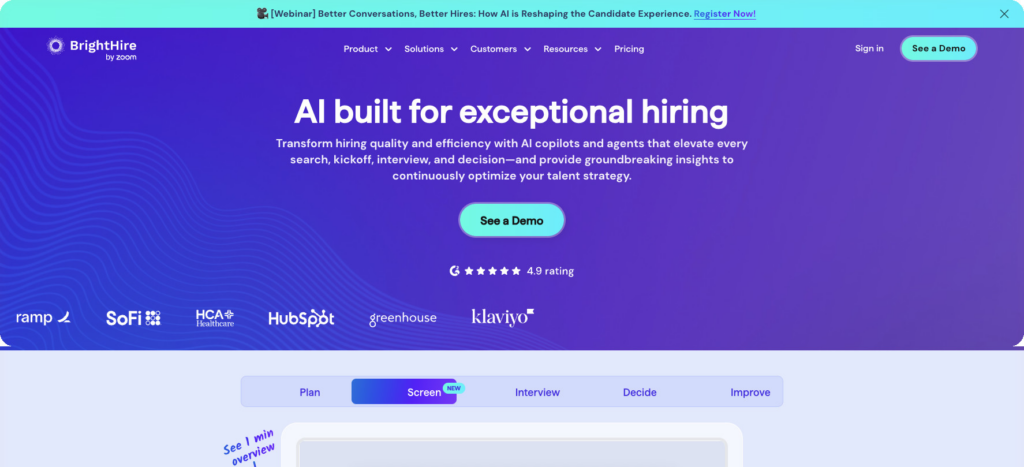
BrightHire also stands out in the category of comprehensive interview intelligence, offering mature recording, transcription, and scorecard-driven coaching visibility. With deep integrations into major Applicant Tracking Systems (ATS) like Greenhouse, Workday, and Lever, BrightHire has sharpened its focus on compliance and interview quality oversight. It analyzes interviewer behavior patterns (e.g., talk ratios, question types, structure adherence) and surfaces these signals to recruiting leaders. While effective in making interview quality visible for leadership oversight, its core evaluation lens remains somewhat candidate-centric, and the coaching, while valuable, is surfaced to leaders, which some interviewers might perceive as surveillance rather than direct enablement. A notable limitation is the absence of an integrated training library to close the loop on identified skill gaps.
2. Real-Time Guidance & Structured Interviewing:
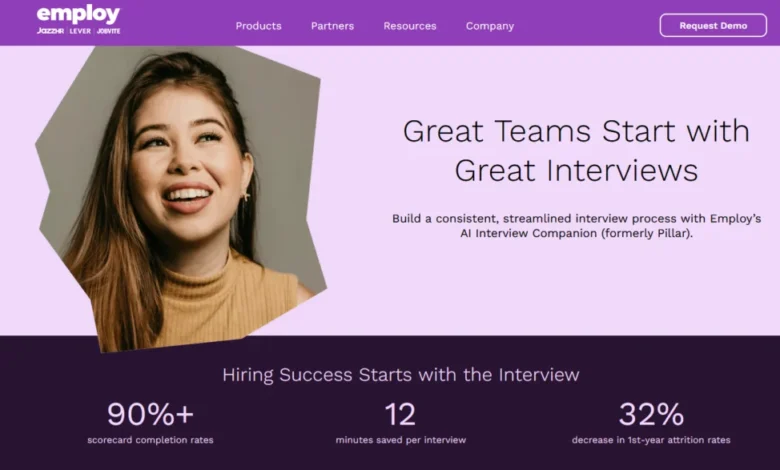
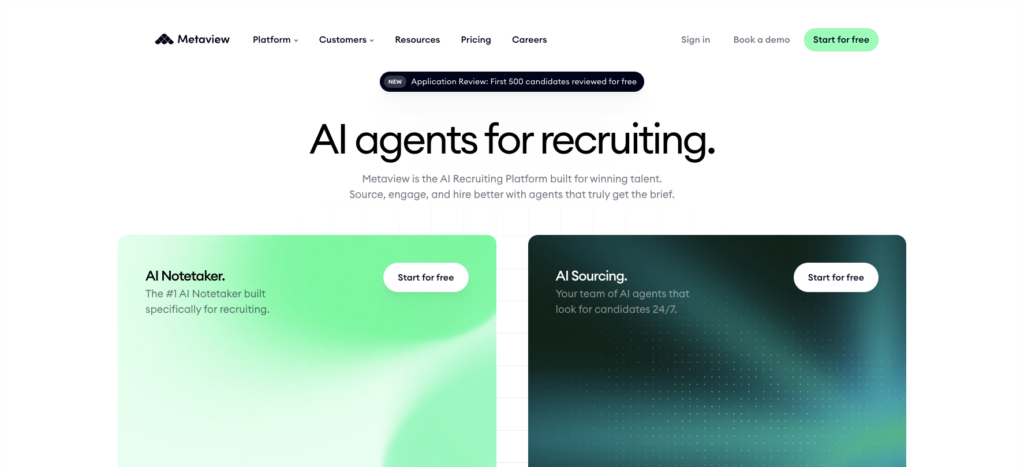
Pillar (Employ’s AI Interview Companion) focuses on reducing interview variance through in-interview guidance, structured frameworks, and post-interview analytics. Positioned for teams within the Employ stack (JazzHR, Lever, Jobvite), Pillar’s strength lies in its real-time prompts and frameworks that help standardize questions and evaluation criteria, thereby reducing bias and inconsistency. While its real-time guidance is genuinely useful, its primary efficacy is within the Employ ecosystem, and it lacks a dedicated learning library to connect feedback with skill development.
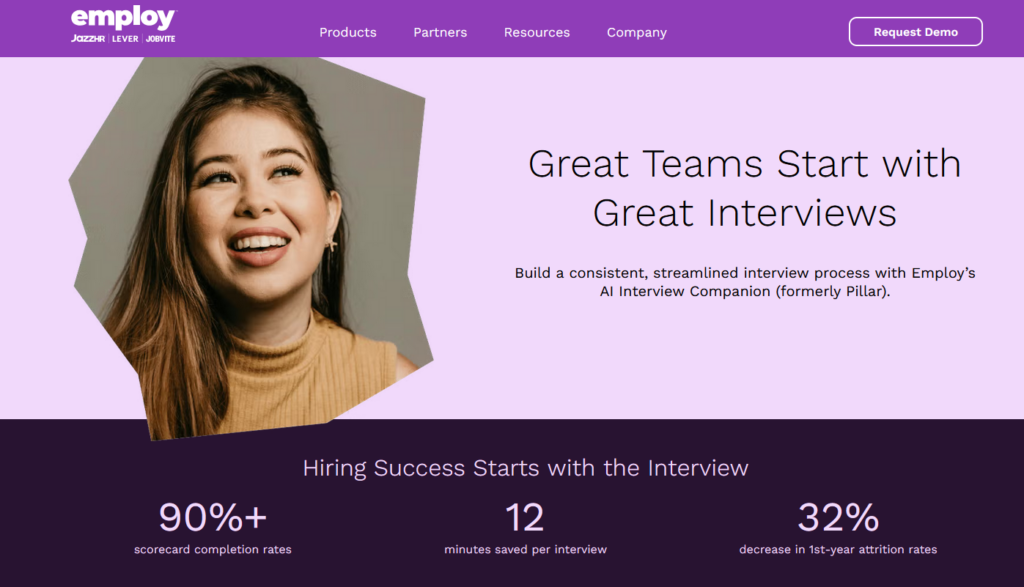
HireVue is a giant in structured video interviewing, serving nearly half of the Fortune 100. It offers structured on-demand video interviews, live interviewing, game-based cognitive assessments, and AI-powered insights. Its distinguishing feature is its enterprise scale and deep assessment science library, capable of handling high volumes of interviews globally. However, buyers in regulated markets must carefully scrutinize its AI-assisted candidate evaluation, especially features that score candidates based on tone, word choice, or facial expressions, which carry a heavy compliance burden under regulations like the EU AI Act.
3. AI-Powered Screening & Conversational Hiring:
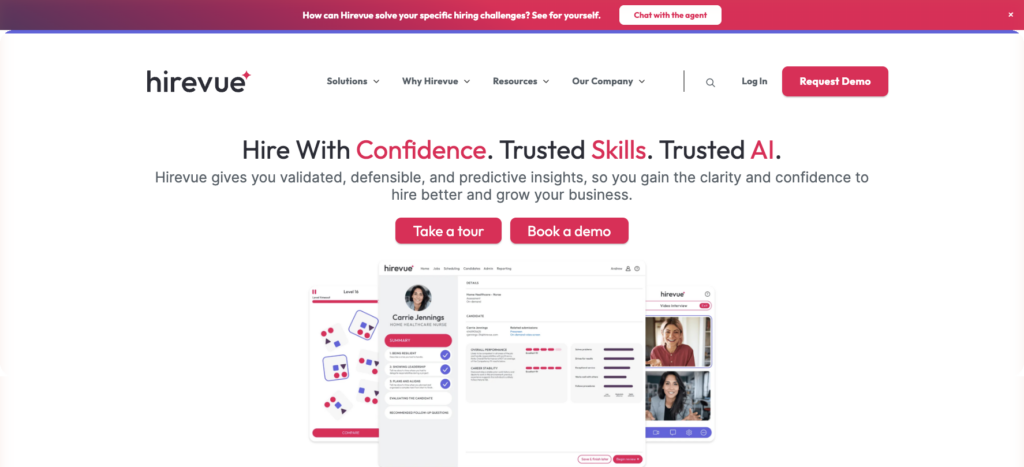
Sapia.ai pioneered the "first interview by chat," providing a structured, asynchronous text interview experience. Candidates answer open-ended behavioral questions, and AI analyzes responses for competency signals, communication style, and values alignment, ranking candidates and offering personalized feedback. Sapia’s strength lies in providing a truly identical, bias-conscious first interview experience for every applicant, eliminating common human interviewer biases. It excels as a first-stage screener for high-volume roles but typically needs to be paired with other solutions for mid-funnel and final-round interviews.
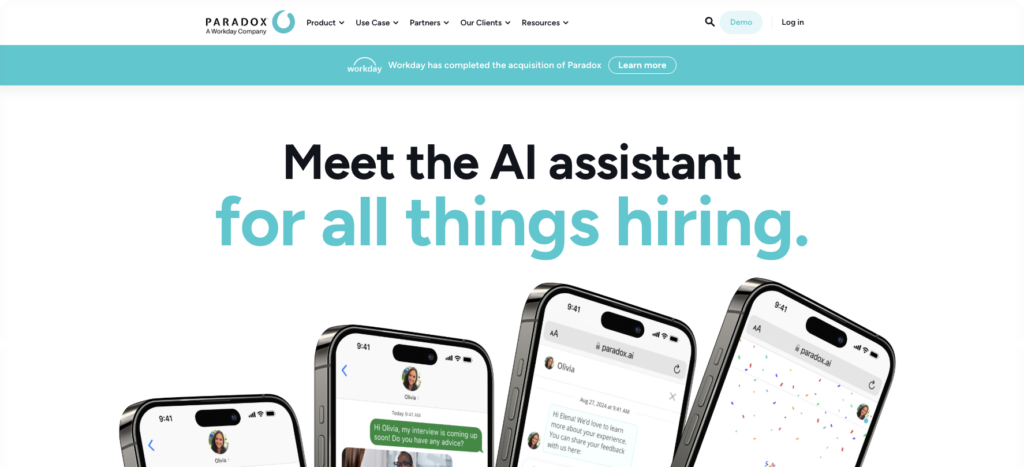
Paradox (Olivia) is a leader in conversational hiring for high-volume, frontline, and hourly roles (e.g., McDonald’s, Chipotle). Its AI assistant, Olivia, automates screening, scheduling, status updates, and onboarding coordination via SMS and chat in multiple languages, 24/7. While highly effective at eliminating recruiter touchpoints and accelerating hiring throughput (Chipotle reported 75% faster hiring), Paradox is less an interview intelligence tool in the sense of interviewer improvement and more a candidate orchestration layer, primarily suited for transactional hiring environments.
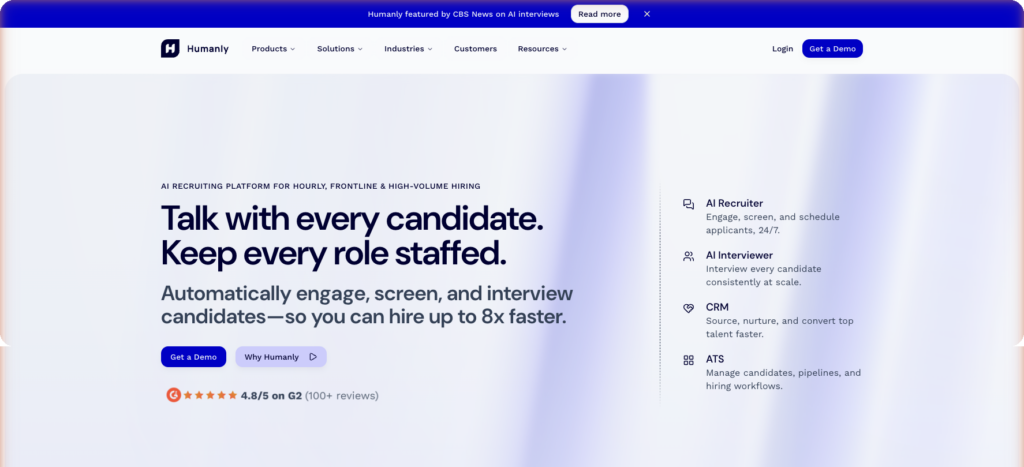
Humanly offers a blend of conversational AI for candidate engagement and screening, structured interview workflows, and a built-in talent CRM for mid-market TA teams. It aims to reduce repetitive work without the full-scale enterprise commitment of platforms like Paradox. Its broad feature set at a competitive price point makes it attractive, though feature depth in any single area may be shallower than dedicated point solutions.
4. Broader Talent Experience & Intelligence Platforms:
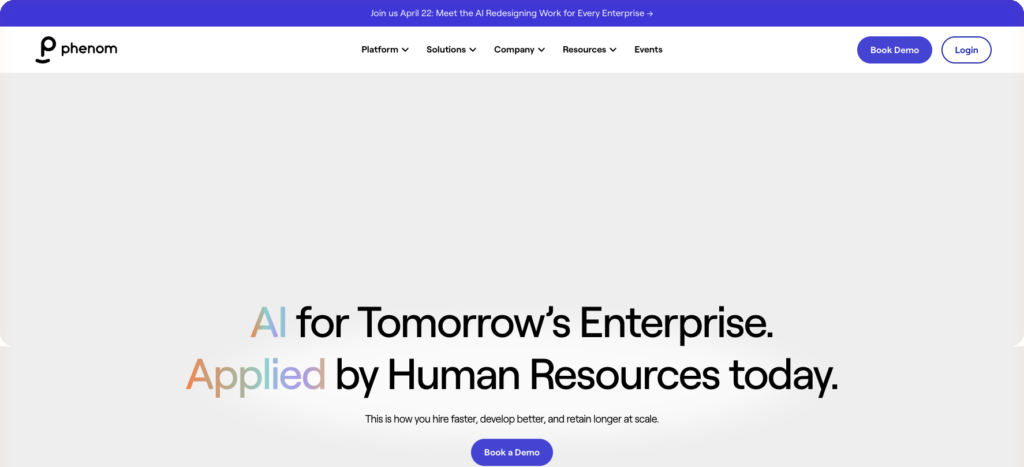
Phenom provides a comprehensive talent experience platform encompassing career sites, candidate engagement, internal mobility, AI-powered search and match, and interview automation. For organizations seeking to consolidate their TA technology stack with a single vendor, Phenom is a strong contender. Its interview automation features are embedded within its broader ecosystem, offering convenience but potentially less depth in interviewer evaluation and coaching compared to specialist platforms.
Eightfold AI positions its AI Interviewer within its larger talent intelligence ecosystem, which includes a deep skills graph, internal mobility, and workforce planning. This context allows interviews to be generated and evaluated against a skills-aware profile rather than generic job descriptions, offering a genuinely useful differentiator. The optimal return on investment for Eightfold’s AI Interviewer typically comes from organizations already invested in its broader talent intelligence platform.
5. Niche & Complementary Solutions:
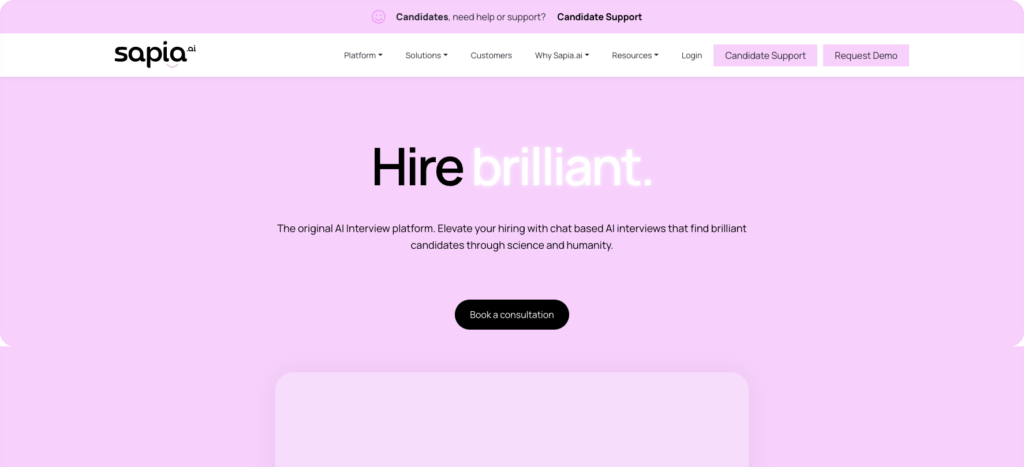
Metaview excels as an AI note-taker for recruiters, transcribing interviews and intake calls to produce structured notes aligned to templates, which are then pushed into the ATS scorecard. It’s widely adopted by growth-stage companies for its simplicity and efficiency in automating documentation, freeing recruiters from manual note-taking. However, it functions more as a scribe than an interviewer evaluation engine, automating documentation without directly intervening in the quality of the documented interaction.
Harver focuses on pre-employment assessments, combining skill tests, personality evaluations, and culture-fit analysis. Its strength lies in refining the candidate shortlist before interviews, which is valuable for organizations where early-stage assessment carries significant weight. Harver is best viewed as a complementary tool, not a substitute for interview intelligence, and its culture-fit algorithms warrant careful compliance scrutiny.
Hireflix offers a straightforward solution for one-way asynchronous video interviews with simple, flat pricing. It’s designed for growing companies needing asynchronous video as a funnel stage without the complexity or cost of enterprise contracts. While effective for its single capability, it lacks interviewer coaching, real-time guidance, or training linkages, positioning it as a tool rather than a comprehensive platform.
Strategic Selection: Matching Solutions to Organizational Needs
The challenge for enterprise TA leaders is distilling this diverse market into a single, strategic choice. The most effective decision framework begins with a fundamental question: what is the most pressing problem facing your organization right now – interview volume, interview quality, or interviewer capability?
- Interview Volume: If the primary concern is processing thousands of frontline workers rapidly, where the interview is largely transactional, platforms like Paradox, Sapia, and Hireflix offer robust automation and consistency. These solutions prioritize throughput and efficient screening.
- Interview Quality: If the organization struggles with inconsistent interviews, incomplete scorecard data, or interview notes lacking substance for debriefs, solutions such as Metaview, BrightHire, and Pillar can significantly enhance documentation and surface critical patterns for review.
- Interviewer Capability: If the root cause of hiring challenges lies in inadequately trained interviewers, persistent mistakes across requisitions, and bad hires traceable to poorly conducted conversations, then platforms designed to build interviewer capability are essential. SocialTalent (Cara) is specifically engineered to address this, providing integrated training, guidance, and feedback loops.
For many enterprise TA teams in 2026, the honest answer encompasses all three, though interviewer capability often represents the most chronically under-invested area. While automation addresses volume and improved documentation enhances quality, sustainable capability improvement necessitates integrated training, real-time guidance, and continuous feedback. This holistic approach is the benchmark against which vendors in this maturing category should be measured.
Compliance and Ethical AI: A Non-Negotiable Factor
A critical consideration, increasingly prominent in 2026, is the legal and ethical implications of AI-generated interview summaries, particularly in the context of discrimination claims. Legal teams are rightfully scrutinizing how these platforms handle and retain data. Tools that indiscriminately summarize all interview content, including potentially biasing exchanges, create a discoverable record that an employer may later need to defend. Conversely, platforms designed to deliberately omit biasing content from summaries, instead surfacing it as a private coaching signal to the interviewer, mitigate this exposure. Key aspects to evaluate during procurement include candidate consent capture mechanisms, transparent data retention policies, and the underlying design principles regarding discoverability of sensitive information. The distinction between AI that scores candidates and AI that coaches interviewers is paramount for compliance and ethical deployment.
The Future Trajectory of Interview Intelligence
The interview intelligence category is in a state of rapid evolution. Several key shifts are already observable, signaling where the market is headed beyond 2026:
- Consolidation and Methodology-Driven Integration: The market will likely see significant consolidation. Standalone AI scribes and basic recording tools, while useful, will increasingly be absorbed into more comprehensive platforms that embed robust hiring methodologies. The industry is recognizing that simply documenting an interview, even with higher fidelity, does not inherently improve its quality.
- Shifting Evaluation Target: The critical debate will center on the "who" is being evaluated. Platforms claiming to assess "interview quality" will face increasing pressure to clarify whether they are evaluating the candidate or the interviewer. Regulatory scrutiny and the demand for unbiased hiring will strongly favor solutions that focus on improving interviewer behavior and mitigating human biases.
- Convergence of Training and Execution: The divide between interview intelligence (identifying what went wrong) and interviewer training (fixing it) will disappear. Platforms that merely provide feedback without offering integrated, actionable training will become less compelling. The future demands a closed loop where insight directly triggers intervention, enabling continuous skill development for hiring managers and recruiters.
The 45 minutes of a human interview, intended to validate depth and facilitate defensible decisions, will only grow in complexity. Interview intelligence that empowers every interviewer to perform better, consistently and compliantly, will remain a critical investment, not just in 2027 and 2028, but for the foreseeable future of talent acquisition. The strategic choice today should therefore prioritize platforms built for this evolving future, addressing tomorrow’s challenges with integrated, intelligent solutions.
Related posts: