OpenAI Launches Micro Its First Hardware Product Amid Legal Tensions and Market Skepticism

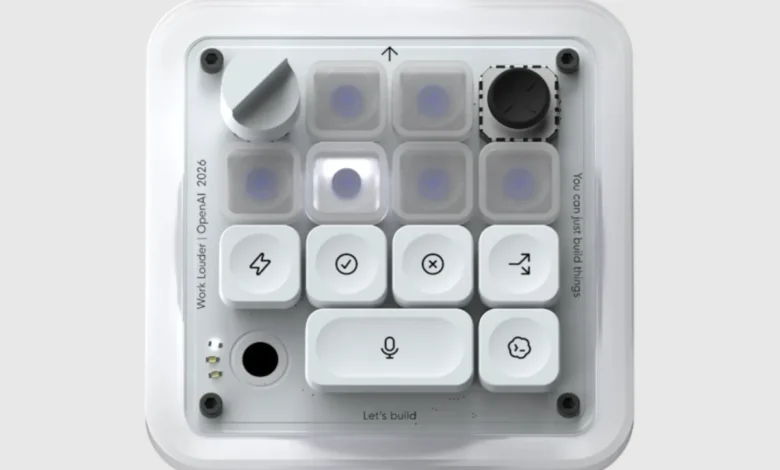
OpenAI, the San Francisco-based artificial intelligence laboratory that sparked a global technological revolution with ChatGPT, has officially entered the hardware sector with the release of its first physical device. Named "Micro," the product is a specialized, artisanal keypad designed specifically to streamline interactions with the company’s flagship AI models. Developed in collaboration with Work Louder, a boutique hardware firm known for its modular "Creator Board" and minimalist aesthetic, the Micro represents a strategic, albeit niche, expansion for a company that has until now defined itself almost exclusively through software and large language models (LLMs). The device, which retails for $230, arrives at a pivotal moment for OpenAI as it navigates a complex landscape of intense competition, hardware experimentation, and high-stakes legal battles with industry incumbents like Apple.
The Micro is positioned as a "macropad"—a secondary keyboard typically used by creative professionals and software engineers to map complex shortcuts to single-button presses. However, OpenAI has tailored the Micro specifically for its ecosystem. The device features a distinct 12-key layout divided into two primary sections. The top row consists of six frosted "agent" keys, which are programmable to trigger specific tasks within ChatGPT or OpenAI’s agentic coding tool, Codex. Below these are six command keys intended to facilitate navigation and control within the software interface. A standout feature of the hardware is its dedicated voice dictation button, which allows users to bypass typing entirely by holding the key and speaking directly to the AI, which then processes the request through OpenAI’s Whisper speech-to-text technology.
Design Philosophy and Technical Specifications
From a design perspective, the Micro reflects a departure from the utilitarian look of standard office peripherals. Reviewers and early testers have noted that the device possesses a "sturdy" and "premium" feel, characterized by a weight that makes it feel more like a permanent desk fixture than a portable accessory. The aesthetic has been frequently described as "Apple-coded," featuring an immaculate white finish, clean lines, and minimalist packaging that mirrors the branding of the Cupertino-based tech giant. This similarity is particularly notable given the current friction between the two organizations.
Technically, the Micro offers flexibility in connectivity, supporting both Bluetooth for wireless operation and USB-C for a stable, wired connection. The device is deeply integrated into the ChatGPT web and desktop interfaces. Users can customize the keypad via a dedicated "Micro" tab within their ChatGPT settings, allowing for the adjustment of LED brightness and the assignment of specific AI "agents" or ongoing projects to individual keys. The hardware utilizes a color-coded feedback system to communicate the AI’s status to the user: white indicates an idle state, pulsing blue signals that the model is processing or "thinking," green denotes a completed task, and red serves as a warning for errors or connectivity issues.
A Turbulent Entry into the Hardware Market
OpenAI’s foray into hardware has not been without significant controversy. The launch of the Micro follows a series of reports and legal filings that suggest a deepening rift between OpenAI and Apple. Several weeks prior to the product’s debut, Apple initiated a lawsuit against the AI lab, accusing it of trade secret theft. The litigation centers on the recruitment of former Apple employees and the alleged misappropriation of proprietary information related to hardware development and system integration.
The tension is exacerbated by reports that OpenAI is concurrently developing a more ambitious hardware project: a screenless smart home speaker designed to serve as a physical portal for ChatGPT. This rumored device is reportedly being spearheaded by a team of former Apple hardware engineers, including figures who were instrumental in the design of the iPhone and the HomePod. While the Micro is a relatively simple peripheral, industry analysts view it as a "trial run" for OpenAI’s supply chain and distribution capabilities before the company attempts to launch more complex consumer electronics.
Chronology of OpenAI’s Hardware Ambitions
The path to the Micro began in late 2023, following rumors that OpenAI CEO Sam Altman had been in talks with legendary former Apple designer Jony Ive and SoftBank’s Masayoshi Son to fund and build a "revolutionary" AI device. While the Micro is a more modest collaboration with Work Louder, it fits into a broader timeline of the company’s evolution:
- November 2022: OpenAI launches ChatGPT, reaching 100 million users in record time and establishing the need for more efficient user interfaces.
- Late 2023: Internal reports surface regarding a "Project Sunshine," a hardware initiative aimed at creating a dedicated AI wearable or home device.
- May 2024: OpenAI releases GPT-4o, emphasizing real-time voice and vision capabilities that demand more immediate physical triggers than a traditional mouse and keyboard can provide.
- July 2024: Apple files its lawsuit alleging trade secret theft, specifically citing OpenAI’s aggressive hiring of hardware engineering talent.
- August 2024: OpenAI officially launches the Micro keypad, marking its transition from a pure software provider to a hardware-software integrated company.
Market Reception and Critical Analysis
The reception to the Micro has been sharply divided, highlighting the challenges of selling specialized hardware in a market dominated by general-purpose devices. Among the "power user" community—specifically those who spend several hours a day prompting AI for coding or content creation—the device has been praised for its efficiency. The ability to toggle between different ChatGPT sessions with a physical button is seen as a significant productivity gain.

However, the broader tech community has expressed skepticism. On platforms like Reddit, the device has been met with derision by some software developers. Critics argue that the $230 price point is exorbitant for what is essentially a 12-key macro pad, noting that similar hardware can be purchased for under $50 or built using DIY kits for even less. One prominent review from the independent tech outlet Aftermath characterized the device as being "engineered to piss me off," citing the steep learning curve and the redundancy of the hardware for anyone already proficient with keyboard shortcuts.
The primary criticism revolves around the "utility-to-cost" ratio. For the average consumer, the time required to memorize the color codes and program the specific agent keys may outweigh the convenience of the device. Critics point out that most of the Micro’s functions can be replicated through software-based hotkeys on a standard laptop.
Strategic Implications for the AI Industry
OpenAI’s decision to release the Micro reflects a broader trend in the Silicon Valley ecosystem: the "hardware-ification" of artificial intelligence. As LLMs become more powerful, companies are discovering that the traditional browser-based interface is often a bottleneck. We have seen similar attempts at dedicated AI hardware from startups like Humane, with its AI Pin, and Rabbit, with the R1 handheld. Both of those devices struggled significantly upon launch, suffering from poor battery life and limited utility compared to a smartphone.
By choosing a desktop peripheral as its first product, OpenAI is taking a more conservative and arguably more logical path. Unlike a standalone wearable, the Micro does not attempt to replace the smartphone or the computer; instead, it seeks to enhance the existing professional workflow. This "companion device" strategy allows OpenAI to collect data on how users interact with AI in a physical space without the high stakes of launching a standalone mobile operating system.
Furthermore, the collaboration with Work Louder suggests that OpenAI is leaning into the "prosumer" and "enthusiast" markets. This demographic is often willing to pay a premium for high-quality, artisanal tools that signal status and technical proficiency. By targeting this group, OpenAI can build a loyal hardware base while refining its internal hardware engineering processes.
Official Responses and Future Outlook
While OpenAI has not officially commented on the specifics of the Apple lawsuit, the company’s hardware roadmap remains aggressive. In statements accompanying the launch, OpenAI spokespeople emphasized that the Micro is intended to make AI more "accessible and tactile." They noted that the device is part of a broader effort to move AI away from being a "tab in a browser" and toward being a "persistent collaborator" in the physical world.
As the legal battle with Apple looms, the success of the Micro will likely be measured not by sales volume, but by its ability to prove that OpenAI can successfully manage the logistics of physical product manufacturing. If the Micro finds a foothold among developers and "code monkeys," it will provide the necessary momentum for OpenAI to unveil its more secretive, large-scale hardware projects currently in development.
Ultimately, the Micro is a polarizing first step. For some, it is an overpriced novelty that solves a problem that doesn’t exist. For others, it is the first glimpse of a future where our physical environments are populated by dedicated tactile interfaces for the digital minds we now rely on. Whether the Micro becomes a staple of the modern office or remains a "paperweight" for tech collectors will depend on how deeply OpenAI can integrate its agentic future into the buttons of this small, white box.