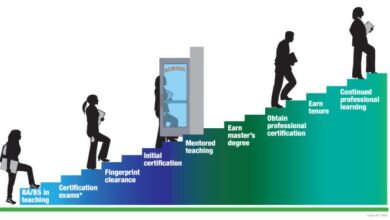

Teacher training and education sets the stage for fostering a love of learning in students. This comprehensive overview delves into various models, from pedagogical approaches to technology integration, exploring successful programs across different educational levels. We’ll also examine curriculum alignment, assessment methods, and the future of teacher training, addressing challenges and opportunities to enhance the teaching profession.
The evolution of teacher training and education is crucial for preparing teachers to effectively address the evolving needs of students in a rapidly changing world. This exploration dives deep into practical strategies, providing actionable insights for educators, administrators, and anyone interested in improving teaching practices. We’ll look at specific examples of successful programs, and examine different approaches to see what works best.
Teacher Training Models
Teacher training is crucial for equipping educators with the skills and knowledge necessary to effectively support student learning. A variety of models and approaches exist, each with its own strengths and weaknesses. Understanding these diverse methodologies allows educators and policymakers to tailor training programs to specific needs and contexts.
Different Approaches to Teacher Training
Various approaches to teacher training focus on different aspects of effective teaching. Pedagogical approaches emphasize instructional strategies, while technology integration focuses on leveraging digital tools in the classroom. Culturally responsive teaching recognizes and values the diverse backgrounds of students, fostering inclusive learning environments.
Examples of Successful Teacher Training Programs
Successful teacher training programs often incorporate a combination of these approaches. Elementary school programs might emphasize hands-on activities and project-based learning, while secondary programs might focus on critical thinking and analytical skills. Special education programs frequently prioritize individualized instruction and support strategies. A notable example of successful training is the “Educator Excellence Initiative” in California, which emphasizes culturally responsive practices and integrates technology tools to enhance student engagement.
Teacher training often emphasizes engaging lesson plans, and modern technology is key. Learning how to use your tablet effectively can significantly boost classroom presentations. For instance, mastering techniques like those detailed in making your tablet a sturdy little powerpoint pony can transform your presentations from static to dynamic, enhancing student engagement. Ultimately, this translates into more effective teaching and learning experiences.
Comparison of Teacher Training Models
Different teacher training models have varying strengths and weaknesses. Coaching, mentoring, and workshops, for instance, offer distinct approaches to professional development. A comparison highlights the nuances of each method.
| Model | Focus | Strengths | Weaknesses |
|---|---|---|---|
| Coaching | Providing individualized support and guidance to teachers through ongoing dialogue and observation. | Tailored to specific needs, fosters reflective practice, and promotes sustained growth. | Time-intensive for coaches, requires significant investment in training for coaches, and may not be scalable for large numbers of teachers. |
| Mentoring | Pairing experienced teachers with newer teachers for support and guidance over an extended period. | Provides a supportive network and a wealth of practical experience, can be a powerful source of motivation and inspiration. | Effectiveness depends heavily on the quality of the mentor-mentee relationship, may not always address specific skill gaps, and requires ongoing monitoring and evaluation. |
| Workshops | Providing focused instruction on specific topics or skills, typically over a short period. | Cost-effective way to disseminate knowledge and skills, can be highly engaging and interactive, and suitable for large numbers of teachers. | May not be sufficiently tailored to individual needs, limited time for practical application, and can lack follow-up support for skill retention. |
Mentorship and Professional Development in Teacher Training
Mentorship and professional development programs are integral components of effective teacher training. Mentorship provides ongoing support and guidance, while professional development offers opportunities for continuous learning and skill enhancement. These programs foster a culture of growth and improvement, enabling teachers to adapt to evolving educational needs. For example, a school district’s professional development plan might include workshops on integrating technology, mentorship programs for new teachers, and coaching sessions for experienced teachers facing specific challenges.
Curriculum and Pedagogy: Teacher Training And Education
Teacher training programs must evolve to effectively prepare educators for the dynamic demands of the modern classroom. Aligning training with current curriculum standards and best practices is crucial for ensuring teachers possess the necessary skills and knowledge to support student success. This necessitates a thorough understanding of diverse learning styles and the incorporation of effective pedagogical approaches.Effective teacher training goes beyond simply imparting knowledge; it fosters a deep understanding of how to apply that knowledge to real-world situations.
This includes understanding the nuances of various learning styles and incorporating pedagogical approaches that cater to diverse learners. It’s not just about what to teach, but how to teach it effectively and engage students in meaningful learning experiences.
Aligning Teacher Training with Curriculum Standards
Teacher training programs should be meticulously aligned with the latest curriculum standards to ensure teachers are equipped to deliver the required content and skills. This alignment allows for a seamless transition from training to classroom practice. This involves staying current with changes in curriculum, recognizing shifts in learning objectives, and providing teachers with practical examples of how to integrate the new standards into their teaching strategies.
This can be achieved by collaborating with curriculum developers, attending workshops, and engaging in ongoing professional development.
Incorporating Diverse Perspectives and Experiences
Teacher training programs should actively incorporate diverse perspectives and experiences to foster cultural sensitivity and inclusivity in the classroom. This requires exposing teachers to various cultural backgrounds, learning styles, and disabilities. By understanding and respecting the diversity within their student population, teachers can create a more inclusive and supportive learning environment. This includes incorporating diverse literature, incorporating different teaching methodologies, and creating opportunities for teachers to interact with students from various backgrounds.
Teacher training and education are crucial for preparing the next generation of educators. Modernizing teaching methods is key, and that includes looking at innovative ways to share resources. Tools like Google’s improved document sharing capabilities, as detailed in this article about google doctors up docs sharing , offer teachers a more efficient platform for collaboration and resource management.
This ultimately benefits student learning by allowing for more dynamic and engaging lessons.
This approach also benefits teachers by promoting empathy and understanding.
Developing Critical Thinking and Problem-Solving Skills
Teachers need to develop critical thinking and problem-solving skills to effectively guide students in their learning journey. Teacher training programs should focus on fostering these skills by incorporating activities that encourage critical analysis, creative problem-solving, and innovative thinking. Examples include case studies, role-playing, and collaborative projects that require students to analyze situations, evaluate options, and propose solutions.
Emerging Trends in Educational Pedagogy
Emerging trends in educational pedagogy, such as personalized learning, project-based learning, and the integration of technology, significantly impact teacher training. These trends necessitate the adaptation of training programs to equip teachers with the necessary skills to effectively leverage these tools and approaches in the classroom. Training should incorporate hands-on experiences with technology, exploration of personalized learning strategies, and collaboration with peers to address the challenges and opportunities of these innovative methods.
Pedagogical Approaches
Understanding various pedagogical approaches can enhance the effectiveness of teacher training. Different approaches offer unique benefits and can be adapted to suit diverse learning environments.
| Approach | Key Features | Benefits |
|---|---|---|
| Project-Based Learning | Students learn by engaging in real-world projects that require them to apply knowledge and skills. Projects often involve research, collaboration, and problem-solving. | Enhances critical thinking, problem-solving, and collaboration skills. Projects provide opportunities for deeper understanding and application of concepts. |
| Inquiry-Based Learning | Students ask questions, investigate, and explore topics of interest. Teachers act as facilitators, guiding students in their learning process. | Develops critical thinking and research skills. Students become active learners and take ownership of their learning. |
| Collaborative Learning | Students work together in small groups to achieve common goals. This approach emphasizes teamwork, communication, and knowledge sharing. | Enhances communication, social skills, and interpersonal skills. Students learn from each other and develop a sense of community. |
Technology Integration in Training
Integrating technology effectively into teacher training programs is crucial for equipping educators with the tools and strategies to thrive in the modern classroom. This approach empowers teachers to embrace innovative pedagogical methods, ultimately enriching the learning experience for their students. A well-designed technology integration strategy equips teachers with practical, applicable skills and resources that translate directly into their classroom practice.Technology enhances teacher training by providing dynamic and interactive learning experiences, fostering collaboration, and offering personalized learning pathways.
Teacher training and education is crucial for nurturing the next generation, but it’s also important to consider career paths beyond the classroom. For instance, if you’re looking for a high-impact, potentially lucrative career, exploring options like getting a graduate job in nuclear energy could be a fascinating avenue. Ultimately, strong foundational skills developed during teacher training and education can be applicable in many fields, fostering adaptability and lifelong learning.
By utilizing diverse digital tools and platforms, trainers can move beyond traditional methods, creating engaging environments that motivate and inspire teachers to embrace technology in their own teaching practices.
Effective Strategies for Technology Integration
A successful technology integration strategy in teacher training goes beyond simply introducing digital tools. It necessitates a thoughtful approach that emphasizes practical application and ongoing support. This involves incorporating technology into various stages of the training, from introductory sessions to hands-on workshops, and creating opportunities for teachers to experiment and reflect on their experiences. Providing access to high-quality online resources and support materials is also vital.
Regular feedback mechanisms and opportunities for peer learning contribute significantly to the effectiveness of technology integration.
Technology Enhancing Learning Experience
Technology empowers both teachers and students. Teachers benefit from access to online courses, interactive simulations, and virtual classrooms, allowing them to explore new pedagogical approaches in a dynamic and engaging environment. This translates to a more personalized learning experience, tailored to individual needs and learning styles. Students, in turn, gain access to innovative learning resources and interactive activities that foster critical thinking and engagement.
Virtual field trips, for instance, can bring distant locations into the classroom, expanding learning horizons.
Digital Tools and Resources
Effective teacher training programs utilize a range of digital tools to facilitate learning and skill development. These tools include:
- Online courses (e.g., Coursera, edX, FutureLearn): These platforms offer structured learning pathways, diverse course materials, and often provide certification upon completion. This ensures a comprehensive and standardized approach to learning.
- Interactive simulations (e.g., educational software, virtual labs): Simulations provide realistic scenarios for teachers to practice new skills and strategies in a safe and controlled environment, preparing them for real-world classroom challenges.
- Virtual classrooms (e.g., Zoom, Google Meet): These tools allow for real-time interaction, collaboration, and discussion among teachers and trainers, promoting active learning and peer support.
- Educational games and apps: Engaging learning experiences like educational games and interactive apps can enhance understanding and retention of key concepts.
Personalizing Teacher Training Experiences
Personalization is key to effective teacher training. Adaptive learning platforms, for example, can tailor the learning path to each teacher’s needs and learning style. Providing personalized feedback and support mechanisms, along with access to individualized learning resources, helps create a more supportive and effective training environment.
Online Platforms and Tools for Teacher Training
A variety of online platforms and tools facilitate teacher training. Their use can streamline the training process, enhance collaboration, and personalize the learning experience.
Assessment and Evaluation
Assessing the effectiveness of teacher training programs is crucial for continuous improvement and ensuring the program’s value for both teachers and students. A robust evaluation process provides data-driven insights into the program’s strengths and weaknesses, enabling adjustments and enhancements to optimize future training initiatives. This iterative approach is key to ensuring that training remains relevant and impactful in a dynamic educational landscape.A comprehensive assessment strategy goes beyond simply measuring teacher knowledge gain.
It encompasses a holistic evaluation of the training’s influence on teaching practices, classroom dynamics, and ultimately, student outcomes. This requires a multifaceted approach, incorporating various methods and perspectives to capture the full picture of program effectiveness.
Methods for Assessing Teacher Training Program Effectiveness
A variety of methods can be employed to assess the effectiveness of teacher training programs. These methods should be chosen carefully to align with the specific objectives and target audience of the training. The best approach usually involves a combination of different assessment tools to obtain a more complete picture.
- Surveys: Surveys provide valuable quantitative data about participants’ perceptions of the training, including its content, delivery, and overall impact. They can assess satisfaction levels, identify areas for improvement, and gauge participants’ perceived knowledge and skill gains. Examples of survey questions include those addressing the clarity of materials, the effectiveness of activities, and the relevance of the training to real-world classroom scenarios.
- Observations: Classroom observations provide qualitative insights into how teachers apply the knowledge and skills gained during the training. Observers can evaluate teaching strategies, classroom management techniques, and the creation of a supportive learning environment. Detailed observation protocols, outlining specific criteria for evaluation, are crucial for consistent and reliable assessment.
- Student Performance Data: Monitoring student learning outcomes can provide an objective measure of the training’s impact. This approach involves comparing student performance before and after the training. For example, comparing standardized test scores, student grades, or project-based learning outcomes can offer valuable insights into whether the training has positively influenced student achievement.
- Teacher Portfolios: Teacher portfolios provide a comprehensive collection of evidence that demonstrates teachers’ growth and development. These portfolios can include lesson plans, student work samples, reflections on teaching practices, and other materials that illustrate the impact of the training on their teaching approach.
Importance of Feedback and Reflection
Feedback and reflection are essential components of the teacher training process. Providing constructive feedback helps teachers identify areas for improvement and understand the impact of their teaching practices. Reflection allows teachers to analyze their experiences, identify patterns, and develop strategies for future growth. Effective feedback should be specific, actionable, and focused on supporting teacher development. Reflection activities can be incorporated throughout the training program to encourage self-awareness and continuous improvement.
Indicators for Measuring the Impact of Teacher Training on Student Outcomes
Measuring the impact of teacher training on student outcomes requires the identification of clear indicators. These indicators should align with the specific goals of the training and the desired improvements in student learning. Examples of potential indicators include:
- Increased student engagement: This can be measured through classroom observations, student surveys, and participation rates in learning activities.
- Improved student achievement: Assessment of student performance, such as test scores, grades, and project outcomes, can provide insights into student learning gains.
- Enhanced student well-being: Collecting data on student attitudes towards school and their sense of belonging can reveal how the training impacts the overall learning environment.
Evaluating Teacher Training Program Effectiveness
The following table illustrates various methods for evaluating the effectiveness of teacher training programs, along with their respective advantages and disadvantages:
| Method | Description | Advantages | Disadvantages |
|---|---|---|---|
| Surveys | Collecting data through questionnaires about participants’ experiences and perceptions. | Easy to administer, provides broad perspectives, relatively inexpensive. | May not capture nuanced perspectives, susceptible to bias, potentially limited in depth. |
| Classroom Observations | Directly observing teachers in their classrooms to assess implementation of new skills and knowledge. | Provides rich qualitative data, allows for real-time feedback, observable improvements. | Time-consuming, potential observer bias, can be disruptive to the classroom. |
| Student Performance Data | Analyzing student outcomes (e.g., test scores, grades) before and after the training. | Objective measure of impact, provides quantifiable data, clear evidence of impact on students. | May not isolate the impact of the training, can be influenced by other factors, requires longitudinal data. |
Challenges and Opportunities

Teacher training programs play a crucial role in shaping the future of education. However, these programs face a multitude of challenges, from securing adequate funding to fostering a supportive environment for teachers. Simultaneously, opportunities abound to improve training through innovative approaches, fostering collaboration, and leveraging the power of technology. A deeper understanding of these challenges and opportunities is essential for developing effective and sustainable teacher training initiatives.Addressing these challenges and seizing opportunities requires a comprehensive understanding of the specific needs and contexts at different educational levels.
This includes recognizing the unique difficulties faced by teachers in elementary, secondary, and higher education settings, while also identifying common themes that transcend these levels. By proactively addressing these issues, we can create more effective and impactful teacher training programs.
Challenges Faced by Teacher Training Programs
Teacher training programs frequently encounter obstacles that hinder their effectiveness. Funding limitations often restrict access to quality resources, professional development opportunities, and expert instructors. Furthermore, teacher burnout, a significant issue across various sectors, can negatively impact the quality of training experiences and ultimately affect the teachers’ ability to effectively impart knowledge to their students. The lack of adequate resources, including relevant materials, technology, and supportive infrastructure, often complicates the training process.
Addressing these issues requires a multifaceted approach.
Opportunities for Improving Teacher Training
Leveraging technology in teacher training can enhance the learning experience. Interactive online platforms, virtual simulations, and digital resources can make training more engaging and accessible. Fostering collaboration among teachers and trainers can lead to the sharing of best practices and innovative teaching strategies. Incorporating diverse perspectives in training programs, through including educators from varied backgrounds and experiences, ensures a more inclusive and enriching learning environment.
Recognizing these opportunities is vital to optimizing teacher training.
Role of Policy and Leadership in Supporting Teacher Training
Policies and leadership play a critical role in shaping the future of teacher training. Policies that prioritize teacher well-being, professional development, and adequate resources are essential. Strong leadership within educational institutions can champion initiatives to enhance training programs and provide the necessary support for teachers. Policymakers and leaders should actively seek to understand the specific challenges and opportunities within their respective educational settings.
This allows for tailored interventions that meet the unique needs of teachers and students.
Potential Solutions for Addressing Challenges
Addressing the challenges Artikeld above requires a combination of strategies. Increased funding for teacher training programs, including allocation for resources and professional development, is a necessary step. Promoting a supportive and healthy work environment, reducing teacher workloads, and providing adequate mental health support can mitigate teacher burnout. Ensuring access to high-quality resources and technology is critical.
Table Comparing Challenges and Opportunities Across Educational Levels, Teacher training and education
| Level | Challenges | Opportunities |
|---|---|---|
| Elementary | Limited access to specialized resources for diverse learners, maintaining student engagement in a classroom setting, managing diverse learning styles, ensuring sufficient classroom resources. | Developing engaging curriculum focused on play-based learning and interactive experiences, leveraging technology to create personalized learning paths, incorporating diverse teaching methods, utilizing community resources. |
| Secondary | Maintaining student engagement across various subjects, navigating the transition to advanced learning styles, addressing academic pressure and student mental health, fostering critical thinking skills. | Creating project-based learning experiences, implementing technology for student research and collaboration, promoting interdisciplinary learning, focusing on critical thinking skills development. |
| Higher Education | Balancing theory and practice in training, keeping training current with evolving technology, ensuring a balance between theoretical learning and practical applications, developing effective mentorship programs. | Leveraging online resources and digital tools to support research, incorporating industry experts for practical training, promoting collaboration between academia and industry, implementing personalized learning paths for individual needs. |
Future of Teacher Training

The future of teacher training is not merely about adapting to existing trends; it’s about proactively shaping the education system to meet the evolving needs of students and society. This involves anticipating future demands and incorporating innovative technologies to create dynamic and effective training programs. The key is to move beyond traditional methods and embrace a future-focused approach.The educational landscape is rapidly changing, driven by technological advancements, shifting societal values, and the constant need for skill development.
To prepare teachers for this evolving environment, teacher training programs must adapt by emphasizing critical thinking, problem-solving, and adaptability. This forward-thinking approach is essential for equipping educators with the skills to navigate the complexities of the future classroom.
Emerging Trends in Teacher Training
Teacher training programs are increasingly incorporating project-based learning, design thinking, and collaborative approaches. These strategies prepare teachers to foster creativity and critical thinking in their students. Personalized learning models are gaining traction, emphasizing the unique needs and learning styles of each student. This necessitates teacher training programs to provide educators with tools and techniques to tailor instruction to individual needs.
Evolving Educational Needs and Teacher Training
The demands of the 21st-century classroom are rapidly changing. Students require a deeper understanding of complex topics and a proficiency in critical thinking, problem-solving, and communication. Consequently, teacher training must prioritize equipping educators with the skills to nurture these abilities. Furthermore, the rise of technology necessitates training teachers on integrating technology seamlessly into their teaching methods.
Adapting Teacher Training to Future Demands
Teacher training programs must adopt a flexible and adaptable curriculum. This includes incorporating modules on emerging technologies, data literacy, and diverse learning styles. It’s vital to foster continuous professional development (CPD) opportunities, allowing teachers to stay abreast of the latest research and best practices. Emphasis should be placed on active learning strategies, such as simulations, case studies, and real-world projects.
Role of Technology and Innovation
Technology plays a pivotal role in shaping the future of teacher training. Virtual reality (VR) and augmented reality (AR) are being integrated to provide immersive learning experiences for aspiring teachers. Online platforms and digital resources are used to deliver interactive modules and provide access to a wealth of educational materials. These technological advancements facilitate collaboration and knowledge sharing among educators.
Examples of Innovative Technologies in Training
Several innovative technologies are already being integrated into teacher training programs. For instance, online simulations allow teachers to practice classroom scenarios and receive immediate feedback. Interactive software tools help teachers understand and apply different teaching methodologies. These tools offer a personalized learning experience for aspiring teachers. Further, many educational institutions are leveraging virtual reality (VR) for immersive experiences, allowing teachers to explore diverse classroom environments and pedagogical approaches.
Final Conclusion
In conclusion, teacher training and education is a dynamic field requiring continuous adaptation to meet the ever-evolving needs of students and society. This discussion highlighted the importance of robust training models, curriculum alignment, and technology integration to ensure teachers are equipped with the skills and knowledge to excel. Ultimately, the future of education hinges on the dedication and preparedness of teachers, making teacher training and education a critical investment in our future.