The Hidden Liability of AI Recruitment: Why Documentation is the New Legal Standard for Employers

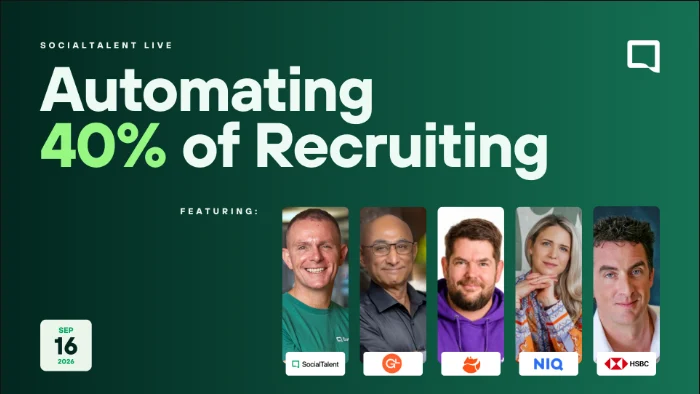
The rapid integration of artificial intelligence into human resources has promised unprecedented efficiency, with automated systems capable of distilling a pool of 800 applicants into a manageable shortlist of 12 in under an hour. However, this technological leap has created a significant legal blind spot. When a rejected candidate demands an explanation for their exclusion—a request now supported by evolving data protection laws—many businesses find themselves unable to provide a substantive answer. As legal experts, including Winston Solicitors’ head of employment Samira Cakali, have highlighted, the failure is not necessarily in the technology itself, but in a profound "evidence-production" gap. Employers are increasingly discovering that possessing advanced software is not a substitute for maintaining the rigorous, human-centered documentation required by the UK’s evolving regulatory landscape.
The Regulatory Landscape: The ICO’s Intervention
The regulatory environment regarding AI in the workplace underwent a significant transformation in the first quarter of 2026. In March 2026, the Information Commissioner’s Office (ICO) released its comprehensive "Recruitment Rewired" report, which served as a wake-up call for HR departments across the United Kingdom. The report identified a widespread failure among employers to implement the necessary safeguards for "solely automated decisions" as defined under the UK General Data Protection Regulation (GDPR).
The ICO’s investigation revealed that many organizations were relying on Data Protection Impact Assessments (DPIAs) that were functionally hollow. While these documents existed on paper, they frequently lacked the granular detail required to justify the use of algorithmic decision-making tools. The central issue identified by the ICO is the disconnect between the claimed level of human oversight and the actual operation of the hiring process. If a firm asserts that its AI-driven hiring is subject to human review, it must be able to demonstrate that this review is not merely a formality, but a substantive, active process.
Chronology of Legislative Shifts and Compliance Requirements
To understand the current climate, one must look at the legislative timeline that has defined the last 18 months of employment law:

- Pre-2025: The period characterized by a near-prohibition on automated decision-making, where the legal threshold for human intervention was poorly defined in the context of high-speed AI hiring tools.
- February 5, 2026: The Data (Use and Access) Act 2025 came into full force. This legislation replaced the previous, more rigid prohibitions with a nuanced framework of safeguards. It explicitly codified a candidate’s right to be informed when automated processing is involved, their right to contest an automated outcome, and their statutory right to request a meaningful human review.
- March 2026: The publication of the ICO’s "Recruitment Rewired" report, which signaled a shift toward active enforcement regarding the transparency and accountability of HR-tech procurement.
- Winter 2026: The anticipated release of the ICO’s final guidance, which is expected to cement the requirements for bias testing and continuous algorithmic monitoring.
The Equality Act and the Myth of Vendor Liability
A critical point of confusion for many talent acquisition leaders is the division of liability between the software vendor and the employer. Under the Equality Act 2010, the responsibility for ensuring a fair, non-discriminatory recruitment process rests solely with the employer. If an AI tool—trained on historical hiring data—replicates past biases or indirectly discriminates against protected groups, the legal burden of proof lies with the firm that utilized the tool.
Many organizations mistakenly rely on indemnity clauses in their vendor contracts, believing that these clauses insulate them from legal action. However, legal analysis confirms that such contracts typically shift the cost of litigation, but they do not shift the legal liability to the vendor. If an applicant challenges a hiring decision at an employment tribunal, the employer must account for the criteria used by the software. Furthermore, employers are tasked with the proactive duty of ensuring "reasonable adjustments" for disabled applicants. This means the assessment process itself—not just the final decision—must be flexible, audited, and capable of being modified if the AI’s standard parameters create an unfair disadvantage.
Meaningful Review vs. The Rubber Stamp
Samira Cakali’s analysis provides a piercing critique of what she terms "the forwarding trap." In many firms, a recruiter is presented with a ranked list of candidates by an AI, and they proceed to forward the top ten candidates to the hiring manager. While this appears to be a human-involved process, it fails the "meaningful review" test.
Meaningful human review requires the reviewer to have the authority, the context, and the practical capability to overturn or adjust the machine’s output. If a recruiter has never, in the history of their use of the software, adjusted the AI’s ranking, then the human is not exercising judgment—they are merely acting as a conduit for an automated decision. A process map that indicates human sign-off is useless in a legal setting if the organization cannot produce evidence of when that human oversight resulted in a different, informed decision. A shortlist that cannot be explained or justified by a human participant is, by legal definition, an automated decision.
The Structural Risk Beyond Recruitment
While recruitment is the most visible area of AI implementation, the legal exposure extends deeply into the management of existing employees. Modern "people analytics" tools that measure productivity, monitor flight risk, or predict performance are increasingly being integrated into capability reviews, promotion cycles, and redundancy selection.

These tools carry the same legal risks as hiring software—discrimination and data protection concerns—but they are often subject to even less scrutiny. Because these tools operate internally, their outputs are rarely questioned by external parties until a formal grievance or an unfair dismissal claim arises. Employers are advised to treat these internal metrics with the same level of caution as hiring data. The structural risk here is high: if an employee is selected for redundancy based on an automated "low productivity" score that the employer cannot explain or validate, the company faces significant exposure to unfair dismissal litigation.
Building a Defensible File: The New HR Imperative
The most significant takeaway for modern talent acquisition leaders is that the documentation of the hiring process must be robust enough to outlive the vendor relationship. A vendor may update its algorithm, change its data storage policies, or go out of business, but the legal obligation to explain a hiring decision remains with the employer for years after the fact.
A defensible HR file, as outlined by experts, must include:
- Documented human intervention: Logs showing where and how a human reviewer considered the AI’s output and exercised their own judgment.
- Version control: Detailed records of which version of the algorithm was used at the time of a specific decision.
- Bias monitoring evidence: Dated, periodic documentation of the bias testing performed on the tool, both during the procurement phase and throughout its active use.
- Reasoning trails: A clear, written justification for the criteria used by the tool to rank candidates, ensuring that these criteria align with the requirements of the Equality Act.
The core of the issue is not the sophistication of the AI, but the rigor of the internal governance. Employers who are best prepared for the future are those who have stopped treating their AI tools as "black box" solutions. Instead, they are treating them as instruments that require constant supervision and, more importantly, a permanent, accessible record of human accountability. As the ICO moves toward its final guidance in late 2026, the firms that will face the least disruption are those that have already institutionalized the practice of human ownership over every automated output. In the eyes of the law, a decision is not complete until a human can articulate why it was made, regardless of how much of the heavy lifting was performed by an algorithm.